Upcoming Events: Moss Art Thursday Sept. 24th @ 6pm / Plant Stake Stained Glass Workshop Sunday Sept. 27th @ 2pm / Moss Art Thursday Oct. 1st @ 6 pm / Intro to Stained Glass October 3rd @ 2 pm
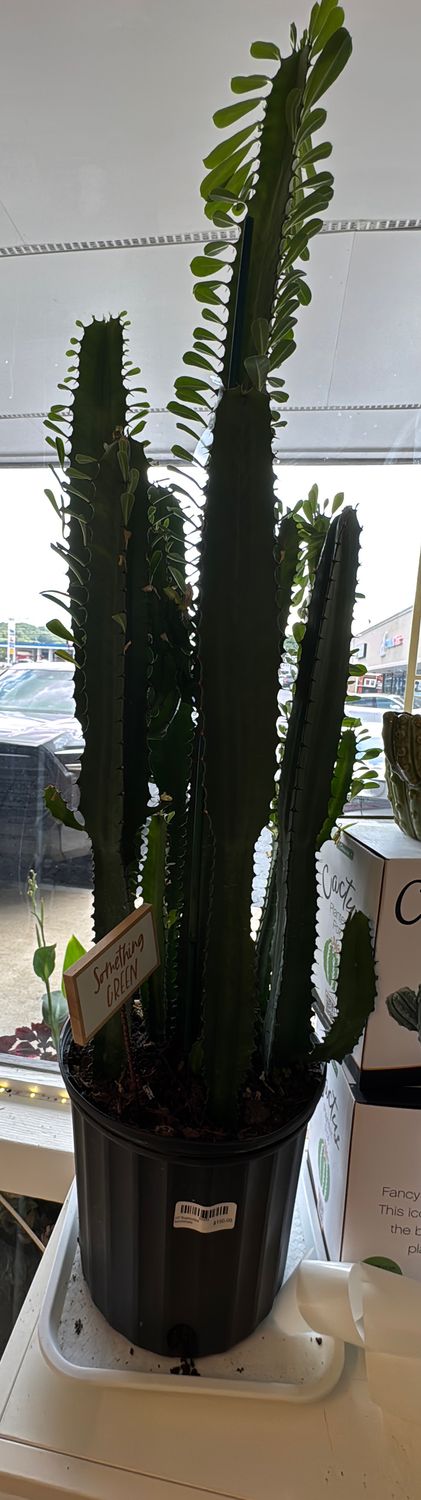
10" Euphorbia Acrurensis
$150.00
Buy and save
Buy and earn $7.50 Loyalty for your next purchase
Loyalty is a discount program that lets you buy products and earn points to redeem on your next purchase. Your Loyalty balance is updated when you pay online or in-store. The Loyalty amount shown on this page can be recalculated at the checkout.
In stock: 1 available
10" Euphorbia Acrurensis
Product Details
Brand: Plant
Euphorbia Acrurensis
Euphorbia Acrurensis is a striking succulent prized for its tall, upright stems, angular ridges, and dramatic cactus-like appearance. Its thick green stems grow vertically and develop branching arms as the plant matures, creating an architectural, tree-like silhouette. Small leaves may appear along new growth but are often temporary, leaving the sculptural stems as the plant’s main feature. Its bold form makes it an impressive statement plant for bright indoor spaces.
The proper botanical name is Euphorbia acrurensis, a species native to parts of southern Africa. It is sometimes sold under names such as Cowboy Cactus or Candelabra Euphorbia, although these common names are also used for other Euphorbia species. Despite its cactus-like appearance, Euphorbia acrurensis is not a true cactus and belongs to the Euphorbiaceae family.
Care
Euphorbia Acrurensis does best in very bright light with some direct sunlight. Indoors, place it near the brightest window available. Plants should be gradually acclimated to stronger direct sunlight to reduce the risk of scorching, particularly if they were previously grown under filtered conditions.
Allow the potting mix to dry completely or almost completely between waterings, then water thoroughly and allow all excess water to drain. Its thick succulent stems store moisture, making overwatering a much greater concern than occasional dryness. Reduce watering significantly during cooler months or periods of slower growth.
Use a very well-draining cactus or succulent potting mix in a container with drainage. Adding pumice, perlite, lava rock, or other coarse mineral amendments can improve drainage and airflow around the roots. Avoid dense soil that remains wet for extended periods.
Euphorbia Acrurensis prefers warm temperatures and low to moderate humidity. Average indoor humidity is generally suitable. Protect it from cold drafts and prolonged exposure to cool temperatures, especially when the soil is damp.
This plant develops a tall, upright and branching growth habit and can eventually become a substantial specimen. Mature plants may become top-heavy, so a sturdy container can help provide stability. Pruning can control its height and encourage branching, but extra care should be taken whenever stems are cut because the plant releases irritating milky sap.
Pet Safety
Euphorbia Acrurensis is toxic to cats and dogs and should be kept away from pets and small children. Like other Euphorbias, it produces a white, milky latex sap that can cause significant skin and eye irritation and can irritate the mouth and digestive tract if ingested. Wear gloves when pruning or handling damaged stems, avoid contact with the eyes and face, and wash exposed skin thoroughly after handling.
Powered by Lightspeed
Display prices in:USD