Upcoming Events: Tissue Culture Workshop August 29 @ 11 am / Macramé Air Plant Holder Class Sunday Sept. 13th @ 3 pm / Moss Art Thursday Sept. 24th @ 6pm / Moss Art Thursday Oct. 1st @ 6 pm
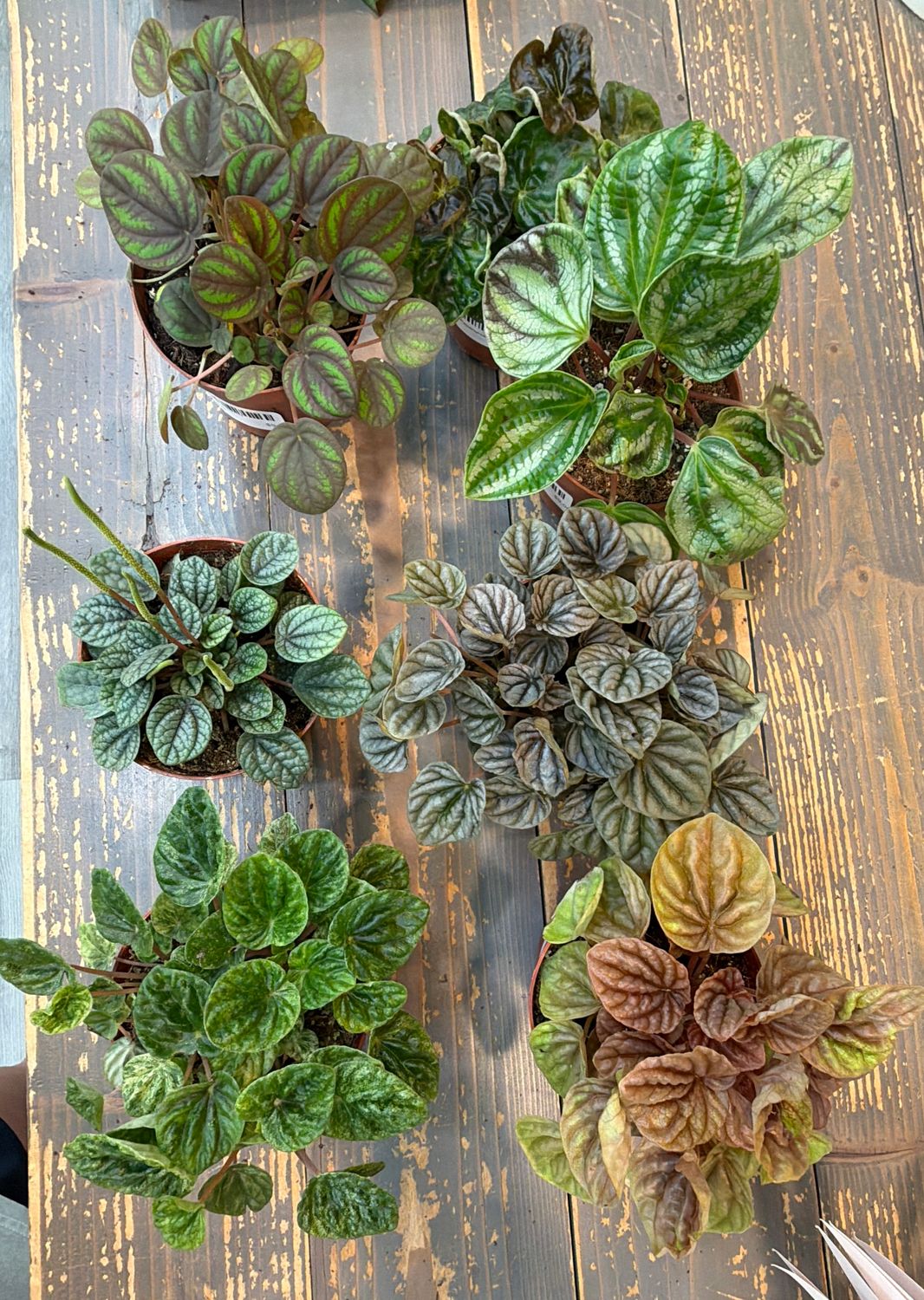
4" Peperomia
$9.00
Buy and save
Buy and earn $0.45 Loyalty for your next purchase
Loyalty is a discount program that lets you buy products and earn points to redeem on your next purchase. Your Loyalty balance is updated when you pay online or in-store. The Loyalty amount shown on this page can be recalculated at the checkout.
In stock: 5 available
4" Peperomia
Product Details
Brand: Plant
Peperomia
Peperomia is a diverse group of tropical houseplants loved for their interesting foliage, compact size, and easy-care nature. With over 1,000 species, Peperomias come in a wide variety of leaf shapes, textures, and colors, from glossy green and rippled leaves to silver-striped, variegated, and succulent-like forms. Their manageable size makes them perfect for desks, shelves, windowsills, terrariums, and small indoor spaces. (Home & Garden Information Center)
The proper botanical name is Peperomia. This large genus belongs to the Piperaceae (black pepper) family and includes many popular houseplants such as Watermelon Peperomia, Ripple Peperomia, Baby Rubber Plant, and String of Turtles. Most species are native to the tropical forests of Central and South America, where they grow beneath the forest canopy. (Plant Toolbox)
Care
Peperomia does best in bright, indirect light. Most varieties tolerate medium light well, making them excellent houseplants for homes and offices. Avoid prolonged direct sunlight, which can scorch the leaves, especially on variegated varieties. (Home & Garden Information Center)
Water thoroughly when the top inch or two of soil feels dry, allowing excess water to drain completely. Many Peperomia species have thick, semi-succulent leaves that store water, making them more tolerant of underwatering than overwatering. Avoid keeping the soil consistently wet, as this can lead to root rot. (Home & Garden Information Center)
Use a well-draining potting mix and a pot with drainage. A blend of houseplant soil with added perlite, orchid bark, or coco coir provides the right balance of moisture retention and airflow around the roots. (Home & Garden Information Center)
Peperomia prefers warm temperatures and moderate humidity. Most varieties adapt well to average household humidity but appreciate a little extra moisture during dry winter months. Keep them away from cold drafts, heating vents, and sudden temperature changes. (Home & Garden Information Center)
Most Peperomia varieties have a slow to moderate growth rate and require very little maintenance. Depending on the species, they may grow upright, trail from hanging baskets, or spread gently over time. Their compact habit makes them an excellent choice for beginners and collectors alike. (Home & Garden Information Center)
Pet Safety
Peperomia plants are pet-friendly and non-toxic to cats and dogs. They are considered one of the safest houseplant groups for homes with pets, making them an excellent choice for animal lovers. As with any plant, eating large amounts may still cause mild stomach upset. (aspca.org)
Powered by Lightspeed
Display prices in:USD