Upcoming : Halloween Terrarium Workshop Tuesday Oct. 13 @ 6 pm / Garden Stone Painting Night Tuesday Oct. 20 @ 6 pm / Dried Floral Book Workshop Thursday Oct 29 @ 6 pm / Moss Art Sunday Nov. 1 @ 2 pm
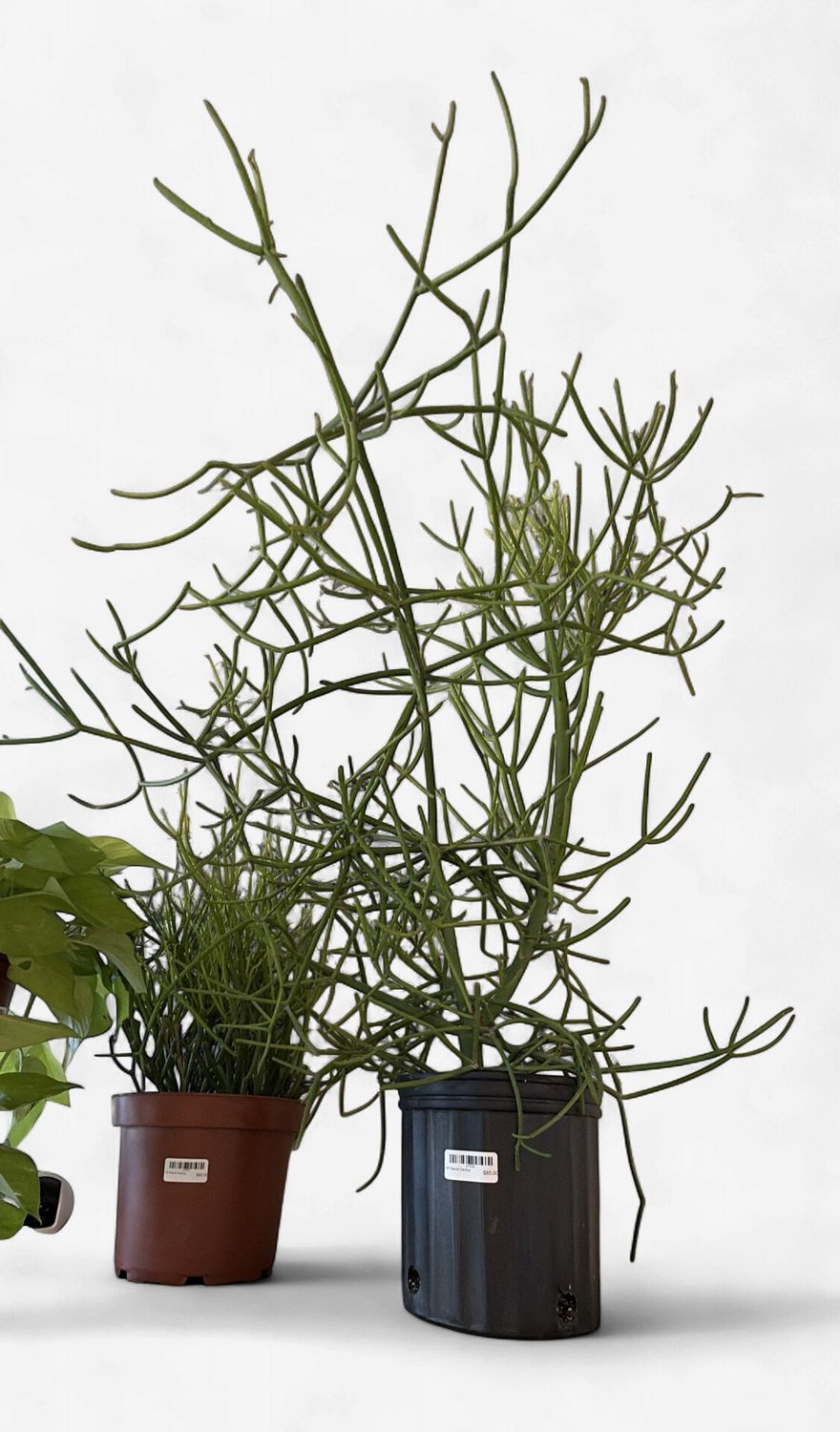
10" Pencil Cactus
Share
$85.00
Buy and save
Buy and earn $4.25 Loyalty for your next purchase
Loyalty is a discount program that lets you buy products and earn points to redeem on your next purchase. Your Loyalty balance is updated when you pay online or in-store. The Loyalty amount shown on this page can be recalculated at the checkout.
In stock: 2 available
10" Pencil Cactus
Share
Delivery information
Shipping: 4–8 days
Pickup: tomorrow, 01:00 PM–07:00 PM
Product details
Brand: Plant
Pencil Cactus
Pencil Cactus is a distinctive succulent prized for its slender, pencil-like green stems and highly branched, architectural growth habit. Rather than producing the broad foliage associated with most houseplants, it develops masses of smooth, narrow stems that create an airy, coral-like silhouette. With age and proper care, Pencil Cactus can develop into an impressive shrub or small tree.
The proper botanical name is Euphorbia tirucalli, commonly called Pencil Cactus, Pencil Tree, Milk Bush, or Indian Tree Spurge. Despite its common name, it is not a true cactus. It belongs to the Euphorbia genus and is native to parts of tropical and southern Africa. Like other Euphorbias, its stems contain a milky white latex sap.
Care
Pencil Cactus does best in very bright light with some direct sunlight. Indoors, place it near one of your brightest windows. Plants should be gradually acclimated to stronger direct sun to reduce the risk of scorching, particularly if they were previously grown under filtered light.
Allow the potting mix to dry completely or almost completely between waterings, then water thoroughly and allow all excess water to drain. Its succulent stems store moisture, making Pencil Cactus highly drought tolerant once established. Overwatering and consistently wet soil are much greater concerns than allowing it to become dry.
Use a very well-draining cactus or succulent potting mix in a container with drainage. Adding pumice, perlite, lava rock, coarse sand, or other mineral amendments can improve drainage and airflow around the roots.
Pencil Cactus prefers warm temperatures and low to moderate humidity. Average household conditions are generally suitable. Protect it from cold drafts and prolonged exposure to low temperatures, particularly when the soil is wet.
This plant develops a strongly branching, upright growth habit and can eventually become quite large. Pruning can be used to control its size and encourage branching, but extreme care should be taken whenever stems are cut because they immediately release irritating latex sap. Wear gloves and eye protection, avoid touching your face, and thoroughly clean tools after pruning.
Pet Safety
Pencil Cactus is toxic to cats and dogs and should be handled with caution around people as well. Its milky latex sap can cause significant skin irritation and can be especially dangerous if it comes into contact with the eyes. Ingestion may cause irritation of the mouth and gastrointestinal tract, drooling, vomiting, and other symptoms. Keep the plant and any freshly cut stems well out of reach of pets and small children.
Powered by Lightspeed
Display prices in:USD