Upcoming : Halloween Terrarium Workshop Tuesday Oct. 13 @ 6 pm / Garden Stone Painting Night Tuesday Oct. 20 @ 6 pm / Dried Floral Book Workshop Thursday Oct 29 @ 6 pm / Moss Art Sunday Nov. 1 @ 2 pm
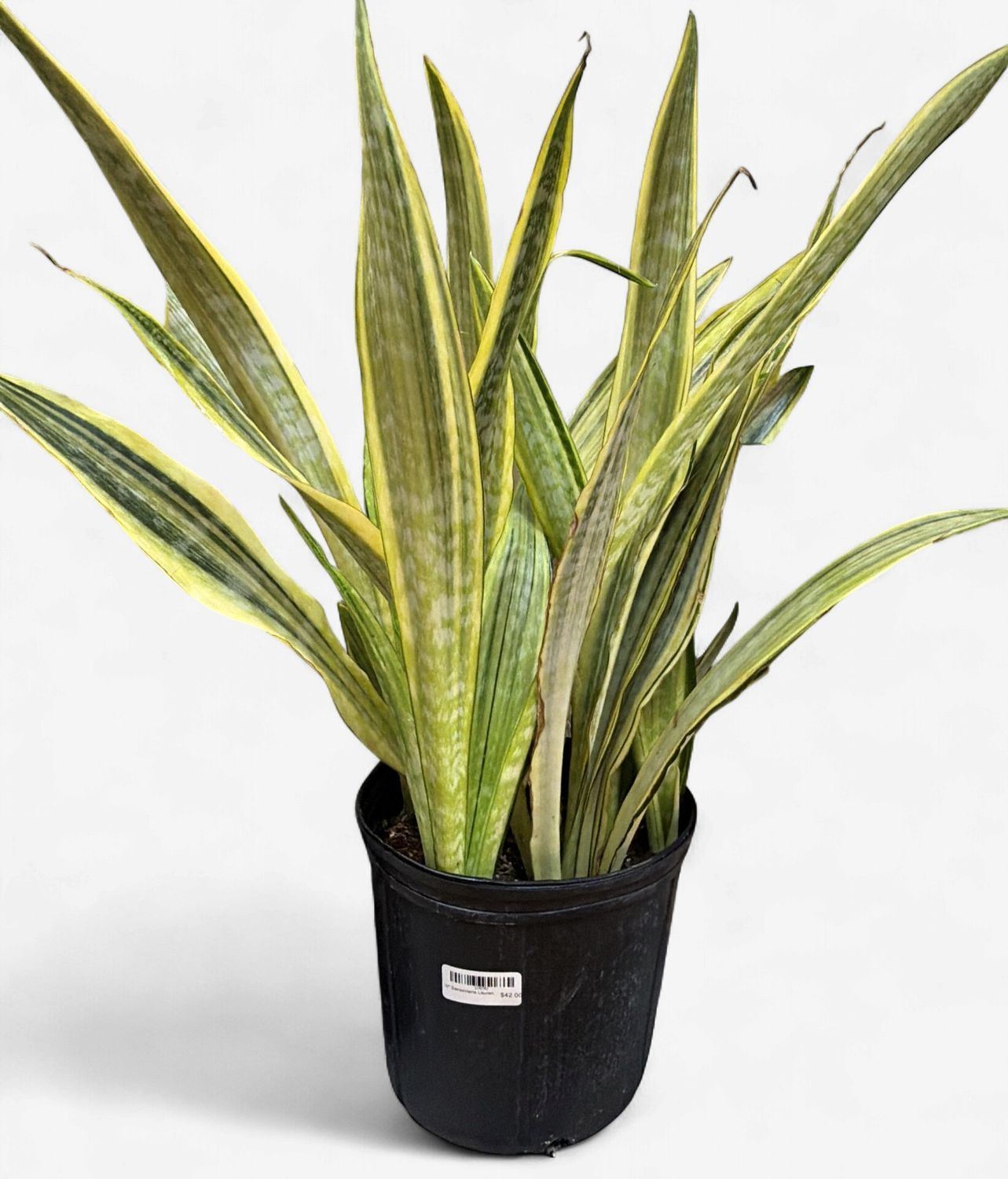
10" Sansevieria Lauren
Share
$42.00
Buy and save
Buy and earn $2.10 Loyalty for your next purchase
Loyalty is a discount program that lets you buy products and earn points to redeem on your next purchase. Your Loyalty balance is updated when you pay online or in-store. The Loyalty amount shown on this page can be recalculated at the checkout.
In stock: 2 available
10" Sansevieria Lauren
Share
Delivery information
Shipping: 4–8 days
Pickup: tomorrow, 11:00 AM–07:00 PM
Product details
Brand: Plant
Sansevieria Lauren
Sansevieria Lauren is an attractive, low-maintenance houseplant known for its thick, upright leaves with rich green coloring and contrasting lighter markings. Its structured, architectural growth gives it a clean, modern appearance, while its durability makes it an excellent choice for homes, offices, desks, shelves, and other indoor spaces where an easy-care plant is desired.
This plant is commonly sold as Sansevieria ‘Lauren’. Sansevieria species have been reclassified into the genus Dracaena, although Sansevieria remains the name most commonly used in the houseplant trade. The exact labeling and cultivar description for ‘Lauren’ can vary somewhat between growers and suppliers.
Care
Sansevieria Lauren does best in medium to bright, indirect light, but it is highly adaptable and can tolerate lower-light conditions. Brighter filtered light generally produces stronger, more compact growth. It can also tolerate some gentle direct sunlight when gradually acclimated.
Water thoroughly and allow the soil to dry completely or almost completely before watering again. Its thick leaves and underground rhizomes store water, making it highly drought tolerant. Sansevieria is much more sensitive to overwatering than underwatering, so avoid keeping the soil consistently moist.
Use a fast-draining potting mix and a pot with drainage. A cactus or succulent mix works well, or use a standard houseplant mix amended with plenty of perlite, pumice, or another gritty material to increase drainage and airflow around the roots.
Sansevieria Lauren prefers warm temperatures and low to moderate humidity. It adapts extremely well to typical household conditions and does not require additional humidity. Protect it from freezing temperatures, prolonged cold drafts, and excessively wet conditions.
This plant has a slow-growing, upright growth habit and produces new shoots from underground rhizomes. Over time, these shoots can develop into a fuller cluster. Sansevieria generally prefers being slightly snug in its container and does not require frequent repotting.
Pet Safety
Sansevieria Lauren is toxic to cats and dogs if ingested. Sansevieria contains saponins that can cause nausea, vomiting, diarrhea, and other gastrointestinal irritation. Keep it away from pets and small children.
Powered by Lightspeed
Display prices in:USD