Upcoming : Halloween Terrarium Workshop Tuesday Oct. 13 @ 6 pm / Garden Stone Painting Night Tuesday Oct. 20 @ 6 pm / Dried Floral Book Workshop Thursday Oct 29 @ 6 pm / Moss Art Sunday Nov. 1 @ 2 pm
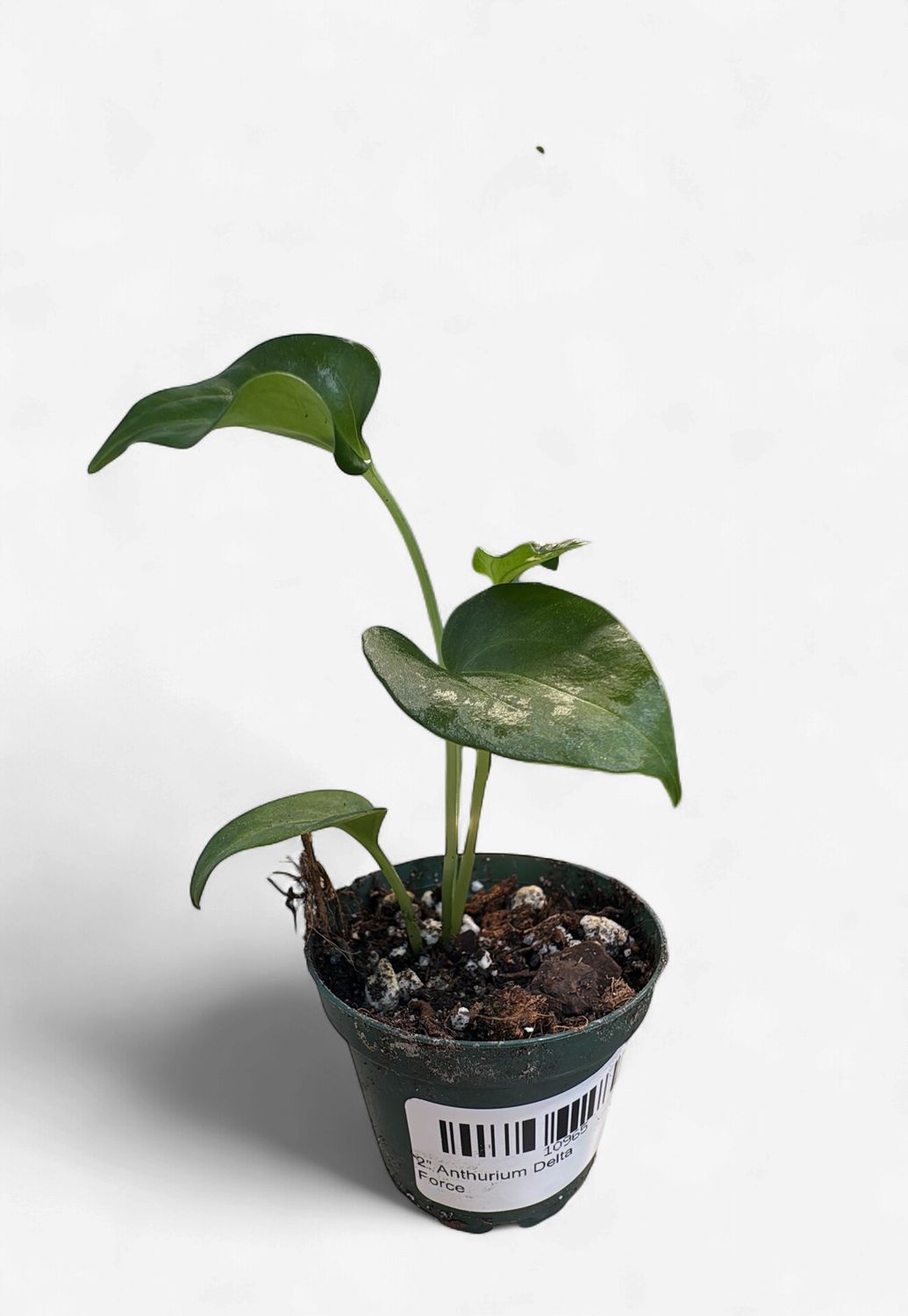
2" Anthurium Delta Force
Share
$45.00
Sold out
Sold out
2" Anthurium Delta Force
Share
Product details
Brand: Plant
Anthurium Delta Force
Anthurium Delta Force is a highly sought-after collector Anthurium prized for its dramatic triangular leaves, deeply lobed base, and bold, sculptural appearance. Mature foliage develops a distinctive delta or arrow-like shape with elongated lobes and prominent veining, giving the plant a look unlike most traditional heart-shaped Anthuriums. Its unusual leaf shape and impressive size make it an exceptional statement plant for a bright indoor space or specialty aroid collection.
The proper cultivar name is Anthurium ‘Delta Force’. It originated as a selected seedling from a cross between Anthurium clarinervium and Anthurium pedatoradiatum. The original plant was selected for its unusually distinctive foliage and propagated to preserve those characteristics. True Delta Force plants are therefore clonal descendants of the original selection. Seed-grown offspring involving Delta Force may display similar traits but are not technically the original ‘Delta Force’ cultivar.
Care
Anthurium Delta Force does best in bright, indirect light. Plenty of filtered light encourages strong growth and helps the plant develop its characteristic mature foliage. Avoid prolonged harsh direct sunlight, which can scorch the leaves.
Water when the top inch or two of the potting mix begins to dry, then water thoroughly and allow excess water to drain. Delta Force prefers consistent moisture during active growth but should never remain soggy or waterlogged. Avoid allowing it to stay completely dry for extended periods.
Use a well-draining, chunky aroid potting mix in a container with drainage. A mixture containing orchid bark, coco coir or quality houseplant soil, perlite or pumice, and other coarse amendments works well. The roots appreciate consistent access to moisture combined with excellent airflow.
Anthurium Delta Force prefers warm temperatures and moderate to high humidity. Higher humidity can encourage larger, healthier foliage and help prevent crispy leaf edges. Good airflow is important in humid growing environments, particularly around developing leaves.
This plant develops an upright, self-heading growth habit rather than behaving like a long climbing vine. Give mature specimens enough room for their large, spreading leaves to develop without rubbing against surrounding plants or surfaces. Consistent light, warmth, humidity, and nutrition will help young plants gradually develop the distinctive leaf shape associated with mature Delta Force.
Pet Safety
Anthurium Delta Force is toxic to cats and dogs if ingested. Like other Anthuriums, it contains insoluble calcium oxalate crystals that can cause irritation of the mouth, tongue, and lips, along with drooling, vomiting, and difficulty swallowing. Keep it out of reach of pets and small children.
Powered by Lightspeed
Display prices in:USD