Upcoming : Halloween Terrarium Workshop Tuesday Oct. 13 @ 6 pm / Garden Stone Painting Night Tuesday Oct. 20 @ 6 pm / Dried Floral Book Workshop Thursday Oct 29 @ 6 pm / Moss Art Sunday Nov. 1 @ 2 pm
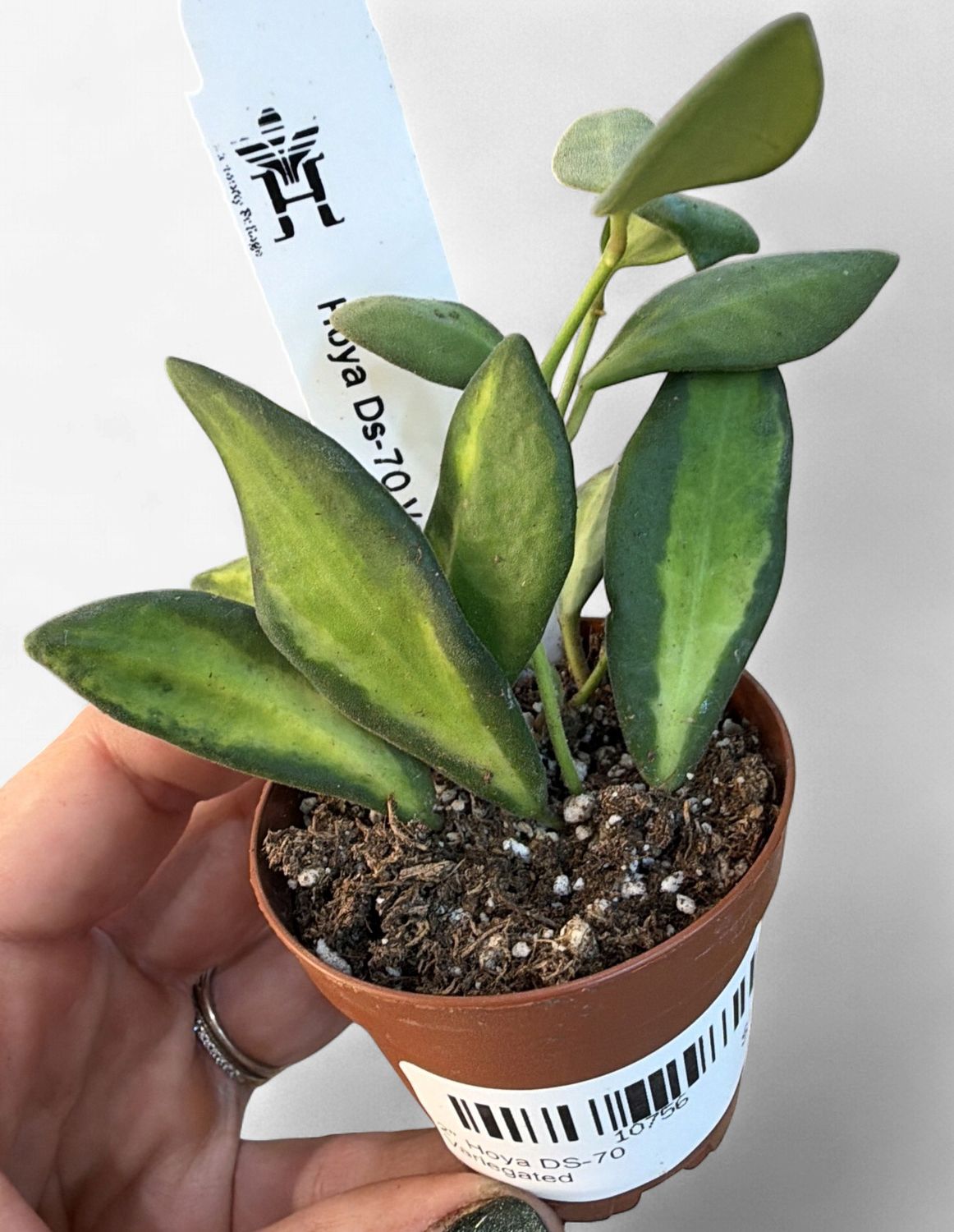
2" Hoya DS-70 Variegated
Share
$7.50
Buy and save
Buy and earn $0.37 Loyalty for your next purchase
Loyalty is a discount program that lets you buy products and earn points to redeem on your next purchase. Your Loyalty balance is updated when you pay online or in-store. The Loyalty amount shown on this page can be recalculated at the checkout.
In stock: 10 available
2" Hoya DS-70 Variegated
Share
Delivery information
Shipping: 4–8 days
Pickup: tomorrow, 11:00 AM–07:00 PM
Product details
Brand: Plant
Hoya DS-70 Variegated
Hoya DS-70 Variegated is a beautiful trailing tropical houseplant admired for its soft, velvety olive-green leaves marked with creamy yellow to white variegation. Many plants develop rich burgundy or reddish tones along the leaf edges and undersides when grown in bright light, creating a striking contrast with the variegation. Its compact trailing habit and clusters of fragrant, star-shaped flowers make it a favorite among Hoya collectors and an excellent choice for hanging baskets, shelves, or decorative planters. (Entrecactus)
The plant is commonly sold as Hoya DS-70 Variegated or Hoya DS-70 Variegata. The name DS-70 is a collector's accession number rather than a formal botanical name. Today, many growers consider it closely related to or refer to it as Hoya sp. aff. burtoniae, although the original DS-70 designation remains widely used in the houseplant trade. (Entrecactus)
Care
Hoya DS-70 Variegated does best in bright, indirect light. Bright filtered light helps maintain vibrant variegation and encourages reddish coloring along the leaf margins. A little gentle morning or late afternoon sun is beneficial, but avoid prolonged harsh midday sunlight, which can scorch the leaves. (JOMO Studio)
Water thoroughly when the potting mix has mostly dried, allowing excess water to drain away. Like most Hoyas, it prefers to dry slightly between waterings and is much more tolerant of underwatering than consistently wet soil. Reduce watering during the winter months when growth naturally slows. (JOMO Studio)
Use a chunky, well-draining potting mix and a pot with drainage. A blend of houseplant soil, orchid bark, perlite, and coco coir provides excellent airflow around the roots while retaining just enough moisture for healthy growth.
Hoya DS-70 Variegated prefers warm temperatures and moderate to high humidity. It adapts well to average household humidity but will produce stronger growth and healthier foliage with additional humidity. Keep it away from cold drafts and sudden temperature changes. (JOMO Studio)
This plant has a trailing or gently climbing growth habit and looks beautiful cascading from a hanging basket or trained onto a small trellis. Mature plants may produce clusters of fragrant, waxy flowers. Avoid removing old flower spurs (peduncles), as Hoyas bloom repeatedly from the same growth points. (Entrecactus)
Pet Safety
Hoyas are generally considered pet-friendly and non-toxic to cats and dogs. While Hoya DS-70 Variegated is not individually listed by the ASPCA, other commonly grown Hoya species are considered non-toxic, and this plant is widely regarded as a safe choice for homes with pets. As with any plant, consuming large amounts may still cause mild stomach upset. (Entrecactus)
Powered by Lightspeed
Display prices in:USD