Upcoming : Halloween Terrarium Workshop Tuesday Oct. 13 @ 6 pm / Garden Stone Painting Night Tuesday Oct. 20 @ 6 pm / Dried Floral Book Workshop Thursday Oct 29 @ 6 pm / Moss Art Sunday Nov. 1 @ 2 pm
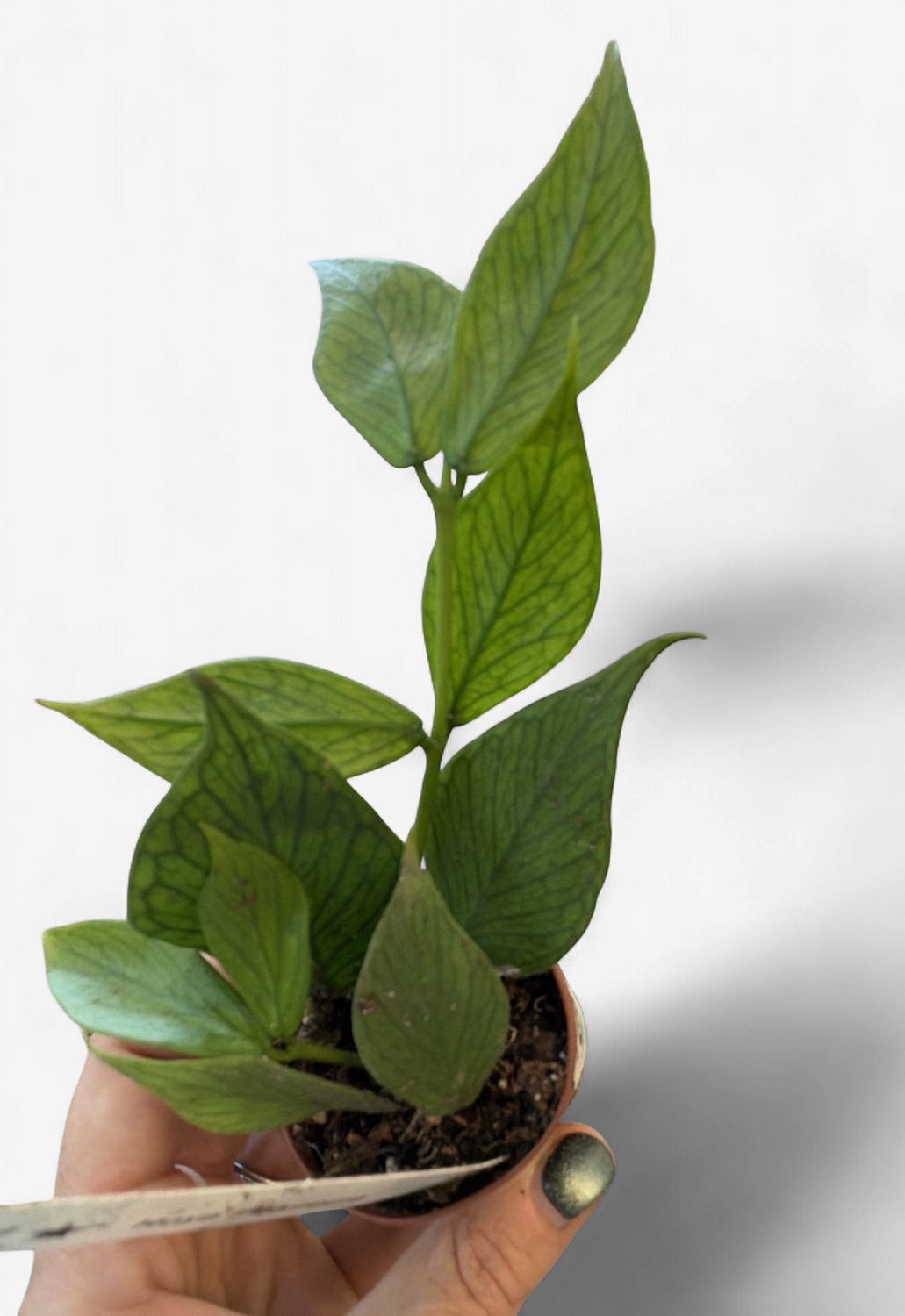
2" Hoya Polyneura
Share
$9.00
Sold out
Sold out
2" Hoya Polyneura
Share
Product details
Brand: Plant
Hoya Polyneura
Hoya Polyneura, commonly known as the Fishtail Hoya, is a unique tropical houseplant prized for its delicate, fishbone-like foliage. Its soft green leaves feature intricate dark veining that resembles the tail of a fish, giving the plant its popular common name. With its graceful trailing stems and occasional clusters of fragrant, star-shaped flowers, Hoya Polyneura is a favorite among Hoya collectors and looks beautiful in hanging baskets, on shelves, or trained along a trellis. (Wikipedia)
The proper botanical name is Hoya polyneura. It is an accepted species native to the Himalayan region and parts of Southeast Asia, where it grows as an epiphytic vine in cool, humid forests. (Plants of the World Online)
Care
Hoya Polyneura does best in bright, indirect light. Bright filtered light encourages healthy growth and flowering, but this species is more sensitive to intense sunlight than many other Hoyas. Avoid prolonged direct afternoon sun, which can scorch the thin leaves. (Foliage Factory)
Water thoroughly when the top inch or two of soil feels dry, allowing excess water to drain away. Unlike many thicker-leaved Hoyas, Hoya Polyneura prefers to stay slightly more evenly moist and should not be allowed to remain completely dry for extended periods. Avoid consistently soggy soil, as this can lead to root rot. (Plantiary - Plant Identifier)
Use a chunky, well-draining potting mix and a pot with drainage. A blend of houseplant soil, orchid bark, perlite, and coco coir provides excellent airflow while retaining just enough moisture for healthy roots.
Hoya Polyneura prefers warm temperatures, moderate to high humidity, and good air circulation. While it appreciates humidity, it also tends to prefer slightly cooler conditions than many tropical Hoyas. Keep it away from cold drafts, heating vents, and extreme heat. (Foliage Factory)
This plant has a trailing growth habit and is best displayed in a hanging basket or allowed to cascade from a shelf. It can also be lightly trained onto a small trellis. If your plant blooms, avoid removing the flower spurs (peduncles), as Hoyas rebloom from the same spurs year after year. (Plantiary - Plant Identifier)
Pet Safety
Hoyas are generally considered pet-friendly and non-toxic to cats and dogs. While Hoya Polyneura is not individually listed by the ASPCA, other commonly grown Hoyas such as Hoya carnosa and Hoya kerrii are listed as non-toxic, and Hoya Polyneura is widely regarded as pet-safe. As with any plant, consuming large amounts may cause mild stomach upset. (aspca.org)
Powered by Lightspeed
Display prices in:USD