Upcoming : Halloween Terrarium Workshop Tuesday Oct. 13 @ 6 pm / Garden Stone Painting Night Tuesday Oct. 20 @ 6 pm / Dried Floral Book Workshop Thursday Oct 29 @ 6 pm / Moss Art Sunday Nov. 1 @ 2 pm
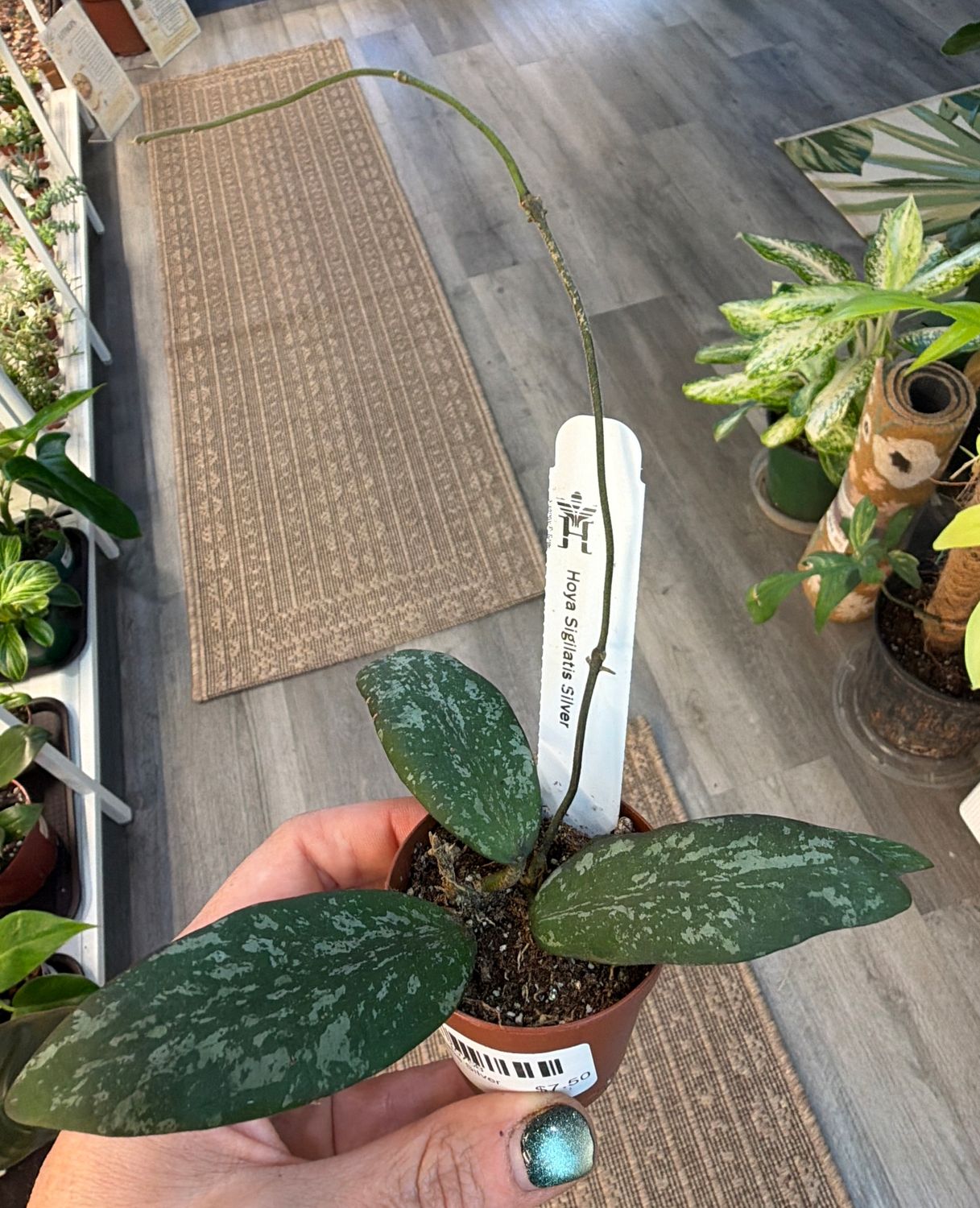
2" Hoya Sigilatis Silver
Share
$7.50
Sold out
Sold out
2" Hoya Sigilatis Silver
Share
Product details
Brand: Plant
Hoya Sigillatis Silver
Hoya Sigillatis Silver is a stunning tropical houseplant prized for its slender leaves heavily covered in shimmering silver, giving the plant an almost metallic appearance. Depending on the clone, the leaves may be long and narrow or more rounded, with new growth often emerging in shades of bronze, burgundy, or deep purple before maturing. Its cascading vines and striking foliage make it a favorite among Hoya collectors and an excellent choice for hanging baskets, shelves, or a small trellis. (Foliage Factory)
The proper botanical name is Hoya sigillatis, while Silver refers to a particularly heavily silvered form selected for its exceptional foliage. Native to Borneo, this species naturally grows as an epiphytic vine in warm, humid forests. The name sigillatis comes from the Latin word meaning "marked" or "stamped," referring to the plant's distinctive silver patterning. (Foliage Factory)
Care
Hoya Sigillatis Silver does best in bright, indirect light. Plenty of filtered light encourages compact growth and enhances the plant's beautiful silver coloration. With enough light, new growth may develop attractive reddish or burgundy tones. Avoid prolonged harsh afternoon sun, which can scorch the leaves. (Foliage Factory)
Water thoroughly when the potting mix is mostly dry, allowing excess water to drain completely. Like most Hoyas, it prefers to dry slightly between waterings but should not remain dry for extended periods. Overwatering or consistently soggy soil can lead to root rot. (Foliage Factory)
Use a chunky, well-draining potting mix and a pot with drainage. A blend of houseplant soil, orchid bark, perlite, and coco coir provides excellent airflow around the roots while retaining just enough moisture for healthy growth. (Foliage Factory)
Hoya Sigillatis Silver prefers warm temperatures and moderate to high humidity. It adapts well to average household humidity but grows best with additional humidity and good air circulation. Keep it away from cold drafts and sudden temperature changes. (Foliage Factory)
This plant has a trailing or climbing growth habit and looks beautiful cascading from a hanging basket or trained onto a trellis. Mature plants may produce clusters of small, fuzzy, pale pink to cream-colored flowers. Avoid removing old flower spurs (peduncles), as Hoyas bloom repeatedly from the same growth points. (Funfactorium)
Pet Safety
Hoyas are generally considered pet-friendly and non-toxic to cats and dogs. While Hoya sigillatis itself is not individually listed by the ASPCA, other commonly grown Hoya species are listed as non-toxic, and it is widely regarded as a safe choice for homes with pets. As with any plant, consuming large amounts may still cause mild stomach upset. (aspca.org)
Powered by Lightspeed
Display prices in:USD