Upcoming : Halloween Terrarium Workshop Tuesday Oct. 13 @ 6 pm / Garden Stone Painting Night Tuesday Oct. 20 @ 6 pm / Dried Floral Book Workshop Thursday Oct 29 @ 6 pm / Moss Art Sunday Nov. 1 @ 2 pm
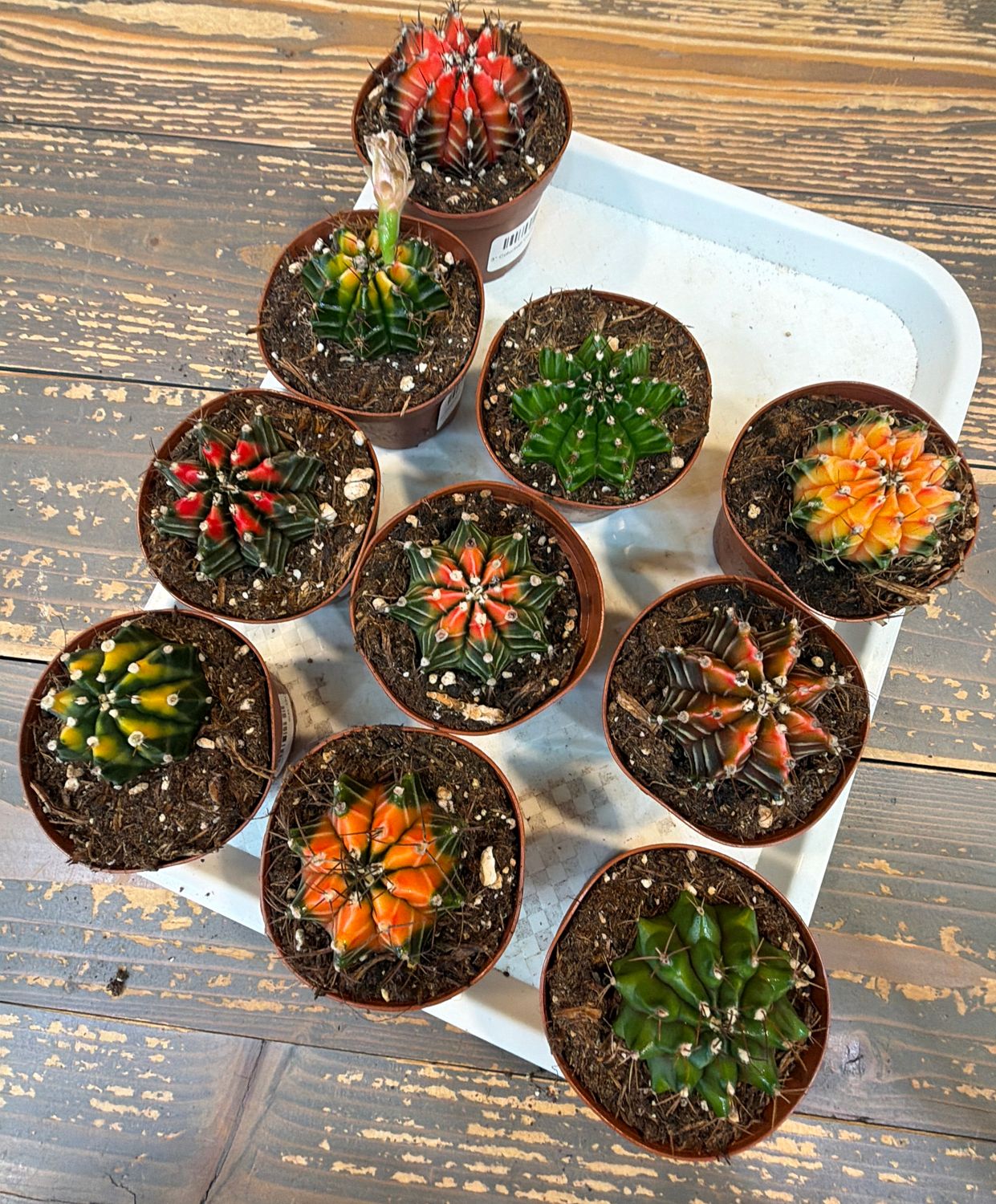
3" Colorball Cactus
Share
$8.00
Buy and save
Buy and earn $0.40 Loyalty for your next purchase
Loyalty is a discount program that lets you buy products and earn points to redeem on your next purchase. Your Loyalty balance is updated when you pay online or in-store. The Loyalty amount shown on this page can be recalculated at the checkout.
In stock: 3 available
3" Colorball Cactus
Share
Delivery information
Shipping: 4–8 days
Pickup: tomorrow, 11:00 AM–07:00 PM
Product details
Brand: Plant
Colorball Cactus
Colorball Cactus is a colorful grafted cactus known for its bright, rounded top growth in shades of red, pink, orange, yellow, or other vivid colors. The colorful upper cactus sits on top of a green cactus rootstock, creating the distinctive two-part appearance. Its compact size and unusual coloring make it a popular choice for sunny windowsills, desks, small plant displays, and cactus collections.
Plants sold as Colorball Cactus are typically grafted forms of Gymnocalycium mihanovichii, the same type of cactus commonly called a Moon Cactus. Many of the brightly colored forms contain very little chlorophyll and therefore cannot survive on their own. They are grafted onto a green cactus rootstock that performs photosynthesis and supplies the colorful upper portion with water and nutrients.
Care
Colorball Cactus does best in bright, indirect light with some gentle direct sun. A bright window is ideal, but intense afternoon sunlight can scorch the colorful upper cactus, particularly red, pink, orange, and yellow forms. If introducing the plant to stronger sunlight, acclimate it gradually.
Water thoroughly and allow the soil to dry completely before watering again. Both the cactus and its rootstock are susceptible to rot when kept consistently wet. Water less frequently during cooler months and periods of slower growth.
Use a fast-draining cactus or succulent mix and a pot with drainage. Adding pumice, perlite, lava rock, or other gritty material can improve drainage and reduce the amount of time moisture remains around the roots.
Colorball Cactus prefers warm temperatures and low humidity. Normal household conditions generally work well. Protect it from freezing temperatures, prolonged cold drafts, and excessively humid conditions with poor airflow.
This plant has a compact, slow-growing habit. Because it is a grafted plant, its long-term health depends on both the colorful upper cactus and the green rootstock remaining healthy. The rootstock may occasionally produce its own shoots or branches, which can be removed so it continues directing energy toward the grafted cactus. With time, grafted cacti may eventually need to be regrafted if the rootstock begins to decline.
Pet Safety
Colorball Cactus is not generally considered highly toxic to cats or dogs, but its spines can cause physical injury and eating cactus tissue may cause gastrointestinal irritation. Keep it where pets and small children cannot easily reach or knock over the plant.
Powered by Lightspeed
Display prices in:USD