Upcoming : Halloween Terrarium Workshop Tuesday Oct. 13 @ 6 pm / Garden Stone Painting Night Tuesday Oct. 20 @ 6 pm / Dried Floral Book Workshop Thursday Oct 29 @ 6 pm / Moss Art Sunday Nov. 1 @ 2 pm
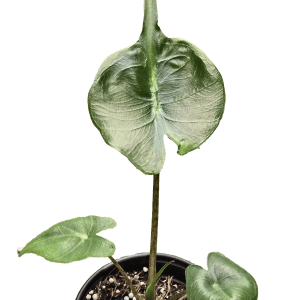
4" Alocasia Stingray
Share
$15.00
Sold out
Sold out
4" Alocasia Stingray
Share
Product details
Brand: Plant
Alocasia Stingray
Alocasia Stingray is a unique tropical houseplant known for its large, glossy green leaves with long, narrow tips that resemble the tail of a stingray. Its unusual foliage and tall, upright stems give it a dramatic, sculptural appearance that stands out from other Alocasia varieties. As it matures, the plant can develop impressively large leaves, making it a great choice for plant collectors, floor displays, and bright indoor spaces.
The proper name is commonly listed as Alocasia macrorrhizos ‘Stingray’, although it may also be sold simply as Alocasia ‘Stingray’. It is a cultivated Alocasia variety selected for its distinctive stingray-shaped foliage.
Care
Alocasia Stingray does best in bright, indirect light. Plenty of filtered light encourages strong growth and larger foliage. Avoid prolonged harsh direct sunlight, which can scorch the leaves.
Water thoroughly when the top inch or two of soil feels dry and allow excess water to drain. Alocasias prefer lightly and consistently moist soil during active growth but should never remain soggy. Avoid allowing the plant to dry completely for extended periods.
Use a well-draining, chunky potting mix and a pot with drainage. A mixture containing houseplant soil, orchid bark, perlite, and coco coir works well, providing moisture retention while allowing plenty of airflow around the roots.
Alocasia Stingray prefers warm temperatures and moderate to high humidity. Higher humidity can encourage larger, healthier foliage and help prevent crispy leaf edges. Keep it away from cold drafts, heating vents, and air conditioning.
This plant has an upright, clumping growth habit and can become quite large as it matures. New leaves emerge from the center while older leaves may naturally yellow and decline over time. Like many Alocasias, growth may slow considerably during cooler months, so reduce watering if the plant becomes less active.
Pet Safety
Alocasia Stingray is toxic to cats and dogs if ingested. It contains insoluble calcium oxalate crystals that can cause irritation of the mouth and digestive tract. Keep it away from pets and small children.
Powered by Lightspeed
Display prices in:USD