Upcoming : Halloween Terrarium Workshop Tuesday Oct. 13 @ 6 pm / Garden Stone Painting Night Tuesday Oct. 20 @ 6 pm / Dried Floral Book Workshop Thursday Oct 29 @ 6 pm / Moss Art Sunday Nov. 1 @ 2 pm
4" Alocasia Stingray Variegated
Share
$212.00
Buy and save
Buy and earn $10.60 Loyalty for your next purchase
Loyalty is a discount program that lets you buy products and earn points to redeem on your next purchase. Your Loyalty balance is updated when you pay online or in-store. The Loyalty amount shown on this page can be recalculated at the checkout.
In stock: 1 available
4" Alocasia Stingray Variegated
Share
Delivery information
Shipping: 4–7 days
Pickup: tomorrow, 11:00 AM–07:00 PM
Product details
Brand: Plant
Alocasia 'Variegated Stingray'
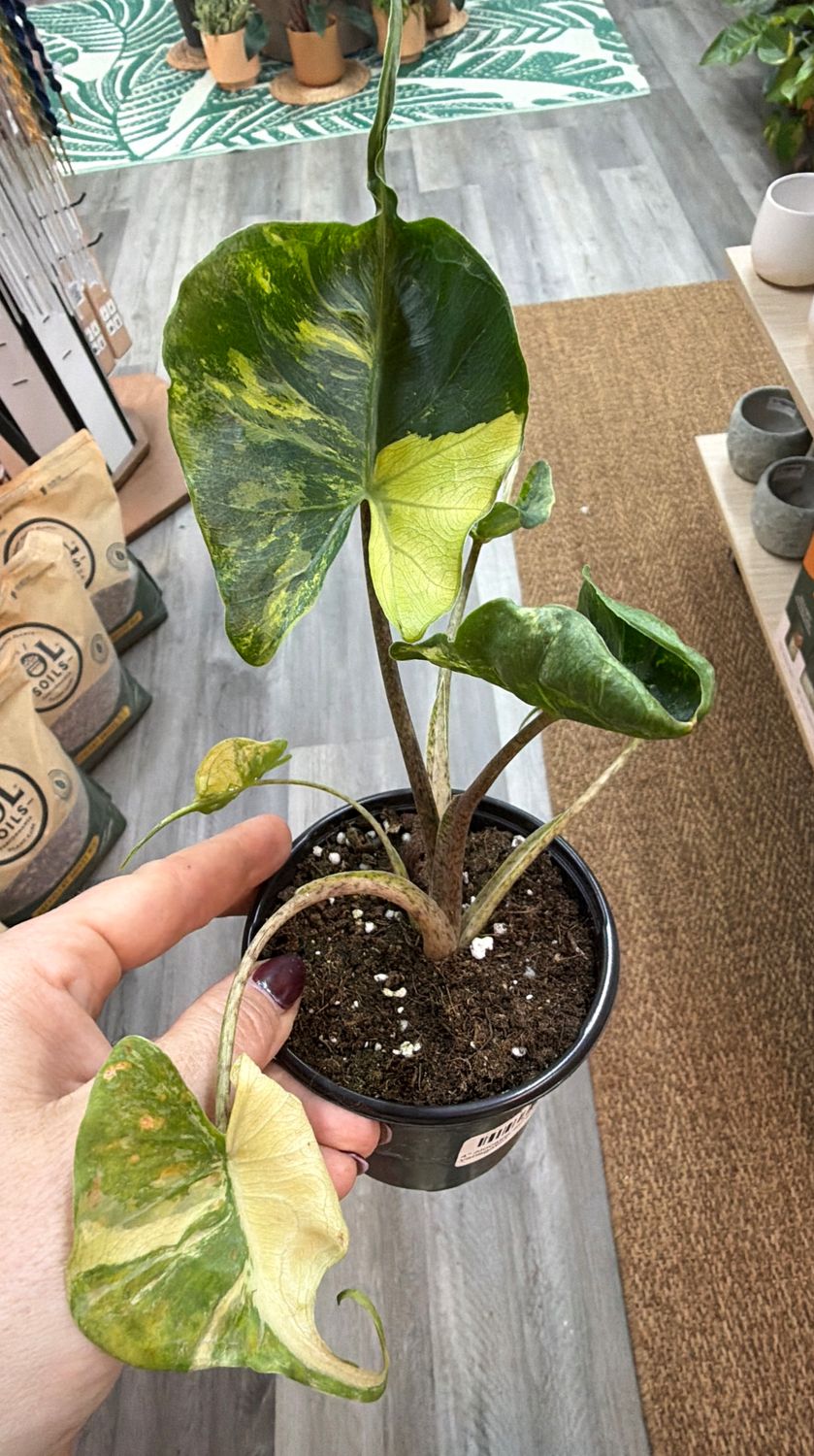
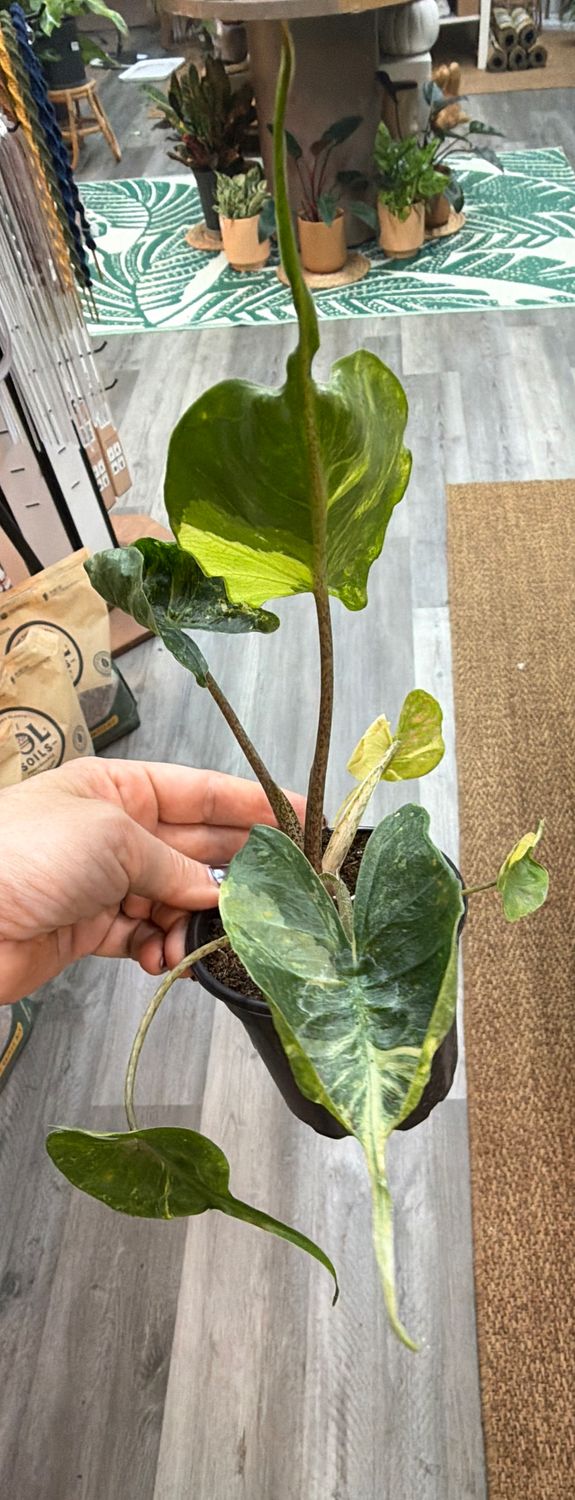
Alocasia 'Variegated Stingray' is a stunning tropical houseplant known for its unusual, stingray-shaped leaves and beautiful splashes of creamy white, pale yellow, and green variegation. Its broad, wing-like foliage features a distinctive elongated tip that resembles a stingray's tail, giving this remarkable plant its name. Each leaf develops its own unique pattern of variegation, creating an eye-catching display that makes it a standout addition to any rare plant collection. With its sculptural appearance and bold tropical character, 'Variegated Stingray' is a true statement plant for collectors who appreciate unusual foliage.
Botanically associated with Alocasia macrorrhizos 'Stingray', this variegated form belongs to the Araceae family. It is also commonly sold under the name Alocasia macrorrhiza 'Variegated Stingray'. Its distinctive leaf shape and irregular cream, yellow, and green coloration make it especially desirable among Alocasia enthusiasts. The amount and distribution of variegation can vary significantly between individual plants and new leaves.
Care
-
Light: Prefers bright, indirect light to maintain its beautiful variegation and encourage healthy growth. Because the lighter portions of the leaves contain less chlorophyll, adequate lighting is especially important. Gentle morning sunlight may be beneficial, but prolonged exposure to harsh direct sunlight can scorch the delicate variegated areas.
-
Watering: Allow the top 1–2 inches of soil to dry slightly between waterings. Water thoroughly, allowing excess water to drain away. Alocasia prefers evenly moist soil during active growth but is sensitive to consistently soggy conditions. Reduce watering during cooler months or periods of dormancy.
-
Soil: Use a chunky, well-draining aroid mix containing orchid bark, perlite, coco coir, and quality potting soil. The mixture should retain some moisture while providing excellent airflow around the roots.
-
Temperature & Humidity: Thrives in temperatures between 65–85°F and appreciates high humidity, ideally 60–80%. Protect from cold drafts, sudden temperature changes, and temperatures below 60°F. Consistent humidity helps encourage healthy leaf development and may reduce browning along the lighter portions of the foliage.
-
Growth Habit: An upright, rhizomatous tropical plant that produces large, distinctive stingray-shaped leaves on sturdy stems. As it matures, the plant can develop an impressive architectural form, potentially reaching several feet tall indoors under favorable conditions. New leaves emerge from the center of the plant, each displaying its own unique variegation pattern. Established plants may produce small corms that can develop into additional plants. Growth may slow during cooler months, and some leaf loss during dormancy is normal.
Pet Safety
Toxic to cats and dogs if ingested. Alocasia contains insoluble calcium oxalate crystals that can cause oral irritation, excessive drooling, vomiting, and difficulty swallowing. Keep this plant out of reach of curious pets.
** Picture is illustrative of plant you will received but not necessarily the exact plant
Powered by Lightspeed
Display prices in:USD