Upcoming : Halloween Terrarium Workshop Tuesday Oct. 13 @ 6 pm / Garden Stone Painting Night Tuesday Oct. 20 @ 6 pm / Dried Floral Book Workshop Thursday Oct 29 @ 6 pm / Moss Art Sunday Nov. 1 @ 2 pm
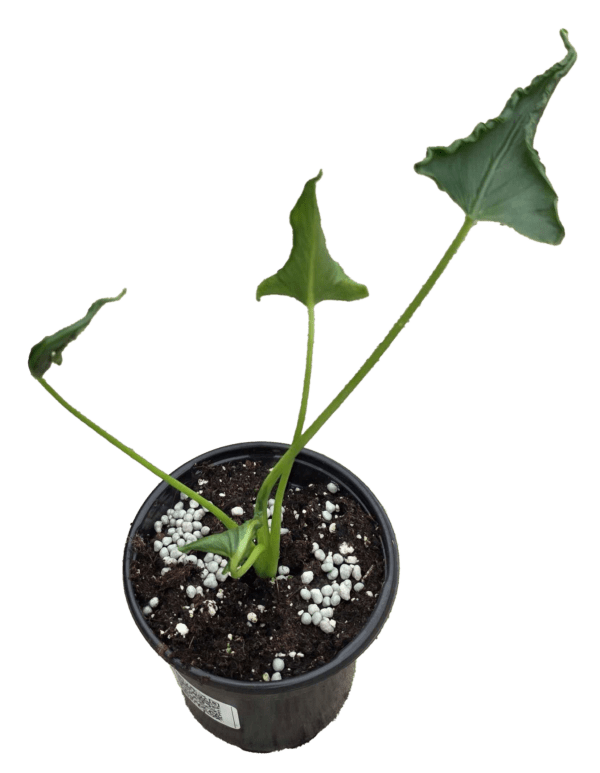
4" Alocasia Triangularis
Share
$28.00
Buy and save
Buy and earn $1.40 Loyalty for your next purchase
Loyalty is a discount program that lets you buy products and earn points to redeem on your next purchase. Your Loyalty balance is updated when you pay online or in-store. The Loyalty amount shown on this page can be recalculated at the checkout.
In stock: 4 available
4" Alocasia Triangularis
Share
Delivery information
Shipping: 4–8 days
Pickup: tomorrow, 11:00 AM–07:00 PM
Product details
Brand: Plant
Alocasia Triangularis
Alocasia Triangularis is an unusual tropical aroid known for its distinctive triangular to arrow-shaped green leaves, prominent veining, and upright growth habit. Its sharply defined foliage gives it a more geometric appearance than many other Alocasia varieties, making it an interesting choice for collectors, plant stands, cabinets, and bright indoor spaces.
The plant is commonly sold as Alocasia triangularis. As with a number of less-common Alocasia in cultivation, trade naming and identification can occasionally vary between growers. Plants sold under this name are primarily recognized for their characteristic triangular foliage and compact, upright appearance.
Care
Alocasia Triangularis does best in bright, indirect light. Plenty of filtered light encourages strong growth and helps maintain healthy, well-formed foliage. Avoid prolonged harsh direct sunlight, which can scorch the leaves.
Water thoroughly when the top inch or two of soil feels dry and allow excess water to drain. Alocasia prefer consistent moisture during active growth but should never remain soggy or waterlogged. Avoid allowing the soil to stay completely dry for extended periods.
Use a well-draining, chunky potting mix and a pot with drainage. A mixture containing houseplant soil, orchid bark, perlite or pumice, and coco coir works well and provides a good balance of moisture retention and airflow around the roots.
Alocasia Triangularis prefers warm temperatures and moderate to high humidity. Consistent warmth and additional humidity can be especially helpful while new leaves are developing. Good airflow is beneficial in higher-humidity environments. Keep the plant away from cold drafts, heating vents, and air conditioning.
This plant has an upright, clumping growth habit and produces new leaves from underground corms or rhizomatous growth. Under favorable conditions, established plants may produce offsets around the base. Growth can slow considerably during cooler or darker months, and some Alocasia may temporarily lose foliage if conditions become unfavorable.
Pet Safety
Alocasia Triangularis is toxic to cats and dogs if ingested. Like other Alocasia and members of the Araceae family, it contains insoluble calcium oxalate crystals that can cause irritation of the mouth and digestive tract. Keep it away from pets and small children.
Powered by Lightspeed
Display prices in:USD