Upcoming : Halloween Terrarium Workshop Tuesday Oct. 13 @ 6 pm / Garden Stone Painting Night Tuesday Oct. 20 @ 6 pm / Dried Floral Book Workshop Thursday Oct 29 @ 6 pm / Moss Art Sunday Nov. 1 @ 2 pm
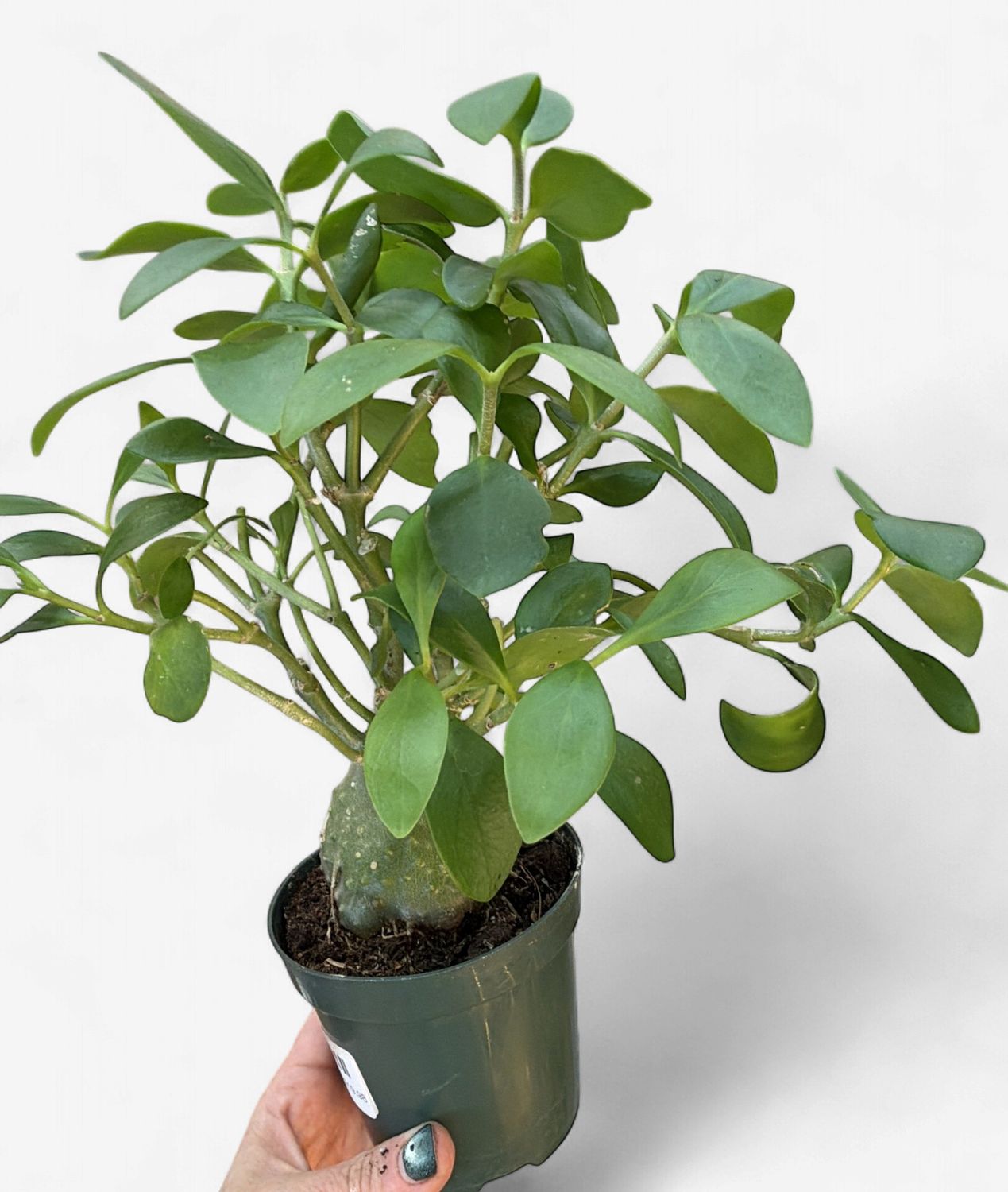
4" Ant Plant (Hydnophytum Papuanum)
Share
$19.98
Sold out
Sold out
4" Ant Plant (Hydnophytum Papuanum)
Share
Product details
Brand: Plant
Hydnophytum Papuanum
Hydnophytum Papuanum is an unusual tropical epiphyte prized for its swollen, sculptural base and glossy green foliage. The enlarged base, called a caudex, develops naturally as the plant matures and contains a network of internal chambers. Its combination of a chunky, almost bonsai-like base and leafy stems makes it an especially interesting choice for collectors looking for something outside the typical tropical houseplant.
The proper botanical name is Hydnophytum papuanum, and it belongs to the coffee family, Rubiaceae. It is commonly grouped with plants known as ant plants because wild Hydnophytum develop hollow chambers within their caudex that can provide shelter for ants. In return, the plant can benefit from nutrients supplied by its ant inhabitants. Ants are not required to successfully grow Hydnophytum Papuanum as a houseplant.
Care
Hydnophytum Papuanum does best in bright, indirect light. Gentle morning or late-afternoon sunlight can be beneficial, but prolonged harsh direct sun may scorch the foliage or overheat the caudex.
Water when the upper portion of the potting mix begins to dry, then water thoroughly and allow excess water to drain. Although its swollen base stores resources, Hydnophytum Papuanum is a tropical epiphyte and should not be treated like a desert cactus. Avoid allowing it to remain completely dry for extended periods, but never leave the roots sitting in soggy soil.
Use a very airy, fast-draining epiphytic potting mix in a container with excellent drainage. Orchid bark, perlite or pumice, coco chips, and a small amount of moisture-retentive material work well. Avoid dense, compact soil that stays wet around the roots and caudex.
Hydnophytum Papuanum prefers warm temperatures and moderate to high humidity. Good airflow is particularly important when humidity is high. Protect the plant from cold temperatures and drafts, as it is adapted to warm tropical conditions.
This plant develops its characteristic swollen caudex as it matures, with leafy stems emerging above it. Avoid burying the caudex deeply in the potting mix. Hydnophytum Papuanum naturally grows as an epiphyte, so keeping the root zone airy and allowing the enlarged base to remain exposed helps replicate its natural growth habit.
Pet Safety
There is limited reliable information regarding the toxicity of Hydnophytum papuanum to cats and dogs. Because its pet safety has not been well established, it is best treated as potentially unsafe for ingestion and kept out of reach of pets and small children.
Powered by Lightspeed
Display prices in:USD