Upcoming : Halloween Terrarium Workshop Tuesday Oct. 13 @ 6 pm / Garden Stone Painting Night Tuesday Oct. 20 @ 6 pm / Dried Floral Book Workshop Thursday Oct 29 @ 6 pm / Moss Art Sunday Nov. 1 @ 2 pm
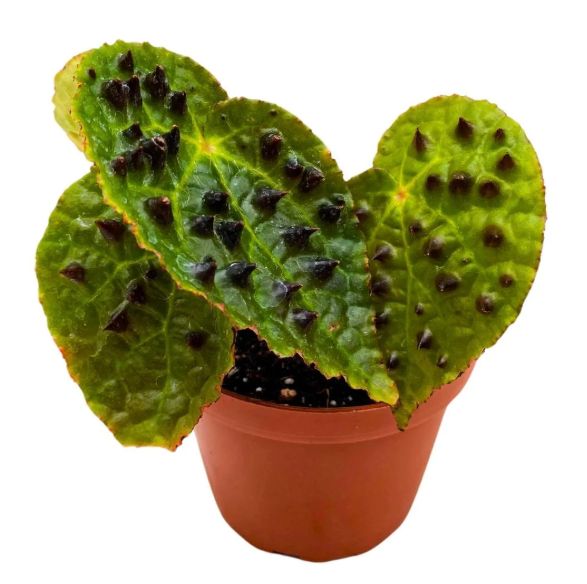
4" Begonia Ferox
Share
$40.00
Sold out
Sold out
4" Begonia Ferox
Share
Product details
Brand: Plant
Begonia ferox
Begonia ferox is a rare tropical houseplant prized for its dramatic, textured foliage. Its deep green leaves are covered in distinctive black, cone-shaped bullae (raised spikes) tipped with soft reddish hairs, giving the plant an almost prehistoric appearance. Native to the limestone forests of southern China, this extraordinary species is a favorite among Begonia collectors and makes a stunning statement in terrariums, plant cabinets, or humid indoor spaces. (Wikipedia)
The proper botanical name is Begonia ferox. It is a rhizomatous species discovered in Guangxi, China, and is known for developing its signature bullae as the leaves mature. Young leaves often emerge smooth before gradually producing their unique textured surface. (Wikipedia)
Care
Begonia ferox does best in bright, indirect light. It enjoys filtered light similar to the forest floor, where it naturally grows. Avoid direct sunlight, which can scorch the leaves, while too little light may slow growth and reduce the development of its characteristic texture. (American Begonia Society)
Water thoroughly when the top inch of soil begins to dry, but do not allow the plant to dry out completely. Begonia ferox prefers consistently lightly moist soil while being sensitive to soggy conditions. Water the soil directly rather than the leaves, as moisture sitting on the foliage can encourage rot. (American Begonia Society)
Use a light, airy, well-draining potting mix and a pot with drainage. A blend of houseplant soil, perlite, orchid bark, and coco coir works well, providing both moisture retention and excellent airflow around the roots.
Begonia ferox prefers warm temperatures and high humidity, ideally above 60%. It thrives in terrariums, greenhouse cabinets, or naturally humid rooms but can also grow well indoors with consistent humidity and good air circulation. Keep it away from cold drafts and sudden temperature changes. (American Begonia Society)
This species grows from a creeping rhizome and forms a compact clump over time. It is generally a slow to moderate grower, rewarding patience with increasingly dramatic foliage as each new leaf matures. Remove damaged or aging leaves as needed to keep the plant looking its best. (Wikipedia)
Pet Safety
Begonia ferox is toxic to cats and dogs if ingested. Like other Begonias, it contains soluble calcium oxalates, with the highest concentration found in the rhizomes and roots. Keep it out of reach of pets and small children. (aspca.org)
Powered by Lightspeed
Display prices in:USD