Upcoming : Halloween Terrarium Workshop Tuesday Oct. 13 @ 6 pm / Garden Stone Painting Night Tuesday Oct. 20 @ 6 pm / Dried Floral Book Workshop Thursday Oct 29 @ 6 pm / Moss Art Sunday Nov. 1 @ 2 pm
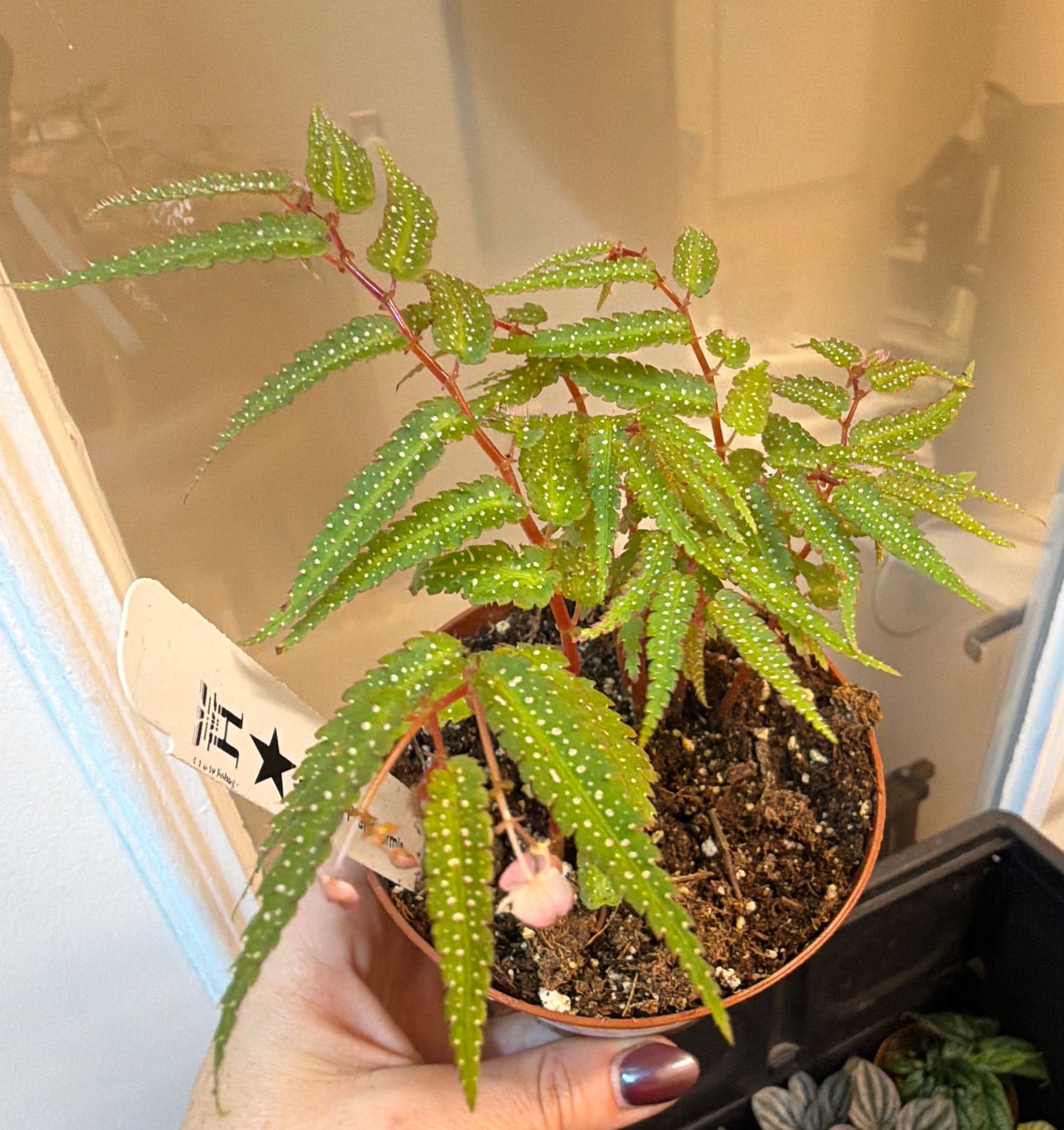
4" Begonia Pteridiformis
Share
$24.00
Buy and save
Buy and earn $1.20 Loyalty for your next purchase
Loyalty is a discount program that lets you buy products and earn points to redeem on your next purchase. Your Loyalty balance is updated when you pay online or in-store. The Loyalty amount shown on this page can be recalculated at the checkout.
In stock: 4 available
4" Begonia Pteridiformis
Share
Delivery information
Shipping: 6–10 days
Pickup: tomorrow, 11:00 AM–07:00 PM
Product details
Brand: Plant
Begonia Pteridiformis
Begonia Pteridiformis is a rare and unusual tropical Begonia prized for its delicate, fern-like foliage, slender reddish stems, and distinctive leaf arrangement. Unlike the broad, rounded leaves commonly associated with Begonias, this species produces numerous narrow, lance-shaped leaves arranged along its stems, creating the appearance of a miniature fern. Its foliage can range from fresh green to deeper green with reddish or bronze tones, making it a fascinating addition to terrariums and specialty plant collections.
The proper botanical name is Begonia pteridiformis, a naturally occurring species native to Thailand and Vietnam. Originally described from southern Thailand, it grows in shaded, humid environments, often along moist limestone rocks and crevices. The name “pteridiformis” refers to its fern-like appearance. Although it resembles a fern, it is a true Begonia belonging to the Begoniaceae family. Its unusual growth habit and relatively small size make it especially desirable among collectors of rare botanical species.
Care
Begonia Pteridiformis does best in medium to bright, indirect light. In its natural habitat, it grows in heavily shaded environments, so it appreciates gentle, filtered lighting rather than direct sunlight. Avoid harsh direct sun, which can quickly scorch its delicate foliage.
Keep the potting mix lightly and consistently moist, allowing only the very top layer to begin drying between waterings. This species is adapted to humid environments and does not appreciate prolonged periods of dryness during active growth. However, the roots and tuber should never remain waterlogged, as excessive moisture without adequate airflow can cause rot.
Use a light, airy, moisture-retentive, and well-draining potting mix. A combination of fine orchid bark, perlite or pumice, coco coir, and a small amount of quality houseplant soil works well. Because this species naturally grows around limestone, a small amount of horticultural limestone or another suitable calcium-rich amendment may be beneficial. Avoid dense soil that remains saturated.
Begonia Pteridiformis prefers warm temperatures and high humidity, ideally around 70–80% humidity. It is particularly well suited for terrariums, enclosed plant cabinets, and greenhouse environments where humidity can be maintained consistently. Good airflow remains important to prevent fungal problems and stem rot. Protect it from cold drafts and sudden temperature changes.
This species develops a small, delicate, spreading to slightly climbing growth habit, with numerous narrow leaves arranged along slender stems. Its distinctive foliage creates the appearance of a miniature fern, making it especially attractive in naturalistic terrarium displays. The stems can be somewhat fragile, so handle the plant carefully when repotting or repositioning it.
Begonia Pteridiformis grows from a small underground tuber and may slow its growth or enter a resting period under unfavorable conditions. If the foliage declines, check the tuber's condition before assuming the plant has died, and reduce watering if it becomes dormant. Under favorable conditions, mature plants may also produce delicate white to pale pink flowers.
Pet Safety
Begonia Pteridiformis should be considered toxic to cats and dogs if ingested. Like other Begonias, it may contain soluble calcium oxalates, with higher concentrations generally found in underground plant structures. Ingestion can cause irritation of the mouth and digestive tract, drooling, and vomiting. Keep it out of reach of pets and small children.
Powered by Lightspeed
Display prices in:USD