Upcoming : Halloween Terrarium Workshop Tuesday Oct. 13 @ 6 pm / Garden Stone Painting Night Tuesday Oct. 20 @ 6 pm / Dried Floral Book Workshop Thursday Oct 29 @ 6 pm / Moss Art Sunday Nov. 1 @ 2 pm
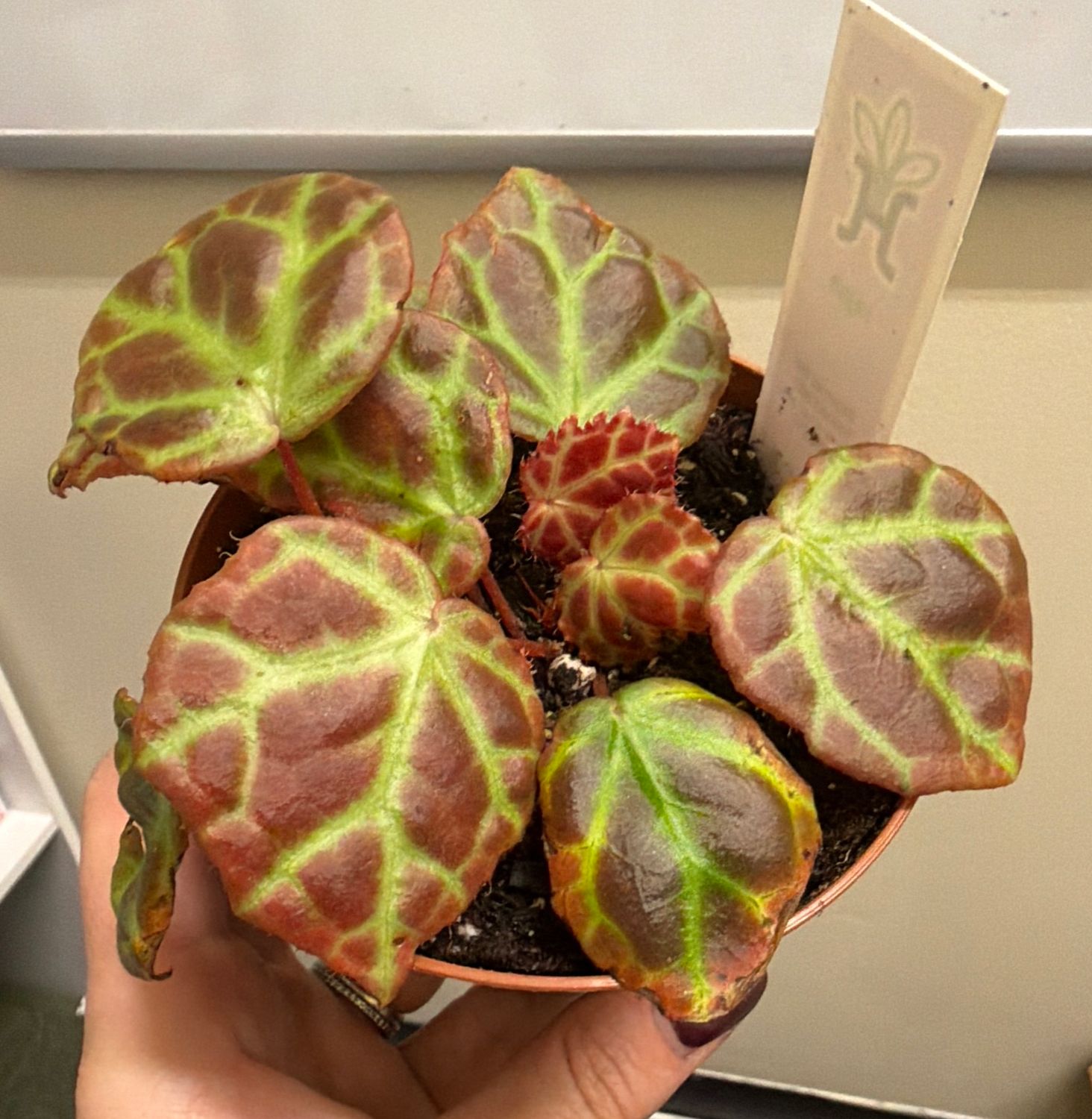
4" Begonia Rajah
Share
$25.00
Buy and save
Buy and earn $1.25 Loyalty for your next purchase
Loyalty is a discount program that lets you buy products and earn points to redeem on your next purchase. Your Loyalty balance is updated when you pay online or in-store. The Loyalty amount shown on this page can be recalculated at the checkout.
In stock: 2 available
4" Begonia Rajah
Share
Delivery information
Shipping: 6–10 days
Pickup: tomorrow, 11:00 AM–07:00 PM
Product details
Brand: Plant
Begonia Rajah
Begonia Rajah is a distinctive tropical Begonia prized for its deeply textured leaves, rich reddish-brown coloration, and striking dark veining. Its rounded to slightly heart-shaped foliage features a heavily quilted surface, with raised areas between the veins that create a dramatic, almost sculpted appearance. The combination of warm bronze, chocolate, and burgundy tones makes this Begonia a beautiful addition to terrariums, plant cabinets, and specialty foliage collections.
The proper botanical name is Begonia rajah, a naturally occurring species native to Peninsular Malaysia. Unlike cultivated Rex Begonia hybrids, this is a true botanical species known for its unusual bullate, or blistered, leaf texture. It naturally grows in humid tropical forest environments, often near shaded, rocky areas. Its compact growth habit and distinctive foliage make it especially popular among collectors of rare and unusual Begonias.
Care
Begonia Rajah does best in medium to bright, indirect light. Gentle, filtered lighting helps maintain its rich foliage coloration while protecting the delicate leaves from damage. Avoid direct sunlight, which can scorch the foliage and cause the leaves to dry out.
Keep the potting mix lightly and consistently moist, allowing only the uppermost layer to begin drying between waterings. Begonia Rajah is sensitive to prolonged dryness and may wilt or develop crispy leaf edges if allowed to dry out completely. However, the roots should never remain waterlogged, as stagnant moisture can cause rot.
Use a light, airy, moisture-retentive, and well-draining potting mix. A combination of fine orchid bark, perlite or pumice, coco coir, and a small amount of quality houseplant soil works well. Its relatively fine root system benefits from consistent moisture combined with excellent airflow.
Begonia Rajah prefers warm temperatures and high humidity, ideally around 70–85% humidity. It is particularly well suited for terrariums, enclosed plant cabinets, and greenhouse environments where humidity can be maintained consistently. Good airflow is important to help prevent fungal problems and maintain healthy foliage. Avoid cold drafts and sudden changes in temperature or humidity.
This species develops a compact, low-growing, rhizomatous growth habit, with its richly textured leaves emerging from creeping stems near the soil surface. Its relatively small size makes it ideal for terrarium displays and decorative containers where its intricate foliage can be appreciated up close.
Under favorable conditions, mature plants may produce small clusters of delicate pinkish flowers, although the distinctive foliage remains the primary attraction. Remove damaged or aging leaves as needed to maintain good airflow. Established plants can be propagated through rhizome division or suitable leaf cuttings.
Pet Safety
Begonia Rajah should be considered toxic to cats and dogs if ingested. Like other Begonias, it may contain soluble calcium oxalates, with higher concentrations generally found in underground plant structures. Ingestion can cause irritation of the mouth and digestive tract, drooling, and vomiting. Keep it out of reach of pets and small children.
Powered by Lightspeed
Display prices in:USD