Upcoming : Halloween Terrarium Workshop Tuesday Oct. 13 @ 6 pm / Garden Stone Painting Night Tuesday Oct. 20 @ 6 pm / Dried Floral Book Workshop Thursday Oct 29 @ 6 pm / Moss Art Sunday Nov. 1 @ 2 pm
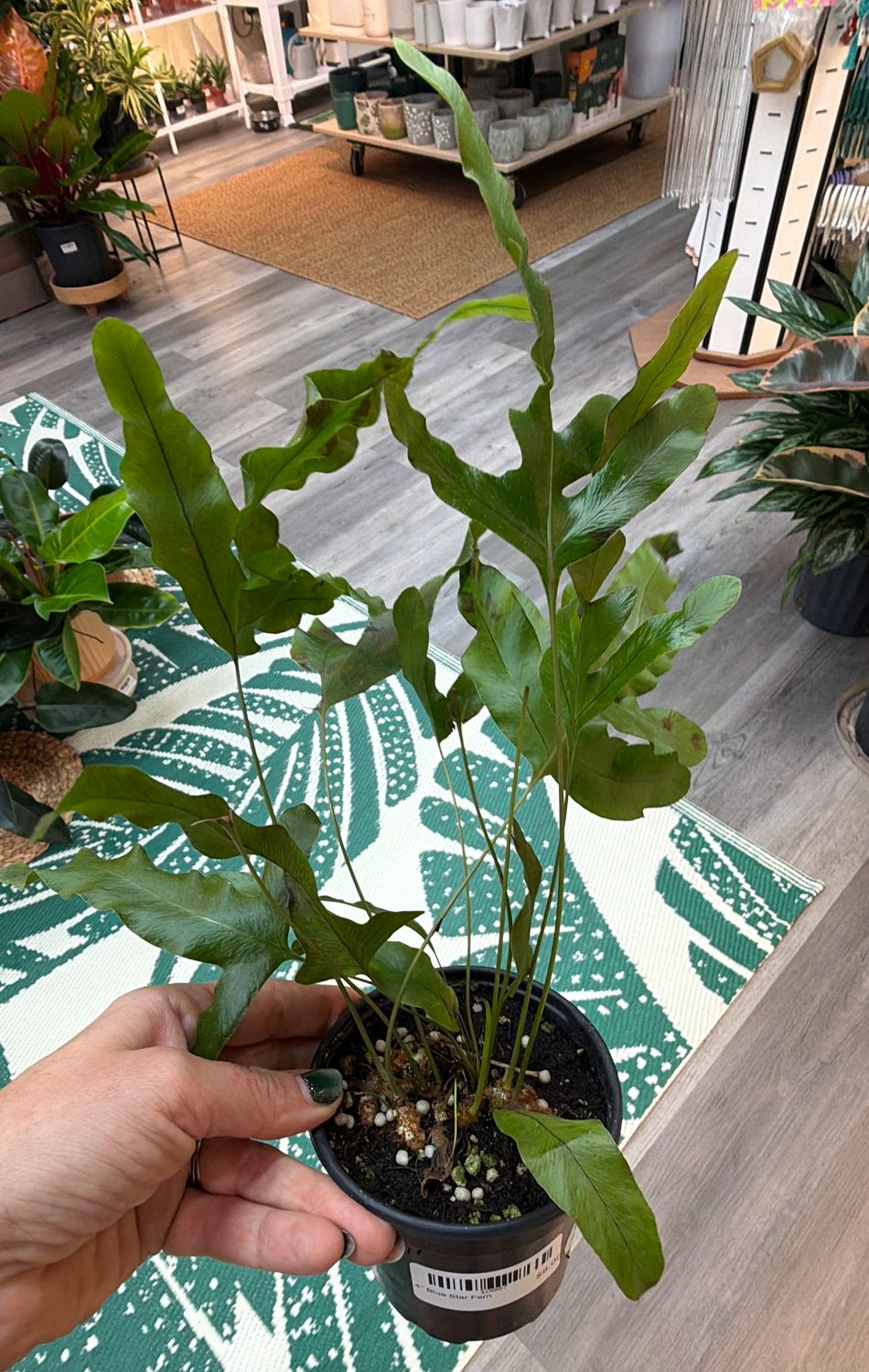
4" Blue Star Fern
Share
$8.00
Buy and save
Buy and earn $0.40 Loyalty for your next purchase
Loyalty is a discount program that lets you buy products and earn points to redeem on your next purchase. Your Loyalty balance is updated when you pay online or in-store. The Loyalty amount shown on this page can be recalculated at the checkout.
In stock: 2 available
4" Blue Star Fern
Share
Delivery information
Shipping: 4–8 days
Pickup: tomorrow, 11:00 AM–07:00 PM
Product details
Brand: Plant
Blue Star Fern
Blue Star Fern is a distinctive tropical fern known for its elongated, wavy fronds with beautiful blue-green to silvery-green coloring. Unlike the delicate, finely divided foliage of many traditional ferns, its fronds are thicker and develop irregular lobes as they mature. Its unusual color, relaxed growth habit, and greater tolerance for typical indoor conditions make it an excellent choice for shelves, hanging baskets, plant stands, bathrooms, and other moderately bright spaces.
The proper botanical name is Phlebodium aureum, with Blue Star Fern commonly sold as Phlebodium aureum ‘Blue Star’. The species is native to tropical and subtropical regions of the Americas and naturally grows as an epiphyte, often growing on trees rather than directly in the ground. It develops fuzzy, golden-brown creeping rhizomes that travel across the surface of its growing medium.
Care
Blue Star Fern does best in medium to bright, indirect light. It can tolerate somewhat lower light than many tropical houseplants, but growth may become slower. Avoid prolonged harsh direct sunlight, which can scorch or fade its blue-green foliage.
Water when the top inch of the potting mix begins to feel dry, keeping the plant lightly and consistently moist without allowing it to remain soggy. Blue Star Fern is somewhat more forgiving of occasional drying than many other ferns, but it should not be allowed to dry completely for extended periods.
Use a light, airy and well-draining potting mix and a pot with drainage. A mixture containing coco coir or quality houseplant soil, orchid bark, and perlite works well. Because Blue Star Fern naturally grows as an epiphyte, its roots and rhizomes appreciate plenty of airflow.
Blue Star Fern prefers warm temperatures and moderate to high humidity. It adapts better to average household humidity than many ferns but appreciates additional humidity in particularly dry environments. Keep it away from heating vents, air conditioning, and cold drafts.
This fern has a creeping, spreading growth habit. Its fuzzy golden rhizomes should remain at or above the surface of the potting mix rather than being buried, as planting them too deeply can encourage rot. Older or damaged fronds can be removed at the base, and new fronds will emerge from the spreading rhizomes.
Pet Safety
Blue Star Fern is generally considered pet-friendly and non-toxic to cats and dogs. As with any houseplant, eating large amounts of foliage may still cause mild digestive upset, so it is best to discourage pets from chewing on the plant.
Powered by Lightspeed
Display prices in:USD