Upcoming Events: Moss Art Thursday Sept. 24th @ 6pm / Plant Stake Stained Glass Workshop Sunday Sept. 27th @ 2pm / Moss Art Thursday Oct. 1st @ 6 pm / Intro to Stained Glass October 3rd @ 2 pm
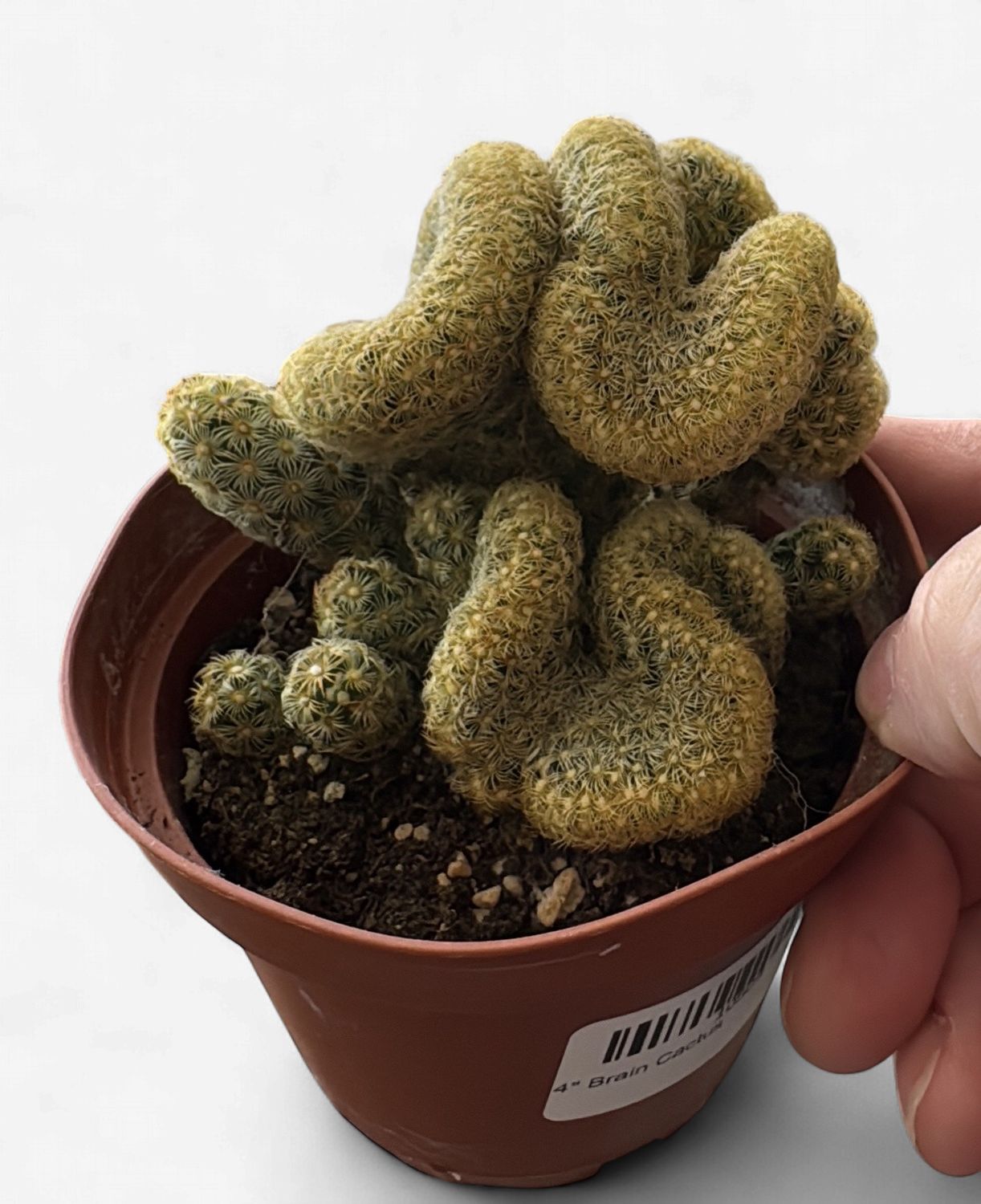
4" Brain Cactus
$15.00
Buy and save
Buy and earn $0.75 Loyalty for your next purchase
Loyalty is a discount program that lets you buy products and earn points to redeem on your next purchase. Your Loyalty balance is updated when you pay online or in-store. The Loyalty amount shown on this page can be recalculated at the checkout.
In stock: 9 available
4" Brain Cactus
Product Details
Brand: Plant
Brain Cactus
Brain Cactus is an unusual sculptural cactus prized for its dense folds, twists, and rippled growth that closely resemble the surface of a human brain. Instead of developing the straight, upright stems typical of its species, this crested form grows in tightly packed waves and convolutions. Its blue-green to gray-green surface is lined with small spines, creating a fascinating living sculpture that becomes increasingly intricate as it matures.
The plant commonly called Brain Cactus is Mammillaria elongata ‘Cristata’, the crested form of Mammillaria elongata. The term “cristata” refers to crested growth, which occurs when the plant’s growing point develops along an elongated line rather than from a single point. This unusual growth pattern creates the characteristic brain-like folds and is maintained through propagation.
Care
Brain Cactus does best in very bright light with some direct sunlight. Indoors, place it near a bright, sunny window. Several hours of gentle direct sun can encourage compact, healthy growth, but plants should be gradually acclimated to stronger sunlight to prevent scorching.
Allow the potting mix to dry completely between waterings, then water thoroughly and allow all excess water to drain. Crested cacti can be particularly vulnerable to rot when moisture becomes trapped around their dense growth, so avoid frequent watering and never allow the plant to remain in soggy soil. Water less during cooler months and periods of slower growth.
Use a very well-draining, gritty cactus or succulent potting mix in a container with drainage. A mix containing plenty of pumice, perlite, lava rock, coarse sand, or other mineral amendments works well and helps prevent excess moisture from remaining around the roots.
Brain Cactus prefers warm temperatures, low humidity, and good airflow. Average indoor humidity is generally sufficient. Protect it from prolonged cold, especially when the potting mix is damp.
This cactus has a slow-growing, compact crested growth habit. As it matures, the folds can become increasingly dense and elaborate. Occasionally, a crested plant may produce sections of normal cylindrical growth. These can be left in place for an unusual mixed appearance or carefully removed if maintaining the tightly crested form is preferred.
Pet Safety
Brain Cactus is not generally considered highly toxic to cats or dogs, but its numerous spines can cause painful injuries to the mouth, paws, eyes, or skin. Chewing or swallowing plant material may also cause gastrointestinal irritation. Keep it positioned where pets and small children cannot easily handle or chew the plant.
Powered by Lightspeed
Display prices in:USD