Upcoming : Halloween Terrarium Workshop Tuesday Oct. 13 @ 6 pm / Garden Stone Painting Night Tuesday Oct. 20 @ 6 pm / Dried Floral Book Workshop Thursday Oct 29 @ 6 pm / Moss Art Sunday Nov. 1 @ 2 pm
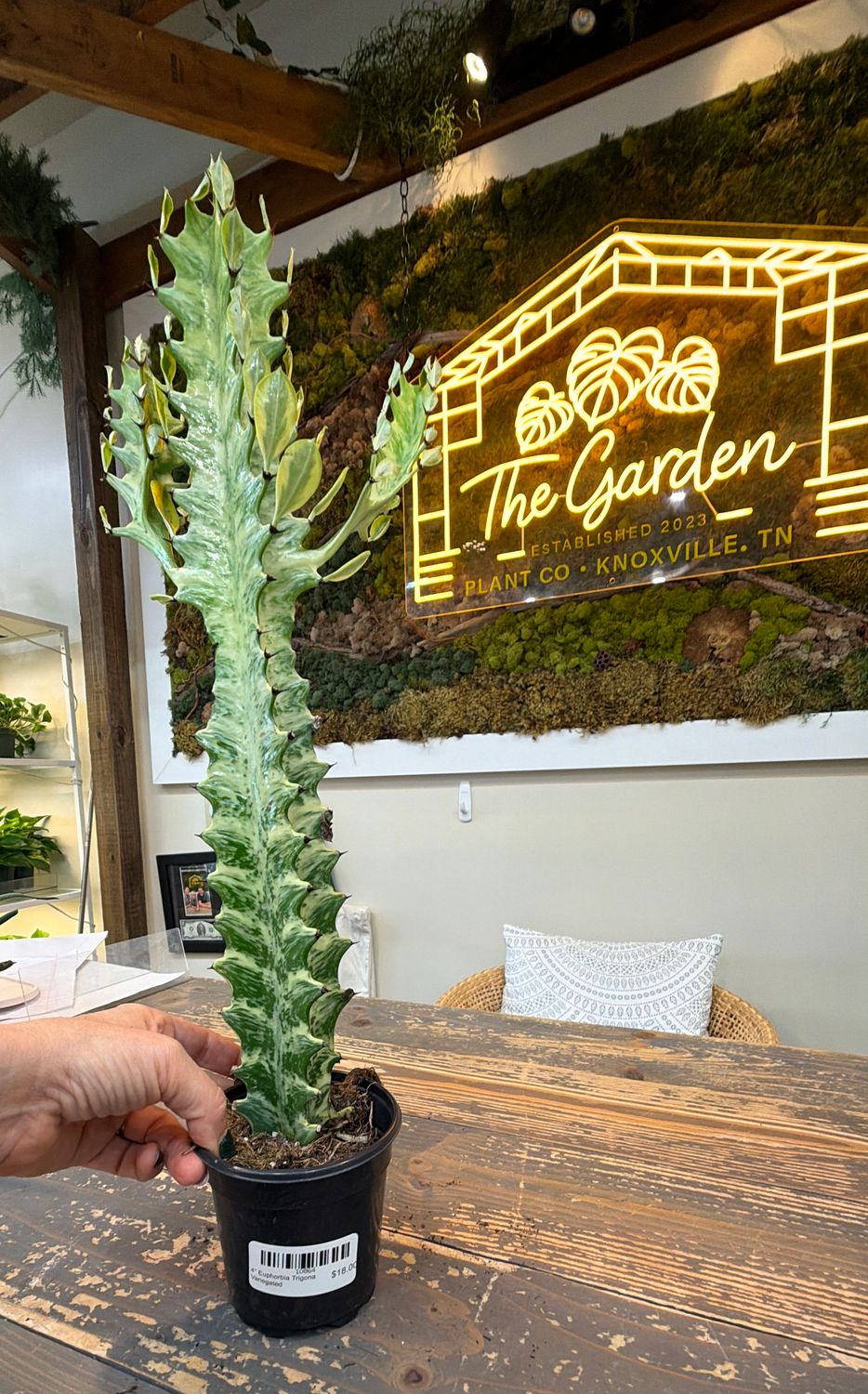
4" Euphorbia Trigona Variegated
Share
$18.00
Sold out
Sold out
4" Euphorbia Trigona Variegated
Share
Product details
Brand: Plant
Euphorbia Trigona Variegated
Euphorbia Trigona Variegated is a striking succulent known for its upright, branching stems patterned with creamy white, pale yellow, and green variegation. Small leaves emerge along the ridged edges of the stems during active growth, adding to its unusual architectural appearance. As the plant matures, it can develop into a tall, branching specimen that resembles a cactus, making it an impressive choice for sunny windows, plant stands, and bright indoor spaces.
The proper botanical name is Euphorbia trigona, with the variegated form commonly sold as Euphorbia trigona ‘Variegata’, Variegated African Milk Tree, or Variegated Cathedral Cactus. Despite its cactus-like appearance and common names, it is not a true cactus. It belongs to the Euphorbia family and produces the characteristic milky latex sap associated with many Euphorbia species.
Care
Euphorbia Trigona Variegated does best in very bright light with some direct sun. Variegated plants benefit from strong light to maintain their cream and yellow coloration and encourage sturdy, compact growth. A bright south- or west-facing window can work well indoors. Gradually acclimate the plant to intense direct sunlight to reduce the risk of scorching the lighter variegated areas.
Water thoroughly and allow the soil to dry completely or almost completely before watering again. Its thick stems store water, making it highly drought tolerant. Reduce watering significantly during cooler months and periods of slower growth. Consistently wet soil can quickly lead to root or stem rot.
Use a fast-draining cactus or succulent mix and a pot with excellent drainage. Adding pumice, perlite, lava rock, or other gritty materials can improve drainage and provide additional airflow around the roots.
Euphorbia Trigona Variegated prefers warm temperatures and low to moderate humidity. It adapts well to normal household conditions and does not require additional humidity. Protect it from freezing temperatures and prolonged cold drafts.
This plant has an upright, branching growth habit and can become several feet tall indoors with time. Mature plants can become top-heavy, so a sturdy pot may be necessary. Pruning can control its height and encourage branching, but extra care should be taken because damaged or cut stems release irritating milky sap.
Pet Safety
Euphorbia Trigona Variegated is toxic to cats and dogs. Its milky latex sap can cause significant irritation to the mouth, skin, and eyes, and ingestion may cause drooling, vomiting, and gastrointestinal upset. The sap can also irritate human skin and eyes, so wear gloves when pruning or handling damaged stems and keep the plant away from pets and small children.
Powered by Lightspeed
Display prices in:USD