Upcoming Events: Moss Art Thursday Sept. 24th @ 6pm / Plant Stake Stained Glass Workshop Sunday Sept. 27th @ 2pm / Moss Art Thursday Oct. 1st @ 6 pm / Intro to Stained Glass October 3rd @ 2 pm
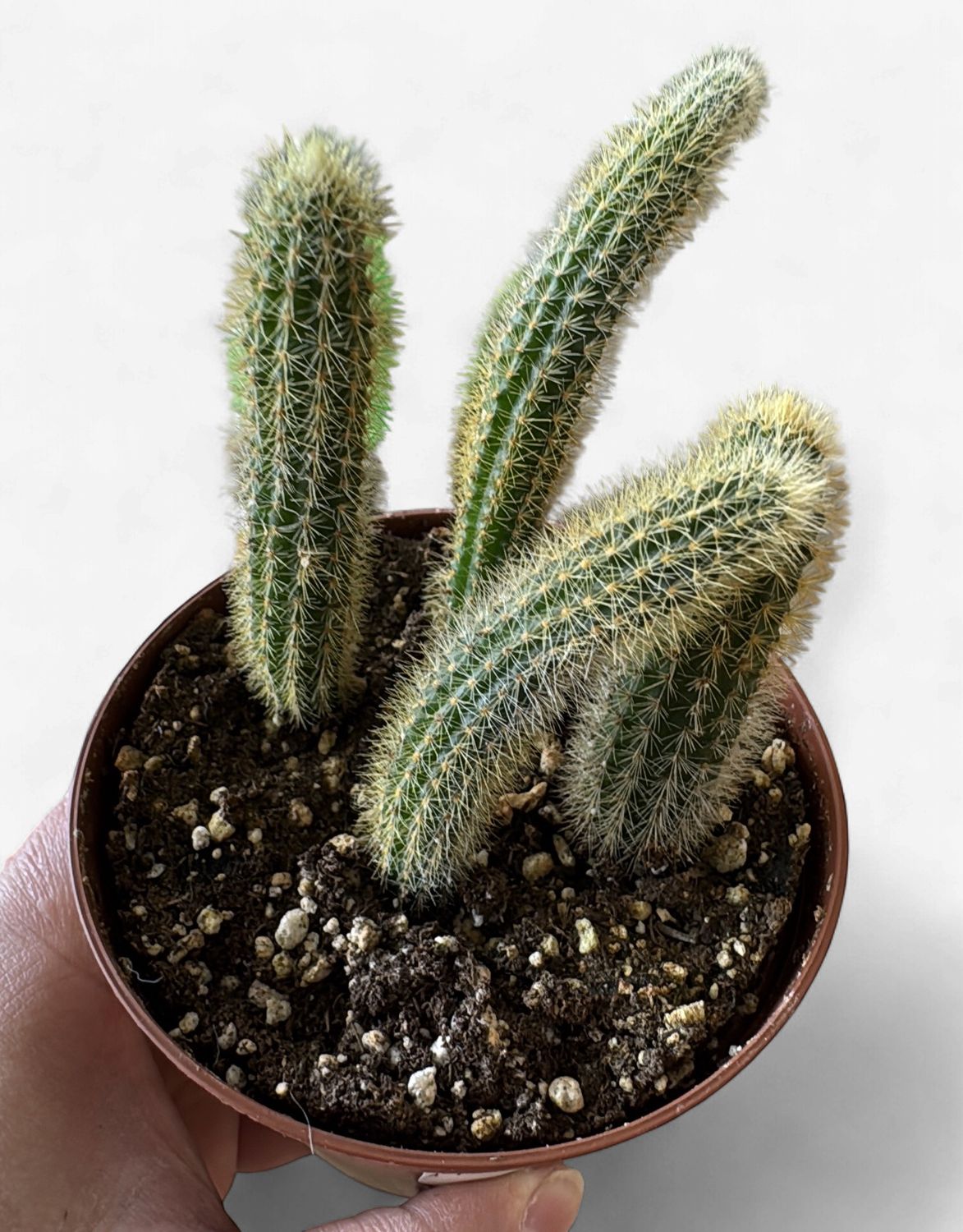
4" Foxtail White Cactus
$20.00
Buy and save
Buy and earn $1.00 Loyalty for your next purchase
Loyalty is a discount program that lets you buy products and earn points to redeem on your next purchase. Your Loyalty balance is updated when you pay online or in-store. The Loyalty amount shown on this page can be recalculated at the checkout.
In stock: 12 available
4" Foxtail White Cactus
Product Details
Brand: Plant
White Foxtail Cactus
White Foxtail Cactus is an eye-catching cactus prized for its slender cylindrical stems densely covered in soft-looking white hairs and fine spines. As the stems lengthen, they naturally arch and trail over the sides of the container, creating a fuzzy, cascading appearance reminiscent of an animal’s tail. Mature specimens are especially attractive in hanging baskets or elevated planters where their unusual stems can be fully displayed.
The proper botanical name is Cleistocactus winteri subsp. colademononis, although it is also commonly listed as Cleistocactus colademononis. It is widely known as Monkey Tail Cactus and is native to Bolivia. “White Foxtail Cactus” is a horticultural or trade name sometimes used for its long, densely haired stems.
Care
White Foxtail Cactus does best in very bright light with several hours of direct or gently filtered sunlight. Strong light encourages dense, healthy growth and better flowering. Indoors, a bright south- or west-facing window can work well, although plants should be gradually acclimated to stronger direct sunlight.
Allow the potting mix to dry thoroughly between waterings, then water deeply and allow all excess water to drain. During active spring and summer growth, it may appreciate somewhat more regular watering than a desert cactus, but the roots should never remain wet or waterlogged. Reduce watering significantly during cooler periods of slower growth.
Use a very well-draining cactus or succulent potting mix in a container with excellent drainage. Adding pumice, perlite, lava rock, coarse sand, or other mineral amendments can help prevent excess moisture from remaining around the roots.
White Foxtail Cactus prefers warm temperatures and low to moderate humidity with good airflow. Protect it from prolonged cold, particularly when the potting mix is wet.
This cactus develops a trailing and cascading growth habit, with individual stems becoming increasingly long as the plant matures. It is particularly well suited to hanging baskets. Established plants grown in strong light can produce striking bright red to orange-red tubular flowers along the stems.
Although the white hairs appear soft, fine spines are hidden within the covering, so handle the plant carefully and avoid grabbing the stems with bare hands.
Pet Safety
White Foxtail Cactus is not generally considered chemically toxic to cats or dogs, but its spines can cause painful injuries to the mouth, paws, skin, or eyes. Eating plant material may also cause gastrointestinal upset. Keep it where curious pets and small children cannot easily reach or brush against the trailing stems.
Powered by Lightspeed
Display prices in:USD