Upcoming Events: Moss Art Thursday Sept. 24th @ 6pm / Plant Stake Stained Glass Workshop Sunday Sept. 27th @ 2pm / Moss Art Thursday Oct. 1st @ 6 pm / Intro to Stained Glass October 3rd @ 2 pm
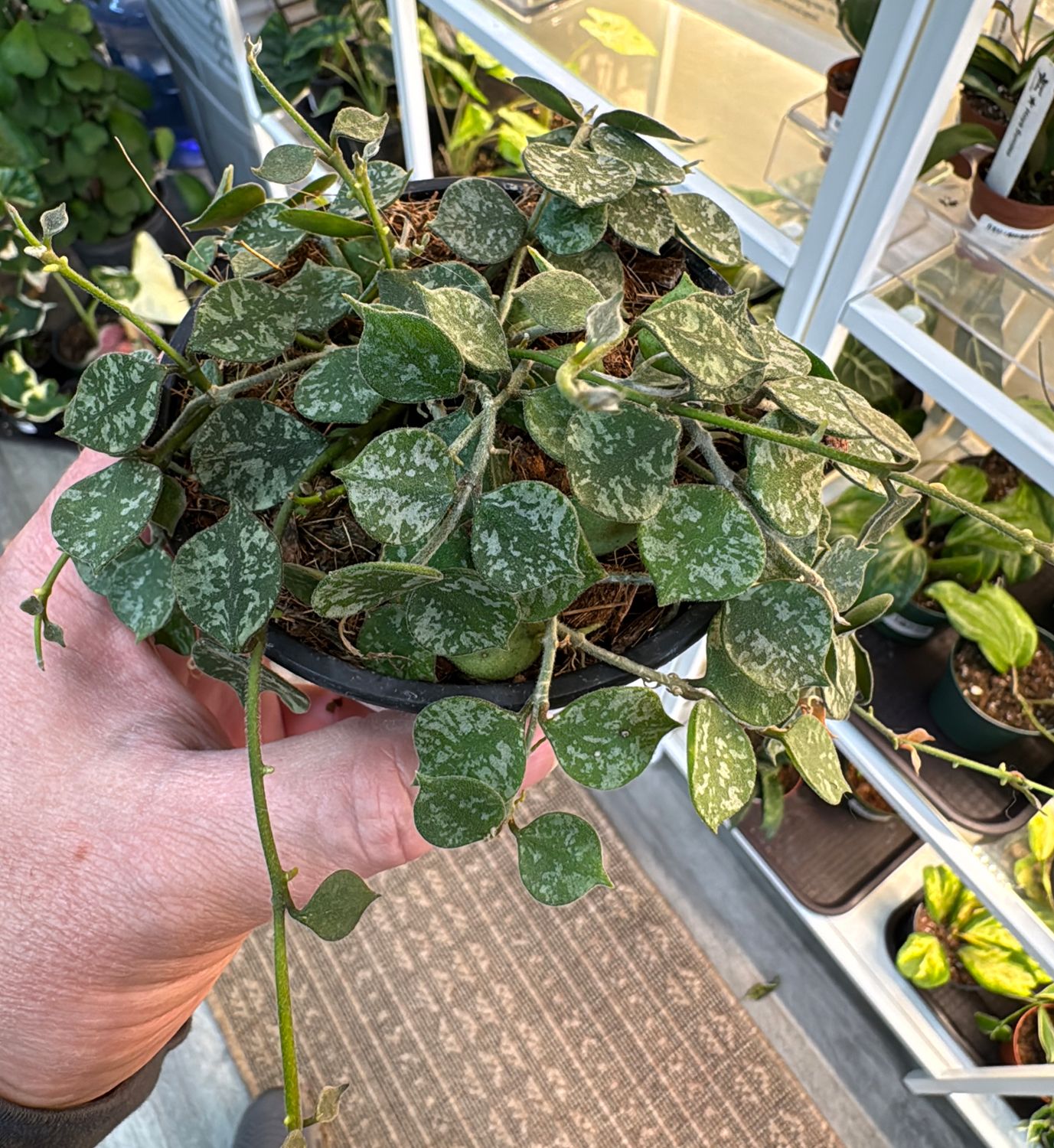
4" Hoya Curtisii
Product Details
Brand: Plant
Hoya Curtisii
Hoya Curtisii is a charming miniature Hoya prized for its tiny, heart-shaped leaves patterned with silvery speckles and darker green markings. Its small foliage grows densely along thin trailing stems, creating a delicate cascading appearance that works especially well in hanging baskets, on shelves, or spilling over the edge of a decorative planter. Despite its petite leaves, it can eventually form a dense mat of foliage and produce clusters of distinctive Hoya flowers.
The proper botanical name is Hoya curtisii. It is a naturally occurring Hoya species native to parts of Southeast Asia, including the Philippines, Malaysia, and Thailand. Its naturally compact foliage and creeping growth habit make it noticeably different from many of the larger-leaved Hoyas commonly grown as houseplants.
Care
Hoya Curtisii does best in bright, indirect light and can benefit from some gentle morning or late-afternoon direct sunlight. Good light encourages dense growth and improves the likelihood of flowering. Avoid prolonged intense direct sunlight, which can scorch the small leaves.
Allow the upper portion of the potting mix to dry between waterings, then water thoroughly and allow excess water to drain. Because Hoya Curtisii has smaller, thinner leaves than many thick-leaved Hoyas, it may appreciate slightly more consistent moisture and should not be left completely dry for extended periods. Avoid keeping the roots constantly wet or waterlogged.
Use a chunky, airy and well-draining potting mix in a container with drainage. A mixture containing orchid bark, perlite or pumice, and coco coir or quality houseplant soil works well. Its relatively fine root system benefits from a mix that provides some moisture retention without becoming dense or soggy.
Hoya Curtisii prefers warm temperatures and moderate to high humidity. Additional humidity can encourage lush growth, but good airflow is important, particularly when the plant is grown in consistently humid conditions.
This Hoya naturally has a creeping and trailing growth habit. Its stems can cascade from a hanging container, spread across the surface of a pot, or climb when provided with support. Mature plants can produce clusters of small, fuzzy, star-shaped flowers. Avoid removing the flower peduncles after blooming, as Hoyas can flower repeatedly from the same structures.
Pet Safety
Hoya Curtisii is generally considered pet-friendly and non-toxic to cats and dogs. As with any houseplant, consuming a large amount of plant material may still cause mild digestive upset, so discouraging pets from chewing on the foliage is recommended.
Powered by Lightspeed
Display prices in:USD