Upcoming Events: Moss Art Thursday Sept. 24th @ 6pm / Plant Stake Stained Glass Workshop Sunday Sept. 27th @ 2pm / Moss Art Thursday Oct. 1st @ 6 pm / Intro to Stained Glass October 3rd @ 2 pm
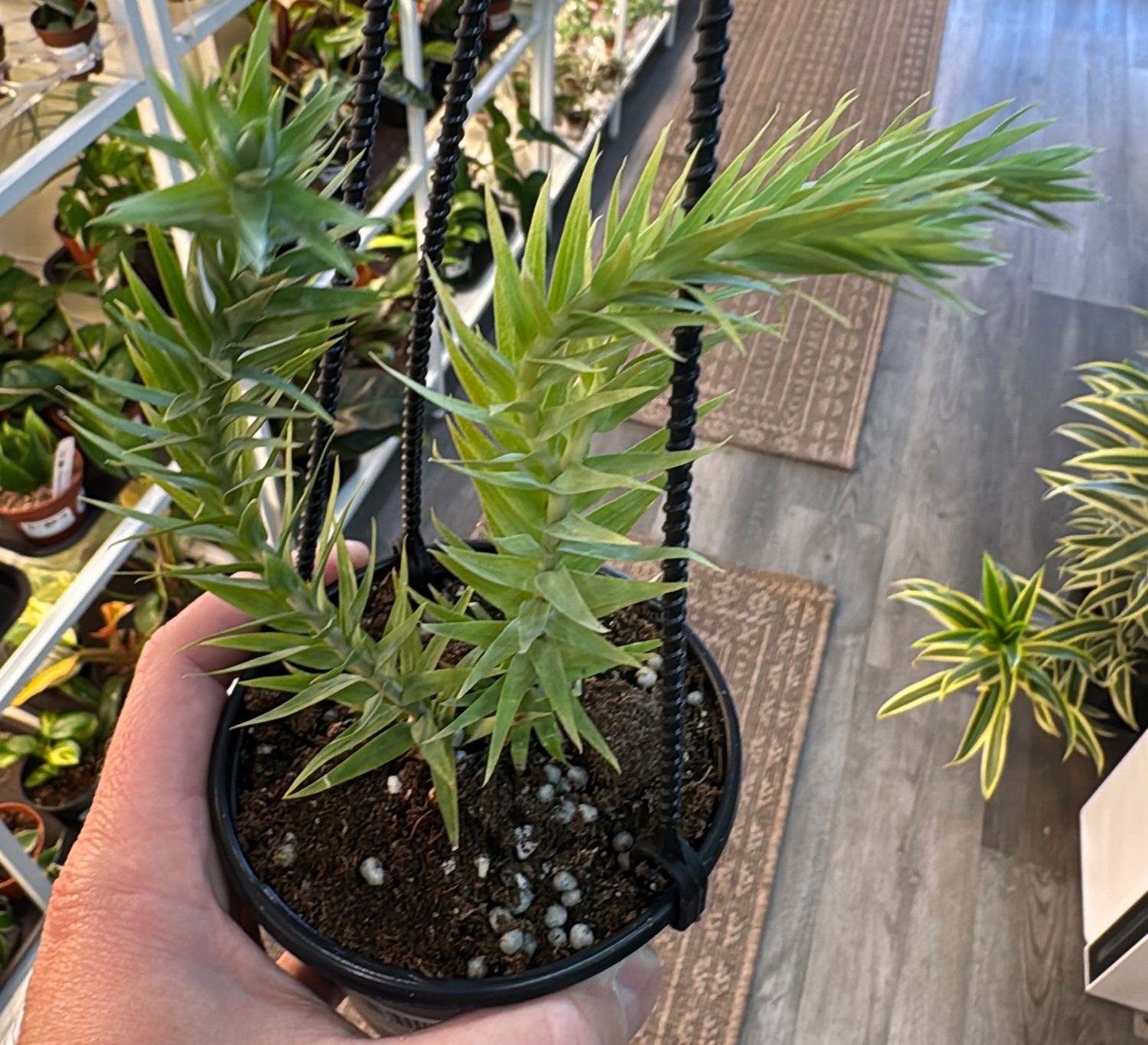
4" Huperzia Goebelii Hanging Basket
$50.00
Buy and save
Buy and earn $2.50 Loyalty for your next purchase
Loyalty is a discount program that lets you buy products and earn points to redeem on your next purchase. Your Loyalty balance is updated when you pay online or in-store. The Loyalty amount shown on this page can be recalculated at the checkout.
In stock: 5 available
4" Huperzia Goebelii Hanging Basket
Product Details
Brand: Plant
Huperzia Goebelii
Huperzia Goebelii is an unusual tropical clubmoss prized for its long, cascading stems covered in tightly arranged blue-green to silvery-green foliage. The narrow overlapping leaves give each stem a dense, almost braided or rope-like appearance, while mature specimens can develop spectacular trailing growth. Its unusual coloration and prehistoric appearance make it especially striking in hanging baskets, mounted displays, humid plant rooms, and specialty tropical collections.
The plant is commonly known as Huperzia goebelii, although modern botanical classifications may place it in the genus Phlegmariurus. It belongs to the Lycopodiaceae family, an ancient lineage of vascular plants commonly called clubmosses. Despite the name, clubmosses are neither true mosses nor ferns and reproduce through spores rather than flowers or seeds.
Care
Huperzia Goebelii does best in medium to bright, indirect light. Plenty of filtered light helps maintain dense growth and its attractive blue-green coloration. Avoid prolonged harsh direct sunlight, which can scorch or discolor the foliage.
Keep the growing medium lightly and consistently moist without allowing it to become waterlogged. Unlike drought-tolerant houseplants, Huperzia Goebelii should not be allowed to remain completely dry for extended periods. Water thoroughly when the surface of the growing medium begins to feel slightly dry, allowing excess water to drain freely.
Use an airy, moisture-retentive and well-draining growing medium rather than dense traditional potting soil. A loose mixture containing sphagnum moss, fine orchid bark, coco chips or coir, and perlite works well. The roots benefit from a combination of consistent moisture and excellent airflow.
Huperzia Goebelii prefers warm temperatures and moderate to high humidity. Consistently elevated humidity can help maintain lush foliage and healthy growing tips, but good airflow is equally important. Avoid stagnant conditions and prolonged moisture sitting directly on dense foliage.
This plant develops a strongly cascading growth habit and is particularly well suited to hanging containers where its stems can grow freely. Established specimens can develop long, branching strands that become increasingly impressive with age. Huperzia Goebelii does not produce flowers; mature growth instead develops spore-producing structures, reflecting its ancient clubmoss lineage.
Pet Safety
There is limited reliable species-specific information regarding the toxicity of Huperzia goebelii to cats and dogs. Because it has not been as thoroughly evaluated as commonly recognized pet-safe houseplants, it is best to keep the plant out of reach of pets and prevent animals from chewing or ingesting the foliage.
Powered by Lightspeed
Display prices in:USD