Upcoming : Halloween Terrarium Workshop Tuesday Oct. 13 @ 6 pm / Garden Stone Painting Night Tuesday Oct. 20 @ 6 pm / Dried Floral Book Workshop Thursday Oct 29 @ 6 pm / Moss Art Sunday Nov. 1 @ 2 pm
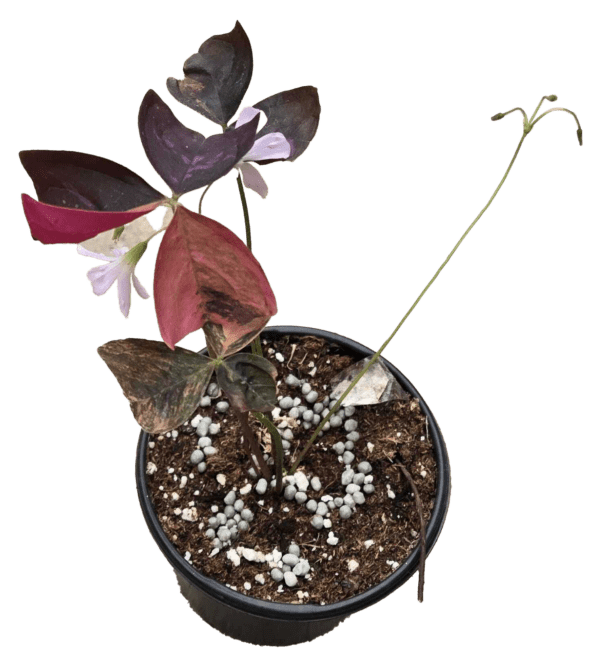
4" Oxalis Triangularis Red Variegated
Share
$150.00
Buy and save
Buy and earn $7.50 Loyalty for your next purchase
Loyalty is a discount program that lets you buy products and earn points to redeem on your next purchase. Your Loyalty balance is updated when you pay online or in-store. The Loyalty amount shown on this page can be recalculated at the checkout.
In stock: 1 available
4" Oxalis Triangularis Red Variegated
Share
Delivery information
Shipping: 4–8 days
Pickup: tomorrow, 11:00 AM–07:00 PM
Product details
Brand: Plant
Oxalis Triangularis Red Variegated
Oxalis Triangularis Red Variegated is an eye-catching plant known for its deep burgundy to reddish-purple, triangular leaves accented with contrasting pink, red, or lighter variegation. The three-part leaves resemble butterflies and naturally open in brighter light before folding downward in the evening or during periods of darkness. Its rich coloring, delicate growth, and constant movement make it a distinctive choice for windowsills, tabletops, and bright indoor spaces.
The proper botanical name is Oxalis triangularis, with variegated red forms commonly sold as Oxalis triangularis Red Variegated, Variegated Purple Shamrock, or similar trade names. Oxalis triangularis is native to South America and grows from underground storage structures called corms or rhizomes. Variegated selections may differ in the exact amount and pattern of lighter coloration displayed on their foliage.
Care
Oxalis Triangularis Red Variegated does best in bright, indirect light with some gentle direct sun. Good light helps maintain its rich red-purple coloring and compact growth. A bright east- or west-facing window can work especially well indoors. Avoid prolonged intense afternoon sunlight if it causes scorching or fading.
Water thoroughly when the top inch of soil feels dry and allow excess water to drain. Oxalis prefers consistent moisture while actively growing but should not remain soggy. Allowing the upper portion of the soil to dry slightly between waterings helps reduce the risk of rot.
Use a well-draining, airy potting mix and a pot with drainage. A quality houseplant mix amended with perlite or pumice works well. The soil should retain enough moisture for active growth while allowing excess water to drain freely.
Oxalis Triangularis Red Variegated prefers mild to warm temperatures and moderate humidity. It adapts well to average household humidity and generally does not require especially humid conditions. Protect it from extreme heat, freezing temperatures, and prolonged cold drafts.
This plant has a compact, clumping growth habit and naturally spreads from its underground corms. Oxalis can periodically enter a dormancy period in which the foliage yellows and dies back. If this occurs, reduce watering and allow the plant to rest. New growth can emerge from the underground corms when favorable growing conditions return.
Pet Safety
Oxalis Triangularis Red Variegated is toxic to cats and dogs if ingested. Oxalis contains soluble oxalates, and consuming the plant can cause gastrointestinal irritation. Larger amounts may potentially cause more serious problems involving calcium levels and kidney function. Keep it away from pets and small children.
Powered by Lightspeed
Display prices in:USD