Upcoming : Halloween Terrarium Workshop Tuesday Oct. 13 @ 6 pm / Garden Stone Painting Night Tuesday Oct. 20 @ 6 pm / Dried Floral Book Workshop Thursday Oct 29 @ 6 pm / Moss Art Sunday Nov. 1 @ 2 pm
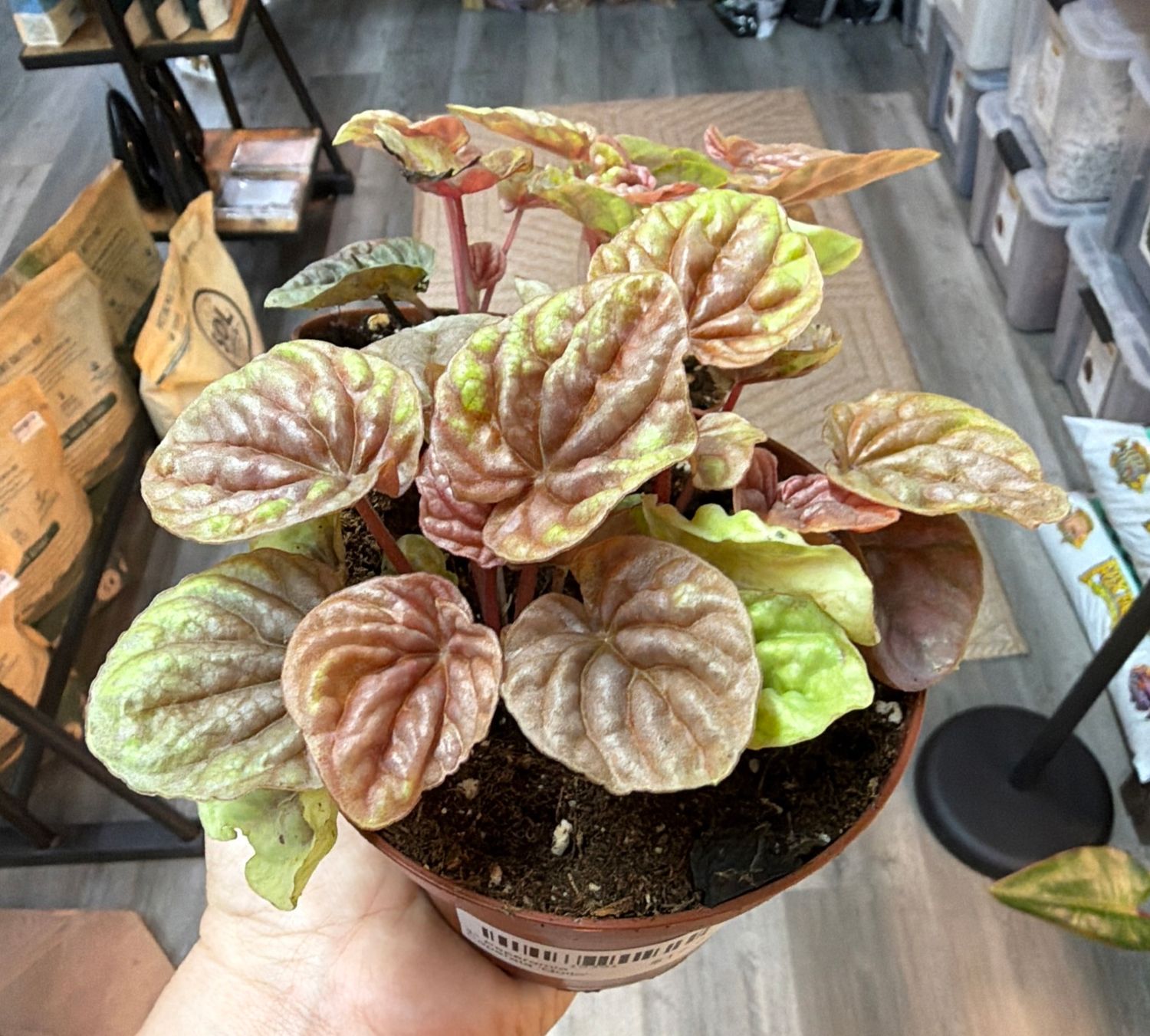
4" Peperomia Caperata 'Quito'
Share
$17.00
Buy and save
Buy and earn $0.85 Loyalty for your next purchase
Loyalty is a discount program that lets you buy products and earn points to redeem on your next purchase. Your Loyalty balance is updated when you pay online or in-store. The Loyalty amount shown on this page can be recalculated at the checkout.
In stock: 4 available
4" Peperomia Caperata 'Quito'
Share
Delivery information
Shipping: 6–10 days
Pickup: tomorrow, 11:00 AM–07:00 PM
Product details
Brand: Plant
Peperomia Caperata Quito
Peperomia Caperata Quito is a colorful, compact houseplant prized for its deeply rippled leaves and beautiful shades of copper, bronze, orange, and reddish-pink. Its textured foliage has a subtle metallic sheen that becomes especially noticeable under bright, filtered light. With its dense, mounding growth habit and vibrant coloring, this Peperomia is an excellent choice for desks, shelves, terrariums with good airflow, and small decorative planters.
The proper botanical name is Peperomia caperata ‘Quito’, a cultivated variety of Ripple Peperomia. It belongs to the Piperaceae family and is related to other popular Peperomias. The species Peperomia caperata is native to Brazil, while ‘Quito’ is a horticultural selection grown for its distinctive warm-toned foliage and deeply textured leaves.
Care
Peperomia Caperata Quito does best in bright, indirect light. Good filtered light helps maintain its rich copper and reddish coloring while encouraging compact, healthy growth. It can tolerate medium light, although its colors may become less vibrant. Avoid prolonged direct sunlight, which can scorch its delicate foliage.
Water when the top inch or two of soil feels dry, then water thoroughly and allow excess water to drain. Its slightly succulent leaves store some moisture, making it more tolerant of brief periods of dryness than constantly wet soil. Avoid overwatering, as Peperomias are particularly susceptible to root rot when their potting mix remains soggy.
Use a light, airy, and well-draining potting mix in a container with drainage. A combination of quality houseplant soil or coco coir, perlite or pumice, and fine orchid bark works well. The roots appreciate good airflow and a potting mix that retains some moisture without staying excessively wet.
Peperomia Caperata Quito prefers warm temperatures and moderate humidity. It adapts well to average household humidity, although additional humidity can help maintain healthy foliage. Good airflow is important, particularly in enclosed growing environments. Avoid cold drafts and sudden temperature changes.
This plant develops a compact, rosette-like, mounding growth habit, with textured leaves emerging from short stems near the base. It generally remains relatively small, making it ideal for limited spaces. Mature plants may produce slender, upright flower spikes that resemble tiny rat tails. These flowers are typical of Peperomias and are usually less noticeable than the colorful foliage.
Remove damaged or aging leaves as needed to maintain a tidy appearance. Peperomia Quito can also be propagated through leaf or stem cuttings, making it a rewarding plant to grow and share.
Pet Safety
Peperomia Caperata Quito is generally considered pet-friendly and non-toxic to cats and dogs. As with any houseplant, eating large amounts of foliage may still cause mild digestive upset, so discouraging pets from chewing on the plant is recommended.
Powered by Lightspeed
Display prices in:USD