Upcoming : Halloween Terrarium Workshop Tuesday Oct. 13 @ 6 pm / Garden Stone Painting Night Tuesday Oct. 20 @ 6 pm / Dried Floral Book Workshop Thursday Oct 29 @ 6 pm / Moss Art Sunday Nov. 1 @ 2 pm
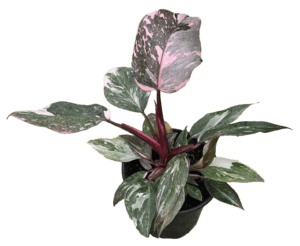
4" Philodendron Pink Princess Galaxy
Share
$28.00
Buy and save
Buy and earn $1.40 Loyalty for your next purchase
Loyalty is a discount program that lets you buy products and earn points to redeem on your next purchase. Your Loyalty balance is updated when you pay online or in-store. The Loyalty amount shown on this page can be recalculated at the checkout.
In stock: 9 available
4" Philodendron Pink Princess Galaxy
Share
Delivery information
Shipping: 5–8 days
Pickup: tomorrow, 06:30 PM–07:00 PM
Product details
Brand: Plant
Philodendron Pink Princess Galaxy
Philodendron Pink Princess Galaxy is a striking collector Philodendron prized for its dark green to burgundy foliage covered with pink speckles, splashes, marbling, and occasional larger sectors of variegation. Compared with a typical Pink Princess, plants sold as Galaxy are selected for their heavily scattered, star-like pink patterning across the leaves. Each new leaf develops its own unique combination of pink and dark foliage, making the plant especially appealing to collectors of variegated aroids.
The plant is commonly sold as Philodendron ‘Pink Princess Galaxy’ or Pink Princess Galaxy. It is generally considered a highly speckled selection of Philodendron ‘Pink Princess’ rather than a separate botanical species. “Galaxy” is primarily a horticultural or trade designation describing the distinctive scattered pattern of pink variegation. The amount and pattern of pink can naturally vary from leaf to leaf.
Care
Philodendron Pink Princess Galaxy does best in bright, indirect light. Plenty of filtered light helps support its variegated foliage and encourages stronger pink coloration. Avoid prolonged harsh direct sunlight, which can scorch the pink portions of the leaves. Very low light can result in weaker growth and reduced variegation.
Water when the top inch or two of soil feels dry, then water thoroughly and allow excess water to drain. It prefers consistent moisture during active growth but should never remain soggy or waterlogged. Avoid allowing the plant to remain completely dry for extended periods.
Use a well-draining, chunky aroid potting mix in a container with drainage. A mixture containing quality houseplant soil or coco coir, orchid bark, perlite or pumice, and other coarse amendments works well. The roots appreciate a balance of moisture retention and plenty of airflow.
Philodendron Pink Princess Galaxy prefers warm temperatures and moderate to high humidity. Additional humidity can encourage healthy new foliage and help prevent dry or crispy edges, particularly on highly variegated leaves. Good airflow is beneficial in higher-humidity environments.
This plant has a climbing growth habit and benefits from a moss pole, plank, or other vertical support as it matures. Providing support can encourage stronger growth and progressively larger leaves. Because variegation can fluctuate, some new leaves may contain considerably more or less pink than others. Completely green growth can sometimes be pruned back to a node that previously produced good variegation if reversion becomes persistent.
Pet Safety
Philodendron Pink Princess Galaxy is toxic to cats and dogs if ingested. Like other Philodendrons, it contains insoluble calcium oxalate crystals that can cause irritation of the mouth, tongue, and lips, along with drooling, vomiting, and difficulty swallowing. Keep it out of reach of pets and small children.
** Picture is illustrative of plant you will received but not necessarily the exact plant
Powered by Lightspeed
Display prices in:USD