Upcoming Events: Moss Art Thursday Sept. 24th @ 6pm / Plant Stake Stained Glass Workshop Sunday Sept. 27th @ 2pm / Moss Art Thursday Oct. 1st @ 6 pm / Intro to Stained Glass October 3rd @ 2 pm
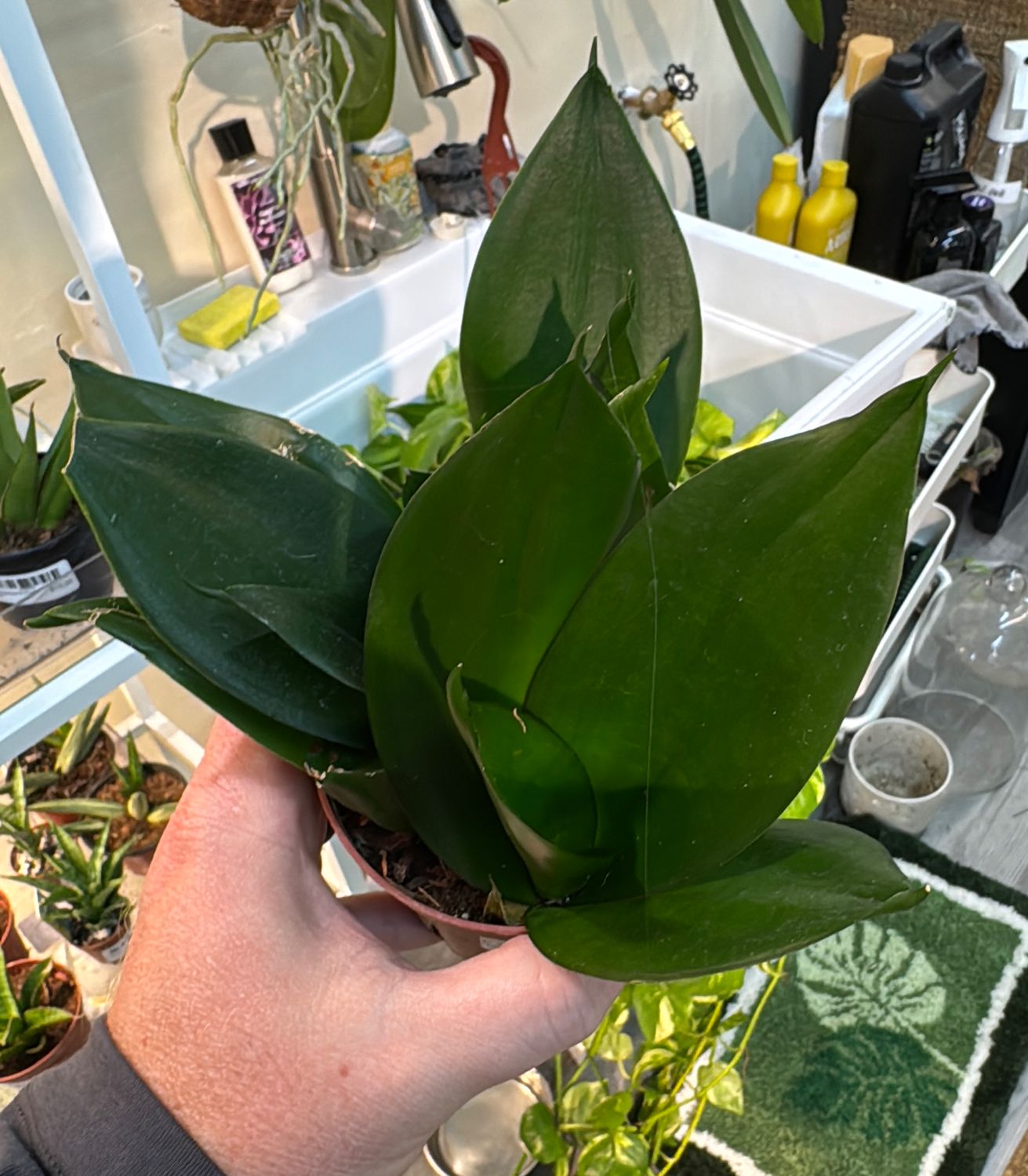
4" Sansevieria Black Hahnii
$16.00
Buy and save
Buy and earn $0.80 Loyalty for your next purchase
Loyalty is a discount program that lets you buy products and earn points to redeem on your next purchase. Your Loyalty balance is updated when you pay online or in-store. The Loyalty amount shown on this page can be recalculated at the checkout.
In stock: 10 available
4" Sansevieria Black Hahnii
Product Details
Brand: Plant
Sansevieria Black Hahnii
Sansevieria Black Hahnii is a compact Snake Plant prized for its short, broad leaves arranged in a tight, architectural rosette. Its foliage is typically very dark green, often appearing nearly black in lower portions of the leaf, with subtle green banding or markings visible across the surface. Unlike taller Snake Plants, Black Hahnii maintains a low, rounded form that makes it ideal for desktops, shelves, smaller containers, and modern indoor displays.
The plant is commonly sold as Sansevieria ‘Black Hahnii’ or Sansevieria trifasciata ‘Black Hahnii’. Sansevierias are now botanically classified within the genus Dracaena, so it may also be listed under Dracaena in updated references. “Hahnii” refers to the compact, bird’s-nest style of growth that distinguishes these plants from taller forms of the traditional Snake Plant.
Care
Sansevieria Black Hahnii does best in medium to bright, indirect light, although it is highly tolerant of lower-light conditions. Brighter filtered light generally encourages stronger, more compact growth. It can tolerate some gentle direct sunlight when gradually acclimated.
Allow the potting mix to dry completely or almost completely between waterings, then water thoroughly and allow all excess water to drain. Its thick leaves and underground rhizomes store moisture, making overwatering a much greater concern than occasional dryness. Avoid allowing water to remain trapped in the center of the rosette, where prolonged moisture can encourage rot.
Use a very well-draining cactus or succulent potting mix in a container with drainage. Adding perlite, pumice, lava rock, coarse sand, or other mineral amendments can improve drainage and airflow around the roots.
Sansevieria Black Hahnii prefers warm temperatures and low to moderate humidity. Average household humidity is generally ideal. Protect it from prolonged cold temperatures and cold, wet conditions.
This plant develops a slow-growing, compact and clumping growth habit. New rosettes emerge from underground rhizomes around the parent plant, gradually forming a fuller cluster. These offsets can be left in place for a dense display or separated during repotting to propagate additional plants.
Pet Safety
Sansevieria Black Hahnii is toxic to cats and dogs if ingested. Snake Plants contain saponins that can cause nausea, vomiting, diarrhea, drooling, and gastrointestinal discomfort. Keep it out of reach of pets and small children.
Powered by Lightspeed
Display prices in:USD