Upcoming Events: Moss Art Thursday Sept. 24th @ 6pm / Plant Stake Stained Glass Workshop Sunday Sept. 27th @ 2pm / Moss Art Thursday Oct. 1st @ 6 pm / Intro to Stained Glass October 3rd @ 2 pm
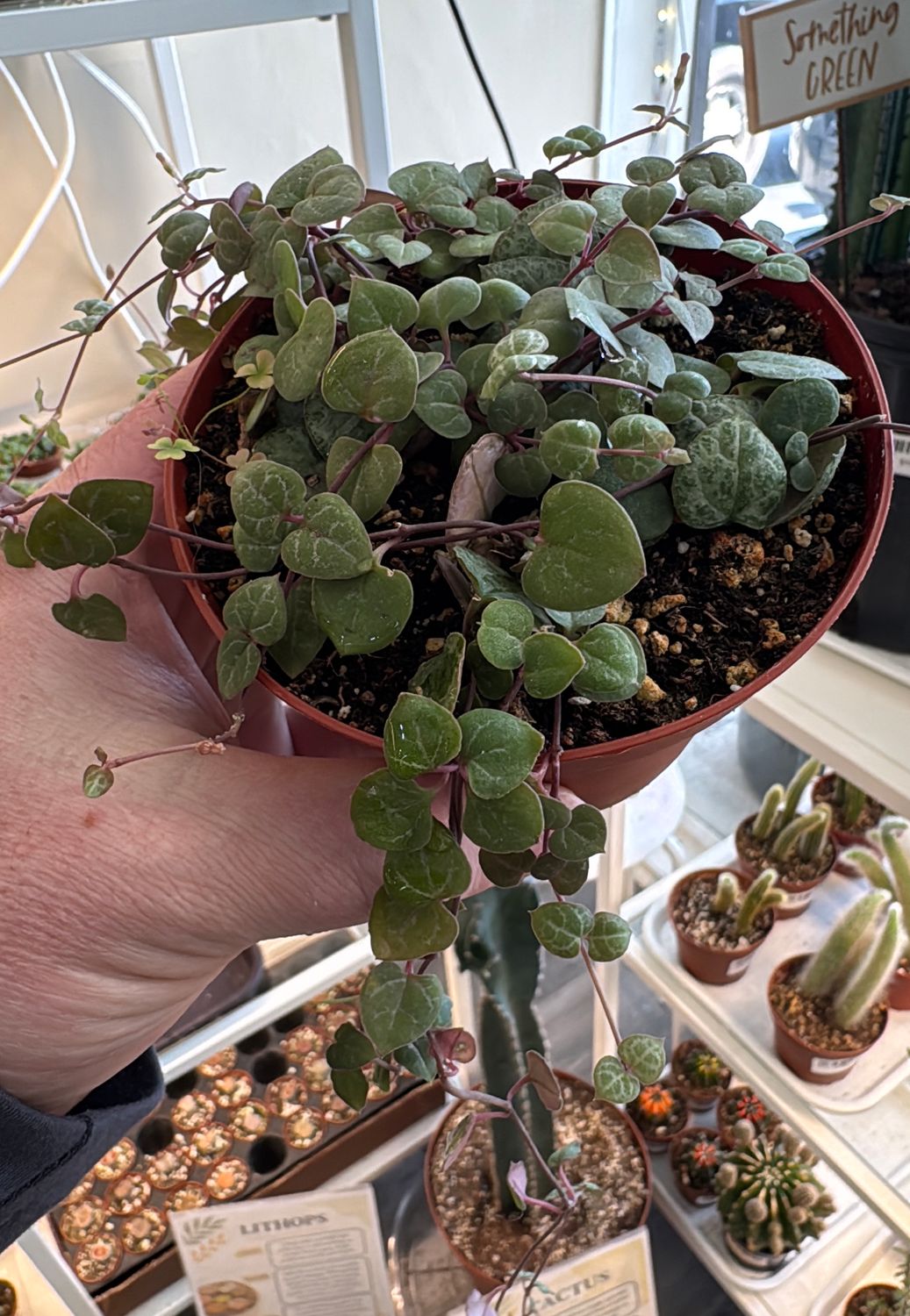
4" String of Hearts Woodii
$15.00
Buy and save
Buy and earn $0.75 Loyalty for your next purchase
Loyalty is a discount program that lets you buy products and earn points to redeem on your next purchase. Your Loyalty balance is updated when you pay online or in-store. The Loyalty amount shown on this page can be recalculated at the checkout.
In stock: 13 available
4" String of Hearts Woodii
Product Details
Brand: Plant
String of Hearts
String of Hearts is a delicate trailing succulent prized for its small, heart-shaped leaves patterned with silvery markings over deep green foliage. The leaves grow in pairs along thin, wiry vines and often have attractive purple or burgundy undersides. As the plant matures, its cascading stems can become several feet long, creating an impressive curtain of foliage that makes it particularly well suited for hanging baskets and elevated shelves.
The proper botanical name is Ceropegia woodii, commonly called String of Hearts, Rosary Vine, Chain of Hearts, or Hearts-on-a-String. It is native to southern Africa and develops underground tubers, along with occasional aerial tubers along mature vines, that store water and help the plant tolerate periods of dryness.
Care
String of Hearts does best in bright, indirect light with some gentle direct sunlight. Plenty of light encourages compact growth, stronger leaf patterning, and shorter spaces between leaves. Make sure light reaches the top of the pot as well as the trailing vines, as insufficient light around the crown can result in sparse growth. Gentle morning or late-afternoon sunlight is beneficial.
Allow the potting mix to dry thoroughly between waterings, then water deeply and allow all excess water to drain. Its succulent foliage and tubers store moisture, making String of Hearts considerably more tolerant of occasional dryness than consistently wet conditions. Overwatering and prolonged moisture around the tubers can quickly lead to rot.
Use a very well-draining, airy succulent potting mix in a container with drainage. A mixture containing cactus or succulent soil with additional perlite, pumice, or other coarse amendments works well. Avoid dense potting mixes that remain wet for extended periods.
String of Hearts prefers warm temperatures and low to moderate humidity. Average household humidity is generally suitable. Good airflow helps the potting mix dry appropriately between waterings, particularly when the plant is grown in a dense hanging basket.
This plant develops a fast-growing, cascading growth habit and can eventually produce vines several feet long. Pruning longer vines encourages branching and can help create a fuller plant. Stem cuttings root readily, and the small aerial tubers that sometimes form along mature vines can also be used for propagation.
String of Hearts can produce unusual small, tubular flowers throughout its growing season. The flowers are typically pale pink to purple with darker tips and have a distinctive lantern-like shape. Although subtle compared with the foliage, they can appear frequently on a healthy, mature plant.
Pet Safety
String of Hearts is generally considered pet-friendly and non-toxic to cats and dogs. Its long, dangling vines can be particularly tempting for pets to play with or chew, so positioning the plant out of easy reach can help prevent damage. Consuming large amounts of any plant material may still cause mild digestive upset.
Powered by Lightspeed
Display prices in:USD