Upcoming Events: Moss Art Thursday Sept. 24th @ 6pm / Plant Stake Stained Glass Workshop Sunday Sept. 27th @ 2pm / Moss Art Thursday Oct. 1st @ 6 pm / Intro to Stained Glass October 3rd @ 2 pm
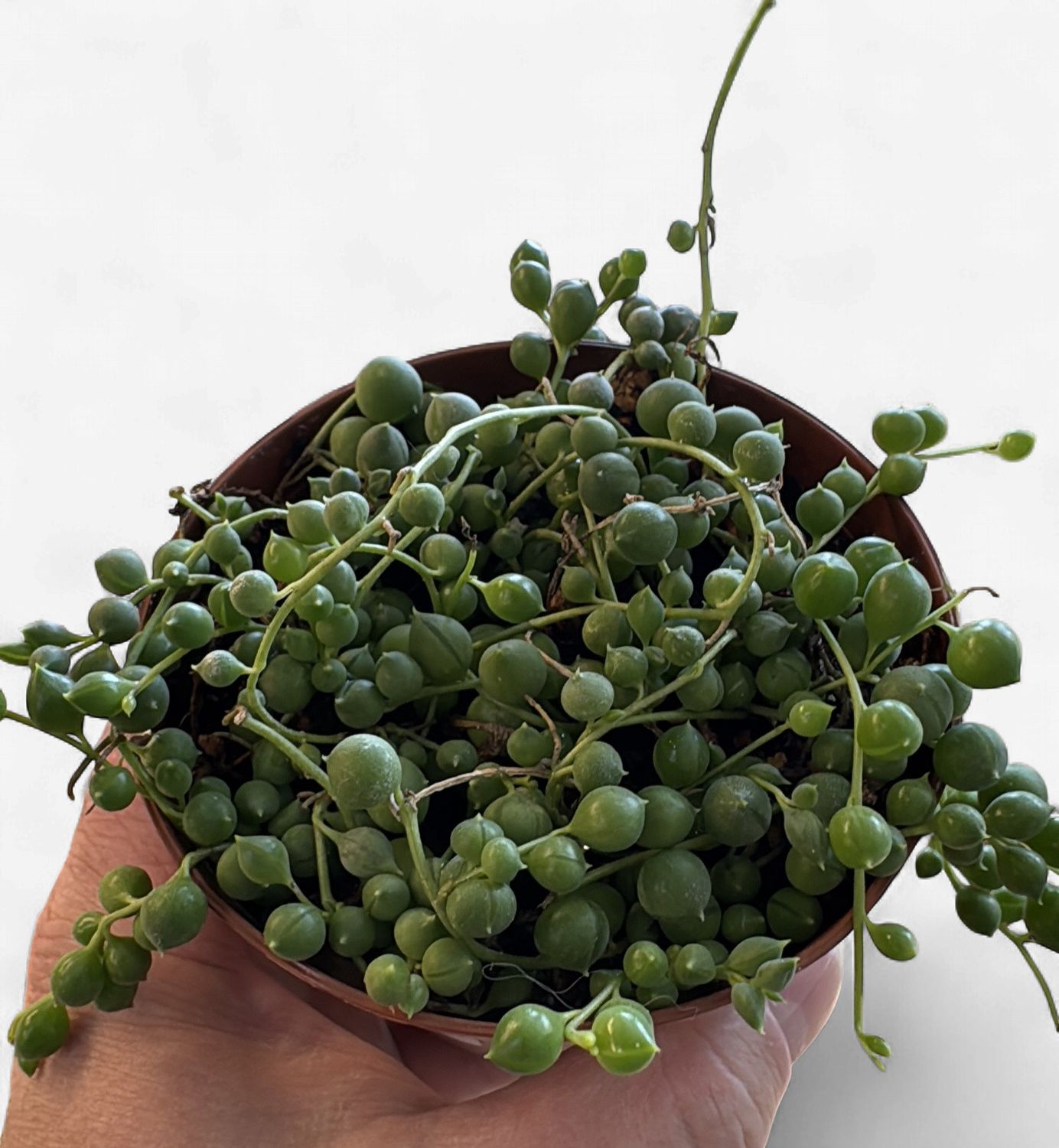
4" String of Pearls
$15.00
Buy and save
Buy and earn $0.75 Loyalty for your next purchase
Loyalty is a discount program that lets you buy products and earn points to redeem on your next purchase. Your Loyalty balance is updated when you pay online or in-store. The Loyalty amount shown on this page can be recalculated at the checkout.
In stock: 9 available
4" String of Pearls
Product Details
Brand: Plant
String of Pearls
String of Pearls is a distinctive trailing succulent prized for its round, bead-like leaves that grow along long, slender cascading stems. Each spherical leaf acts as a small water-storage reservoir, giving the plant its characteristic strand-of-pearls appearance. Mature plants can develop long curtains of foliage, making them especially attractive in hanging baskets or on elevated shelves where the vines can cascade freely.
The proper botanical name is Curio rowleyanus, although it is still frequently sold under its older name Senecio rowleyanus. It is native to the drier regions of southwestern Africa and has evolved its unusual spherical foliage to conserve water. Each pearl also has a small translucent window that helps light reach deeper into the leaf for photosynthesis.
Care
String of Pearls does best in bright, indirect light with some gentle direct sunlight. One of the most important considerations is making sure plenty of light reaches the top and crown of the plant, not just the hanging vines. Insufficient light at soil level can cause thinning and bare patches around the top of the pot. Gentle morning or late-afternoon sun can help maintain dense, healthy growth.
Allow the potting mix to dry thoroughly between waterings, then water deeply and allow all excess water to drain. The spherical leaves store significant moisture, making overwatering a much greater concern than occasional dryness. The pearls may begin to look slightly less plump when the plant is ready for water. Avoid leaving the roots in consistently damp soil.
Use a very well-draining, gritty cactus or succulent potting mix in a container with drainage. Adding perlite, pumice, lava rock, or other coarse mineral amendments can improve drainage and airflow around the roots. A relatively shallow container can also work well because String of Pearls has a fairly shallow root system.
String of Pearls prefers warm temperatures and low to moderate humidity. Average household humidity is generally suitable. Good airflow helps the potting mix dry appropriately and reduces the risk of rot around the dense crown of the plant.
This plant develops a fast-growing, cascading growth habit, with mature vines capable of reaching several feet long. Pruning can encourage branching and create a fuller plant. Cuttings are also easy to propagate by laying sections of vine across the surface of lightly moist potting mix so that several nodes remain in contact with the soil.
Healthy, mature plants may produce small white flowers with prominent stamens and a sweet, cinnamon-like fragrance. Flowering is most likely when the plant receives plenty of light and experiences appropriate seasonal growing conditions.
Pet Safety
String of Pearls is toxic to cats and dogs if ingested. Eating the plant can cause gastrointestinal irritation, including drooling, vomiting, diarrhea, and lethargy. Its long, dangling vines and bead-like leaves can be especially tempting to pets, so keep the plant securely out of reach of cats, dogs, and small children.
Powered by Lightspeed
Display prices in:USD