Upcoming Events: Moss Art Thursday Sept. 24th @ 6pm / Plant Stake Stained Glass Workshop Sunday Sept. 27th @ 2pm / Moss Art Thursday Oct. 1st @ 6 pm / Intro to Stained Glass October 3rd @ 2 pm
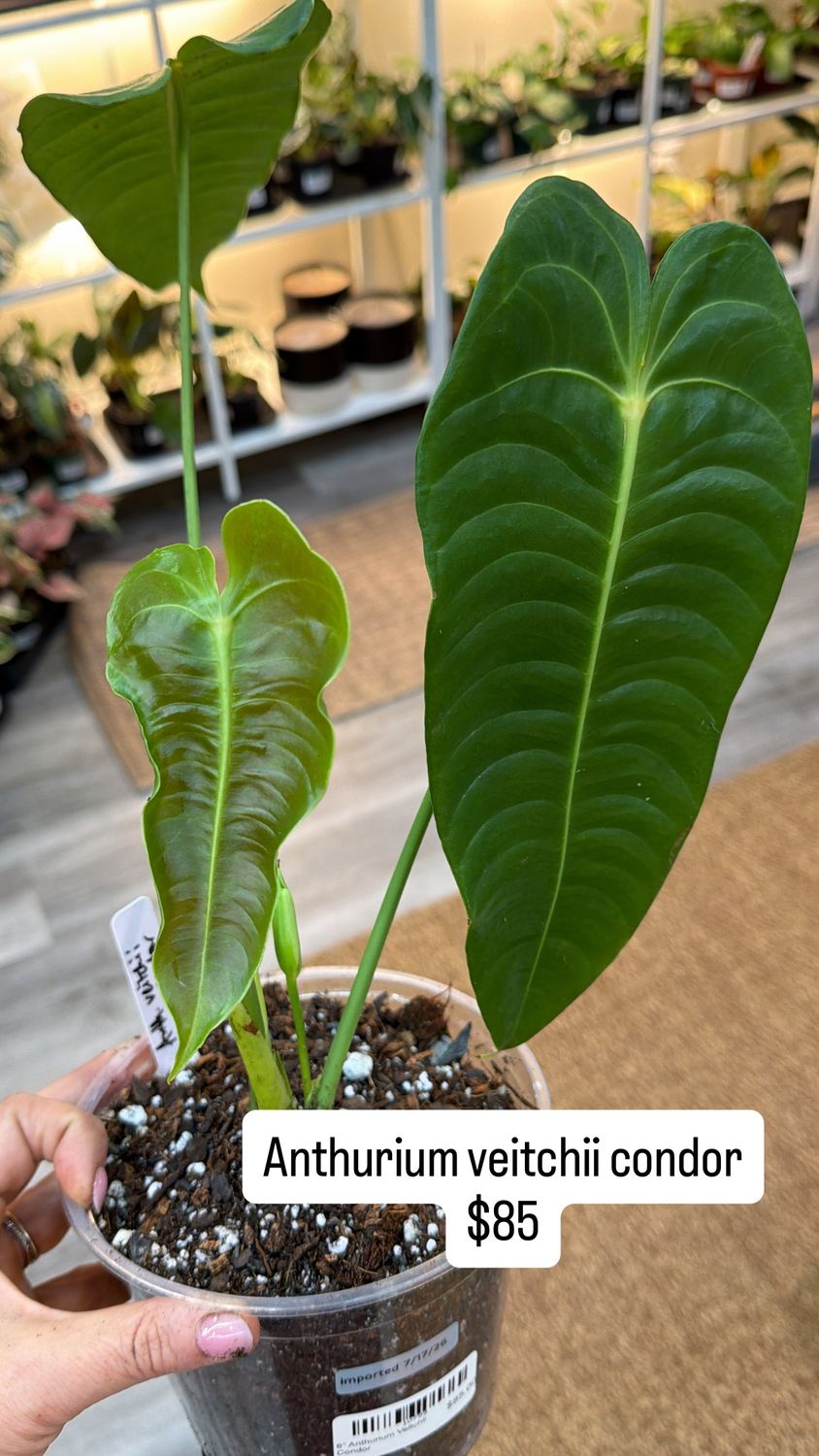
6" Anthurium Veitchii Condor
$85.00
Buy and save
Buy and earn $4.25 Loyalty for your next purchase
Loyalty is a discount program that lets you buy products and earn points to redeem on your next purchase. Your Loyalty balance is updated when you pay online or in-store. The Loyalty amount shown on this page can be recalculated at the checkout.
In stock: 4 available
6" Anthurium Veitchii Condor
Product Details
Brand: Plant
Anthurium Veitchii Condor
Anthurium Veitchii Condor is a dramatic collector Anthurium prized for its long, deeply corrugated green leaves and bold, architectural appearance. The foliage develops the distinctive pleated texture associated with Anthurium Veitchii, with mature leaves becoming increasingly elongated and impressive. The Condor form is grown for its particularly striking leaf shape and substantial mature presence.
The proper botanical name is Anthurium veitchii, commonly known as the King Anthurium. It is an epiphytic species native to Colombia. “Condor” is a horticultural or collector designation used for a selected form of Anthurium Veitchii rather than a formally recognized botanical variety. Individual plants may show some natural variation in leaf width, length, and degree of corrugation as they mature.
Care
Anthurium Veitchii Condor does best in bright, indirect light. Plenty of filtered light encourages steady growth, strong corrugation, and increasingly large mature foliage. Avoid prolonged harsh direct sunlight, which can scorch or discolor the leaves.
Water when the top inch or two of the potting mix begins to dry, then water thoroughly and allow all excess water to drain. Anthurium Veitchii appreciates consistent moisture during active growth but should never remain soggy or waterlogged. Avoid allowing the root system to stay completely dry for extended periods.
Use a very airy, chunky and well-draining aroid or epiphytic potting mix in a container with excellent drainage. Orchid bark, coco chips or coir, perlite or pumice, and a small amount of moisture-retentive material provide a good balance of moisture and airflow around its epiphytic roots.
Anthurium Veitchii Condor prefers warm temperatures and moderate to high humidity. Higher humidity can be especially helpful while new leaves are emerging and expanding. Good airflow is important in humid conditions and helps prevent moisture from remaining trapped within the deeply corrugated foliage.
This Anthurium develops a large, pendant growth habit, with mature leaves extending outward before naturally hanging downward. Give it plenty of room for new foliage to expand without rubbing against walls, shelves, or neighboring plants. An elevated position can be especially useful as the plant matures, allowing its increasingly long leaves to display their characteristic shape and texture.
Pet Safety
Anthurium Veitchii Condor is toxic to cats and dogs if ingested. Like other Anthuriums, it contains insoluble calcium oxalate crystals that can cause irritation of the mouth, tongue, and lips, along with drooling, vomiting, and difficulty swallowing. Keep it out of reach of pets and small children.
Powered by Lightspeed
Display prices in:USD