Upcoming : Halloween Terrarium Workshop Tuesday Oct. 13 @ 6 pm / Garden Stone Painting Night Tuesday Oct. 20 @ 6 pm / Dried Floral Book Workshop Thursday Oct 29 @ 6 pm / Moss Art Sunday Nov. 1 @ 2 pm
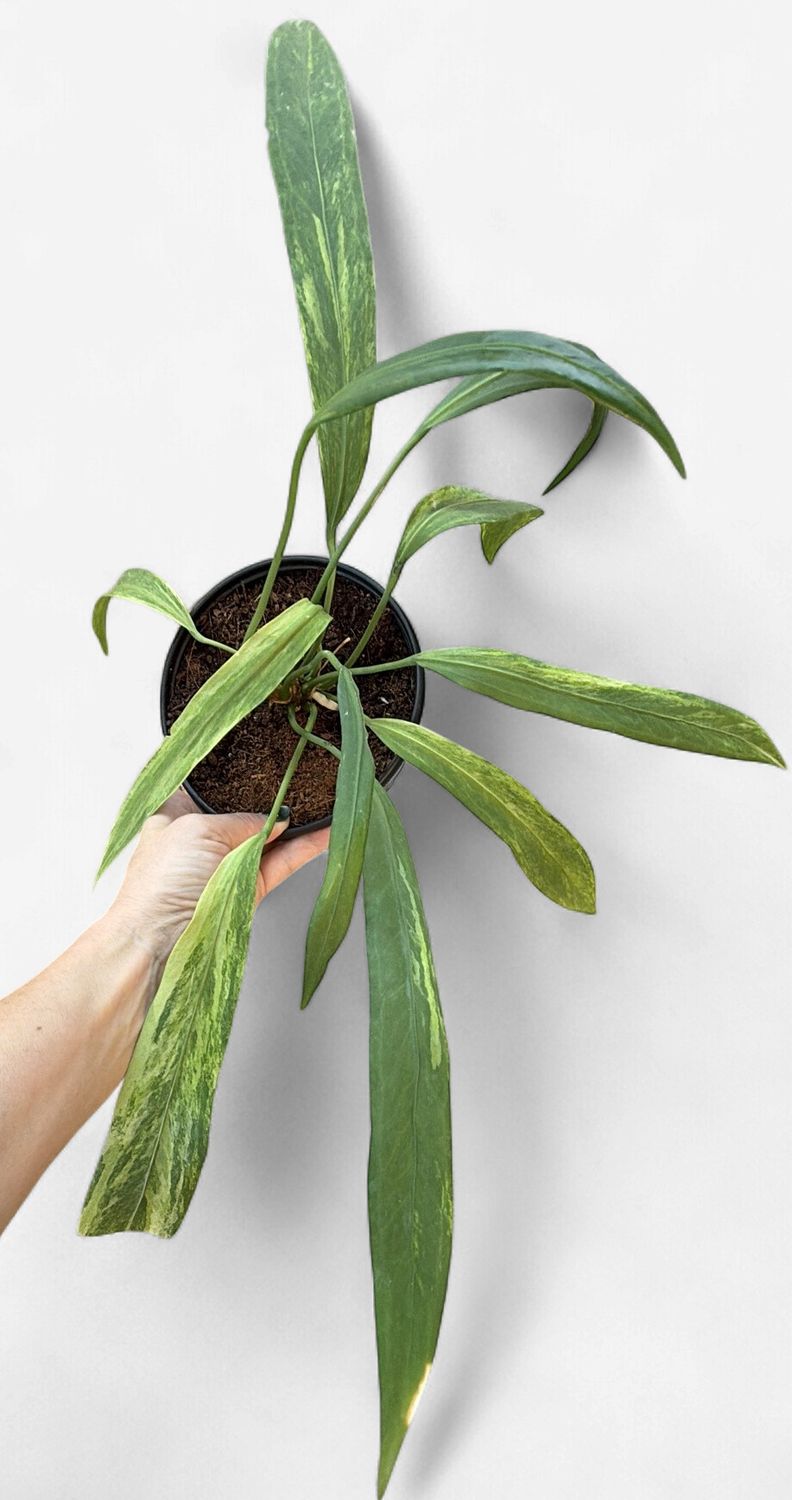
6" Anthurium Vittariifolium Variegated
Share
$65.00
Buy and save
Buy and earn $3.25 Loyalty for your next purchase
Loyalty is a discount program that lets you buy products and earn points to redeem on your next purchase. Your Loyalty balance is updated when you pay online or in-store. The Loyalty amount shown on this page can be recalculated at the checkout.
In stock: 3 available
6" Anthurium Vittariifolium Variegated
Share
Delivery information
Shipping: 4–8 days
Pickup: tomorrow, 11:00 AM–07:00 PM
Product details
Brand: Plant
Anthurium Vittariifolium Variegated
Anthurium Vittariifolium Variegated is a rare tropical houseplant prized for its long, strap-like leaves streaked and marbled with cream, yellow, white, and shades of green. Its dramatic foliage can grow exceptionally long and naturally hangs downward, creating a beautiful cascading appearance. Each new leaf develops its own unique variegation pattern, making this an especially striking choice for collectors, hanging planters, and elevated plant displays.
The proper botanical name is Anthurium vittariifolium, with the variegated form commonly sold as Anthurium vittariifolium Variegated or Anthurium vittariifolium ‘Variegata’. Note the spelling: vittariifolium has a double “ii.” The species is an accepted Anthurium native to parts of Colombia, Ecuador, Peru, and northern Brazil, where it grows as an epiphyte in wet tropical forests.
Care
Anthurium Vittariifolium Variegated does best in bright, indirect light. Plenty of filtered light helps maintain strong variegation and healthy growth. Because the cream and white portions of the leaves contain less chlorophyll, avoid harsh direct sunlight, which can scorch the lighter areas of the foliage.
Water thoroughly when the top inch or two of the potting mix begins to dry, allowing excess water to drain completely. This Anthurium appreciates consistent moisture but should never remain in soggy soil. Its epiphytic nature means the roots perform best when they receive plenty of airflow.
Use a chunky, well-draining potting mix and a pot with drainage. A mixture containing orchid bark, perlite, coco coir, and a small amount of houseplant soil works well. An airy, orchid-style mix helps prevent the roots from remaining wet for too long.
Anthurium Vittariifolium Variegated prefers warm temperatures and moderate to high humidity. Humidity around 60% or higher can help support healthy foliage and reduce browning along the tips and edges of its long leaves. Good air circulation is also beneficial.
This species has a distinctive pendant growth habit, producing long leaves that naturally hang downward and can reach impressive lengths as the plant matures. It is best displayed in a hanging basket or elevated planter where the foliage has plenty of room to cascade without rubbing against walls, shelves, or the floor. In its natural habitat, the species can produce leaf blades approximately 2 to 5 feet long.
Pet Safety
Anthurium Vittariifolium Variegated is toxic to cats and dogs if ingested. Like other Anthuriums, it contains calcium oxalate crystals that can cause irritation and pain in the mouth and throat when chewed. Keep it out of reach of pets and small children.
Powered by Lightspeed
Display prices in:USD