Upcoming : Halloween Terrarium Workshop Tuesday Oct. 13 @ 6 pm / Garden Stone Painting Night Tuesday Oct. 20 @ 6 pm / Dried Floral Book Workshop Thursday Oct 29 @ 6 pm / Moss Art Sunday Nov. 1 @ 2 pm
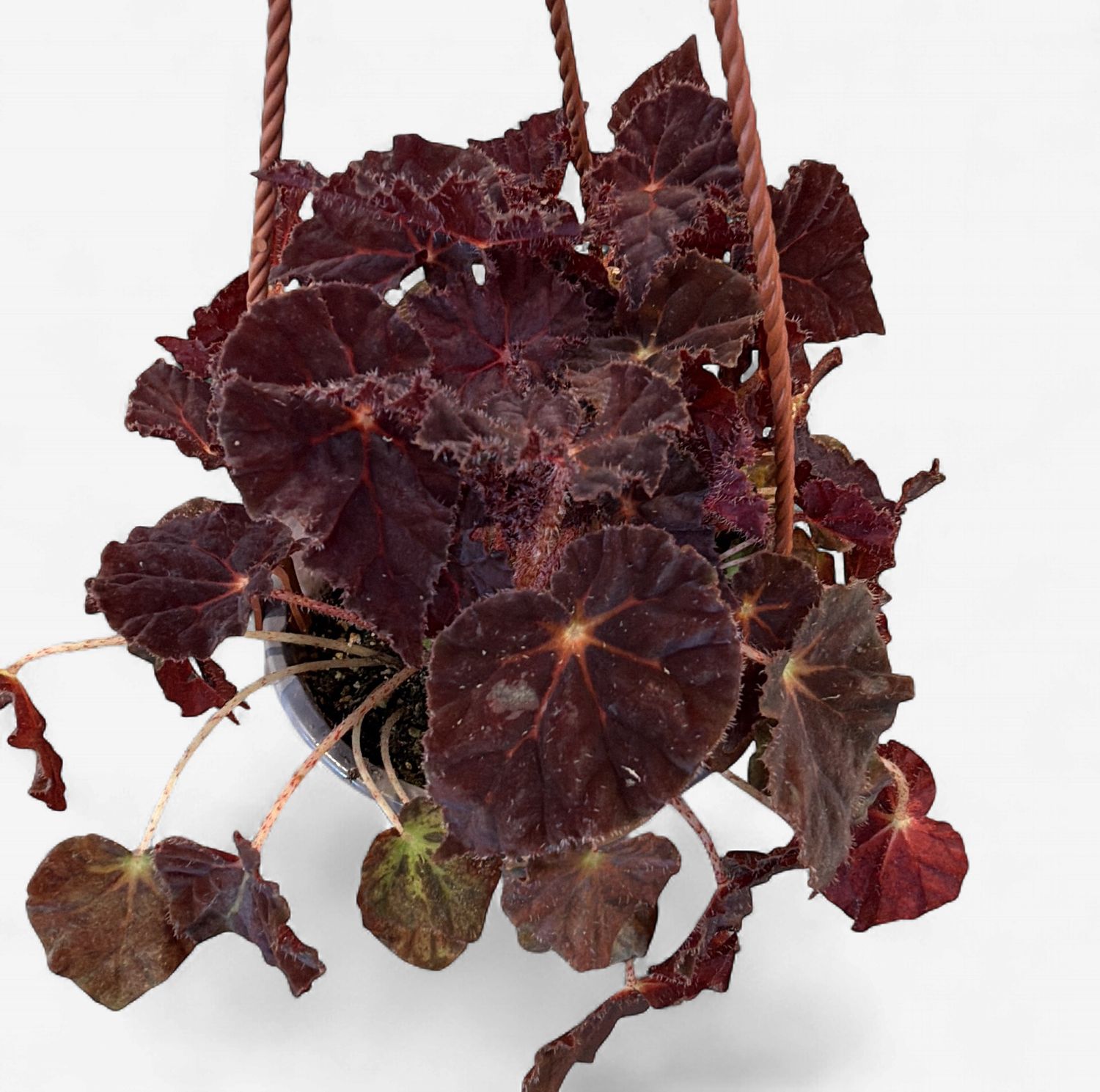
6" Begonia Madame O'Reilly Hanging Basket
Share
$16.00
Sold out
Sold out
6" Begonia Madame O'Reilly Hanging Basket
Share
Product details
Brand: Plant
Begonia Madame O’Reilly
Begonia Madame O’Reilly is a distinctive foliage Begonia grown for its large, decorative leaves and richly contrasting colors. The foliage can display shades of green, silver, bronze, burgundy, and reddish tones, with pronounced veining and intricate markings that give each leaf a highly ornamental appearance. Its lush foliage and dramatic coloring make it an excellent choice for shelves, plant stands, plant cabinets, and specialty Begonia collections.
The plant is commonly sold as Begonia ‘Madame O’Reilly’ or Madame O’Reilly Begonia. It is a cultivated ornamental Begonia grown primarily for its foliage. As with many specialty Begonia cultivars, the exact coloration and intensity of its markings can change with maturity, lighting, temperature, humidity, and other growing conditions.
Care
Begonia Madame O’Reilly does best in bright, indirect light. Good filtered light encourages healthy, compact growth and helps maintain the strongest coloration and contrast in the foliage. Avoid prolonged harsh direct sunlight, which can scorch the leaves.
Water when the top inch of soil begins to feel dry, then water thoroughly and allow excess water to drain. This Begonia prefers consistent moisture during active growth but should never remain soggy or waterlogged. Avoid allowing the potting mix to remain completely dry for extended periods.
Use a light, airy and well-draining potting mix in a container with drainage. A mixture containing quality houseplant soil or coco coir, perlite or pumice, and fine orchid bark works well. The goal is to retain enough moisture for healthy growth while providing plenty of airflow around the roots.
Begonia Madame O’Reilly prefers warm temperatures and moderate to high humidity. Additional humidity can help maintain healthy foliage and reduce crispy leaf edges, but good airflow is equally important. Avoid allowing water to remain on the leaves for extended periods, especially in humid or enclosed growing environments.
This plant generally develops a compact, bushy to spreading growth habit. Older or damaged leaves can be removed at the base to keep the plant looking its best and make room for fresh growth. Its foliage can be delicate, so avoid unnecessary handling of new leaves.
Pet Safety
Begonia Madame O’Reilly is toxic to cats and dogs if ingested. Begonias contain soluble calcium oxalates that can cause irritation of the mouth and digestive tract, with the highest concentrations generally found in the underground portions of the plant. Keep it away from pets and small children.
Powered by Lightspeed
Display prices in:USD