Upcoming : Halloween Terrarium Workshop Tuesday Oct. 13 @ 6 pm / Garden Stone Painting Night Tuesday Oct. 20 @ 6 pm / Dried Floral Book Workshop Thursday Oct 29 @ 6 pm / Moss Art Sunday Nov. 1 @ 2 pm
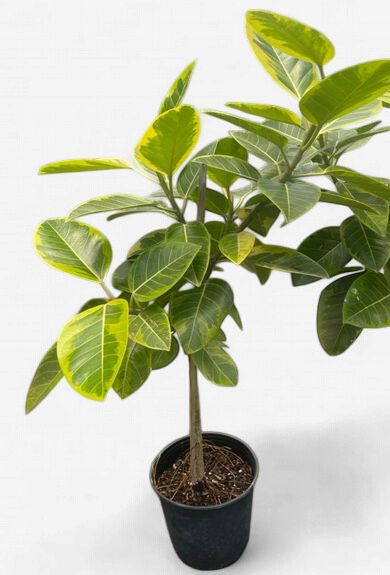
8" Ficus Altissima
Share
$45.00
Sold out
Sold out
8" Ficus Altissima
Share
Product details
Brand: Plant
Ficus Altissima
Ficus Altissima is a striking tropical houseplant known for its large, glossy oval leaves with prominent veining and a bold, upright growth habit. The species has rich green foliage, while variegated forms can display beautiful combinations of green, lime, yellow, and chartreuse. Its substantial leaves and tree-like appearance make it an excellent statement plant for living rooms, offices, entryways, and other bright indoor spaces.
The proper botanical name is Ficus altissima, a species of fig native to tropical and subtropical parts of Asia. It is sometimes called the Council Tree or Lofty Fig. One of the most commonly grown houseplant forms is the variegated cultivar Ficus altissima ‘Yellow Gem’, which features green leaves surrounded by irregular yellow-green to golden variegation.
Care
Ficus Altissima does best in bright, indirect light. It can tolerate some gentle direct morning or late-afternoon sun, especially when gradually acclimated. Variegated forms benefit from brighter light to maintain their strongest coloration. Avoid sudden exposure to intense direct sunlight, which can scorch the foliage.
Water thoroughly when the top inch or two of soil feels dry and allow excess water to drain. Ficus Altissima prefers consistent watering but does not like remaining in soggy soil. Avoid allowing the plant to sit in standing water, and reduce watering somewhat during periods of slower growth.
Use a well-draining, airy potting mix and a pot with drainage. A mixture containing quality houseplant soil, perlite or pumice, orchid bark, and coco coir works well and provides a balance of moisture retention and airflow around the roots.
Ficus Altissima prefers warm temperatures and moderate humidity. It adapts well to average household conditions but appreciates additional humidity in particularly dry environments. Ficus can be sensitive to sudden environmental changes, so keep the plant away from cold drafts, heating vents, and frequently changing temperatures.
This plant has an upright, tree-like growth habit and can become a substantial indoor specimen over time. Pruning can be used to control its height and encourage branching for a fuller appearance. Ficus may occasionally drop leaves after being moved or experiencing a significant change in light, temperature, or watering, so consistent conditions are beneficial.
Pet Safety
Ficus Altissima is toxic to cats and dogs if ingested. Its milky sap can cause irritation of the mouth and digestive tract, and contact with the sap may also irritate sensitive skin. Keep it away from pets and small children.
Powered by Lightspeed
Display prices in:USD