Upcoming : Halloween Terrarium Workshop Tuesday Oct. 13 @ 6 pm / Garden Stone Painting Night Tuesday Oct. 20 @ 6 pm / Dried Floral Book Workshop Thursday Oct 29 @ 6 pm / Moss Art Sunday Nov. 1 @ 2 pm
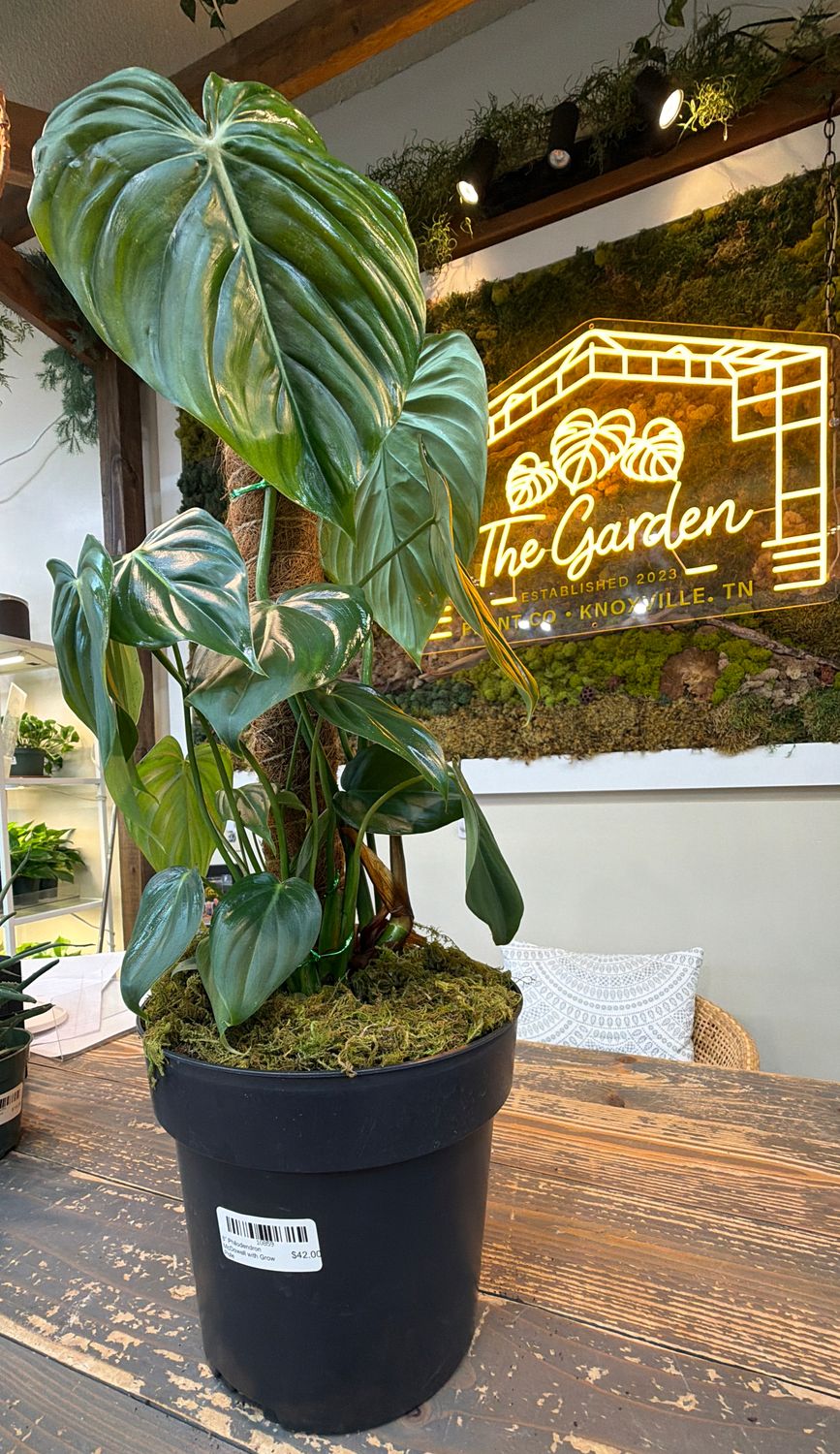
8" Philodendron McDowell with Grow Pole
Share
$42.00
Sold out
Sold out
8" Philodendron McDowell with Grow Pole
Share
Product details
Brand: Plant
Philodendron McDowell
Philodendron McDowell is a highly sought-after tropical aroid known for its large, heart-shaped green leaves, prominent pale veins, and beautifully textured foliage. The leaves develop an impressive size as the plant matures, with a velvety to softly textured surface and deeply defined venation. Its broad foliage and distinctive growth habit make it an excellent statement plant for collectors, large planters, greenhouses, and bright indoor spaces.
The plant is commonly sold as Philodendron ‘McDowell’. It is a hybrid created from Philodendron gloriosum and Philodendron pastazanum, combining characteristics of both parents. Unlike many popular Philodendrons that climb vertically, McDowell develops along a creeping rhizome that travels horizontally across the surface of the soil.
Care
Philodendron McDowell does best in bright, indirect light. Plenty of filtered light encourages strong growth and helps the plant develop increasingly large foliage. It can tolerate medium light, but growth may be slower. Avoid prolonged harsh direct sunlight, which can scorch the leaves.
Water thoroughly when the top inch or two of soil feels dry and allow excess water to drain. McDowell appreciates consistent moisture during active growth but should never remain soggy or waterlogged. Avoid allowing the potting mix to stay completely dry for extended periods.
Use a well-draining, chunky potting mix and a container with excellent drainage. A mixture containing houseplant soil or coco coir, orchid bark, and perlite or pumice works well and provides a good balance of moisture retention and airflow around the roots.
Philodendron McDowell prefers warm temperatures and moderate to high humidity. Higher humidity can be especially beneficial while new leaves are unfurling and expanding. Good airflow is important in higher-humidity environments, and the plant should be protected from cold drafts and sudden temperature changes.
This plant has a creeping rather than climbing growth habit, so a moss pole is generally unnecessary. A long, rectangular planter or wide container can be especially useful because it gives the rhizome room to travel horizontally across the soil. Keep the rhizome at or slightly above the soil surface rather than burying it deeply, as burying the growing stem can increase the risk of rot.
Pet Safety
Philodendron McDowell is toxic to cats and dogs if ingested. Like other Philodendrons, it contains insoluble calcium oxalate crystals that can cause irritation of the mouth and digestive tract. Keep it away from pets and small children.
Powered by Lightspeed
Display prices in:USD