Upcoming : Halloween Terrarium Workshop Tuesday Oct. 13 @ 6 pm / Garden Stone Painting Night Tuesday Oct. 20 @ 6 pm / Dried Floral Book Workshop Thursday Oct 29 @ 6 pm / Moss Art Sunday Nov. 1 @ 2 pm
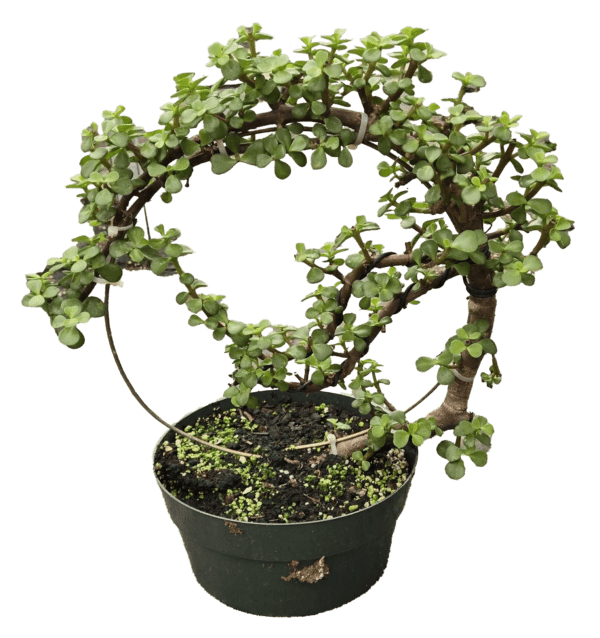
8" Portulacaria Mini Jade Bonsai 'Moon'
Share
$90.00
Sold out
Sold out
8" Portulacaria Mini Jade Bonsai 'Moon'
Share
Product details
Brand: Plant
Portulacaria Mini Jade Bonsai
Portulacaria Mini Jade Bonsai is a charming succulent known for its small, rounded green leaves, reddish-brown stems, and naturally branching, tree-like growth habit. Its compact foliage and ability to develop a thick, woody-looking trunk make it especially well suited for bonsai-style growing. With regular pruning and plenty of light, it can develop into a miniature tree with a dense canopy, making it an excellent choice for sunny windows, desks, plant stands, and succulent collections.
The proper botanical name is Portulacaria afra. It is commonly called Elephant Bush, Dwarf Jade, Mini Jade, or Miniature Jade, although it is not a true jade plant and is not closely related to Crassula ovata. Portulacaria afra is native to southern Africa and is naturally adapted to dry conditions.
Care
Portulacaria Mini Jade Bonsai does best in very bright light with several hours of direct sun. A bright south- or west-facing window is ideal indoors. Strong light encourages compact growth, smaller spacing between leaves, and sturdy stems. Plants moving from lower light into direct sun should be gradually acclimated to prevent scorching.
Water thoroughly and allow the soil to dry completely or almost completely before watering again. Its succulent leaves and stems store water, making it highly drought tolerant. Avoid keeping the soil consistently moist, and reduce watering during cooler months or periods of slower growth.
Use a fast-draining cactus or succulent mix and a container with excellent drainage. Adding pumice, perlite, lava rock, or other gritty materials can improve drainage and increase airflow around the roots. Bonsai specimens grown in shallow containers may dry more quickly and should be checked more frequently.
Portulacaria Mini Jade Bonsai prefers warm temperatures and low to moderate humidity. It adapts very well to normal household conditions and does not require additional humidity. Protect it from freezing temperatures and prolonged cold drafts.
This plant has a branching, woody and highly pruneable growth habit, making it especially suitable for bonsai training. Regular pruning can encourage a dense canopy and help maintain the desired shape and size. New growth can also be pinched back to encourage additional branching. Cuttings root readily, making Portulacaria afra relatively easy to propagate.
Pet Safety
Portulacaria afra is generally considered pet-friendly and non-toxic to cats and dogs. This is an important difference from the true Jade Plant, Crassula ovata, which is toxic to pets. As with any plant, eating large amounts of foliage may still cause mild digestive upset, so it is best to discourage pets from chewing on it.
Powered by Lightspeed
Display prices in:USD