Upcoming : Halloween Terrarium Workshop Tuesday Oct. 13 @ 6 pm / Garden Stone Painting Night Tuesday Oct. 20 @ 6 pm / Dried Floral Book Workshop Thursday Oct 29 @ 6 pm / Moss Art Sunday Nov. 1 @ 2 pm
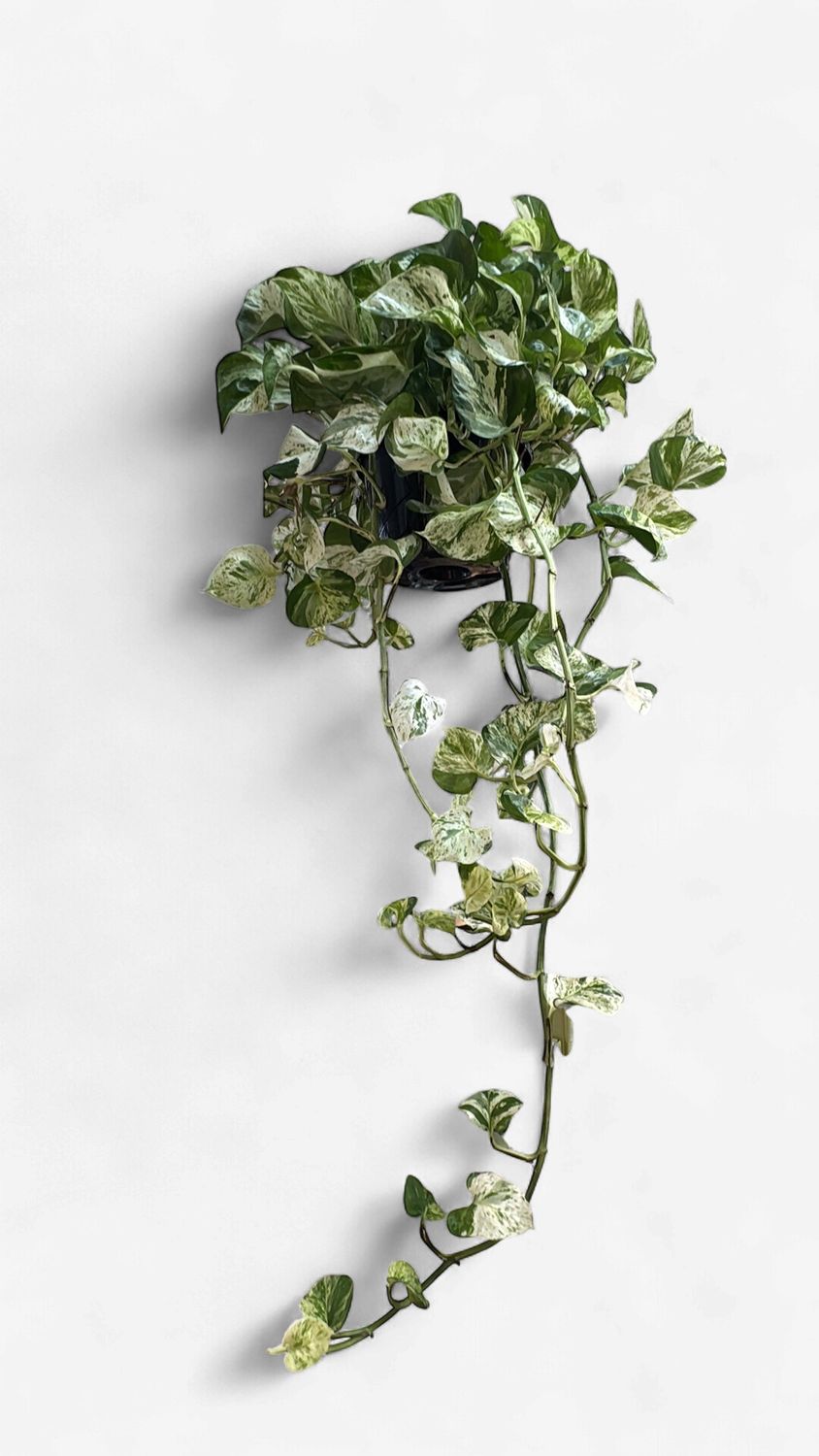
8" Pothos Manjula Hanging Basket
Share
$70.00
Buy and save
Buy and earn $3.50 Loyalty for your next purchase
Loyalty is a discount program that lets you buy products and earn points to redeem on your next purchase. Your Loyalty balance is updated when you pay online or in-store. The Loyalty amount shown on this page can be recalculated at the checkout.
In stock: 1 available
8" Pothos Manjula Hanging Basket
Share
Delivery information
Shipping: 5–9 days
Pickup: tomorrow, 04:00 PM–07:00 PM
Product details
Brand: Plant
Manjula Pothos
Manjula Pothos is a striking tropical houseplant prized for its broad, heart-shaped leaves patterned with creamy white, green, and soft mint variegation. Each leaf develops its own combination of marbling, speckles, and larger patches of color, giving the plant an especially varied appearance. Compared with Golden Pothos, its leaves tend to be broader and slightly more rounded, with gently wavy edges.
The proper botanical name is Epipremnum aureum ‘Manjula’, commonly sold as Manjula Pothos or sometimes Happy Leaf Pothos. It is a cultivated variety of Epipremnum aureum and should not be confused with similar variegated cultivars such as Marble Queen, Snow Queen, or Pearls and Jade.
Care
Manjula Pothos does best in bright, indirect light. Because of its substantial cream and white variegation, it benefits from brighter filtered light than a solid-green Pothos. Insufficient light can result in slower growth and reduced variegation, while prolonged harsh direct sunlight can scorch the lighter portions of the leaves.
Water when the top inch or two of soil feels dry, then water thoroughly and allow excess water to drain. Manjula Pothos prefers consistent moisture during active growth but should not remain in soggy or waterlogged soil. Its slower growth can also mean it uses water less quickly than more vigorous Pothos varieties.
Use a well-draining, chunky potting mix in a container with drainage. A mixture containing quality houseplant soil or coco coir, orchid bark, and perlite or pumice works well. The goal is to retain some moisture while still providing plenty of airflow around the roots.
Manjula Pothos prefers warm temperatures and moderate to high humidity. It adapts well to average household humidity, although additional humidity can encourage healthy foliage and help prevent browning along the lighter variegated areas.
This plant develops a climbing or trailing growth habit and can be displayed in a hanging basket, allowed to cascade from a shelf, or trained onto a moss pole or other vertical support. Providing support encourages more mature growth and progressively larger leaves. Manjula is generally slower growing than Golden Pothos because the highly variegated foliage contains less chlorophyll.
Pet Safety
Manjula Pothos is toxic to cats and dogs if ingested. Like other Epipremnum varieties, it contains insoluble calcium oxalate crystals that can cause irritation of the mouth, tongue, and lips, along with drooling, vomiting, and difficulty swallowing. Keep it out of reach of pets and small children.
Powered by Lightspeed
Display prices in:USD