Upcoming : Halloween Terrarium Workshop Tuesday Oct. 13 @ 6 pm / Garden Stone Painting Night Tuesday Oct. 20 @ 6 pm / Dried Floral Book Workshop Thursday Oct 29 @ 6 pm / Moss Art Sunday Nov. 1 @ 2 pm
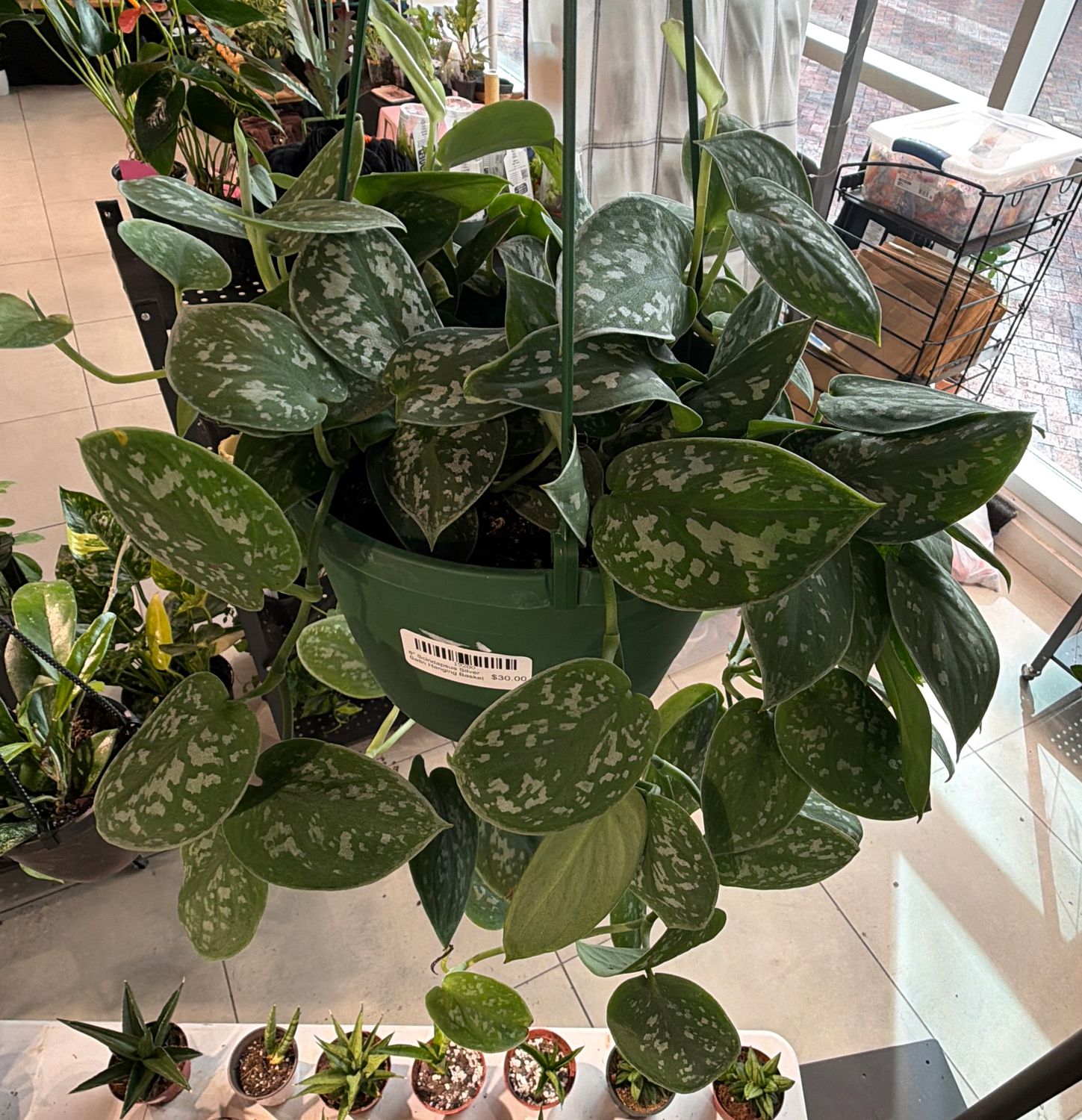
8" Scindapsus Silver Satin Hanging Basket
Share
$30.00
Buy and save
Buy and earn $1.50 Loyalty for your next purchase
Loyalty is a discount program that lets you buy products and earn points to redeem on your next purchase. Your Loyalty balance is updated when you pay online or in-store. The Loyalty amount shown on this page can be recalculated at the checkout.
In stock: 1 available
8" Scindapsus Silver Satin Hanging Basket
Share
Delivery information
Shipping: 4–8 days
Pickup: tomorrow, 11:00 AM–07:00 PM
Product details
Brand: Plant
Scindapsus Silver Satin
Scindapsus Silver Satin is a beautiful tropical vine prized for its soft, velvety green leaves decorated with shimmering silver markings. Its heart-shaped foliage has a distinctive satin-like finish that catches the light, giving the plant an elegant appearance. With its graceful trailing or climbing growth habit, Silver Satin is an excellent choice for hanging baskets, shelves, moss poles, and indoor plant displays.
The plant is commonly sold as Scindapsus pictus ‘Silver Satin’, Satin Pothos, or Silver Satin Pothos. The name Silver Satin is used somewhat inconsistently in the plant trade and may refer to different silver-patterned forms of Scindapsus pictus. Despite its common name, it is not a true Pothos (Epipremnum), although both belong to the aroid family.
Care
Scindapsus Silver Satin does best in medium to bright, indirect light. Brighter filtered light helps maintain its attractive silver markings and encourages healthy, compact growth. It can tolerate medium light, but growth may slow in darker conditions. Avoid prolonged harsh direct sunlight, which can scorch the foliage.
Water when the top inch or two of soil feels dry, then water thoroughly and allow excess water to drain. Silver Satin prefers some drying between waterings but should not remain completely dry for extended periods. Its leaves may begin to curl slightly when the plant becomes thirsty. Avoid keeping the soil constantly soggy or waterlogged.
Use a well-draining, chunky aroid potting mix in a container with drainage. A mixture containing quality houseplant soil or coco coir, orchid bark, and perlite or pumice works well. This provides enough moisture retention to support healthy growth while maintaining good airflow around the roots.
Scindapsus Silver Satin prefers warm temperatures and moderate to high humidity. It adapts well to average household humidity, although additional humidity can encourage larger, healthier leaves and help prevent crispy edges. Protect it from prolonged cold temperatures and cold drafts.
This plant develops a trailing or climbing growth habit. It can cascade beautifully from a hanging basket or shelf, but providing a moss pole, plank, or trellis encourages the vines to climb and can promote larger foliage. Occasional pruning helps maintain a fuller appearance, and stem cuttings containing nodes can be rooted to create additional plants.
Pet Safety
Scindapsus Silver Satin is toxic to cats and dogs if ingested. Like other members of the aroid family, it contains insoluble calcium oxalate crystals that can cause irritation of the mouth, tongue, and lips, along with drooling, vomiting, and difficulty swallowing. Keep it out of reach of pets and small children.
Powered by Lightspeed
Display prices in:USD