Upcoming : Halloween Terrarium Workshop Tuesday Oct. 13 @ 6 pm / Garden Stone Painting Night Tuesday Oct. 20 @ 6 pm / Dried Floral Book Workshop Thursday Oct 29 @ 6 pm / Moss Art Sunday Nov. 1 @ 2 pm
Tillandsia Ionantha Vanhyningii
Share
$6.00
Buy and save
Buy and earn $0.30 Loyalty for your next purchase
Loyalty is a discount program that lets you buy products and earn points to redeem on your next purchase. Your Loyalty balance is updated when you pay online or in-store. The Loyalty amount shown on this page can be recalculated at the checkout.
In stock: 8 available
Tillandsia Ionantha Vanhyningii
Share
Delivery information
Shipping: 5–8 days
Pickup: in 2 days
Product details
Brand: Air Plant
Tillandsia Ionantha Vanhyningii
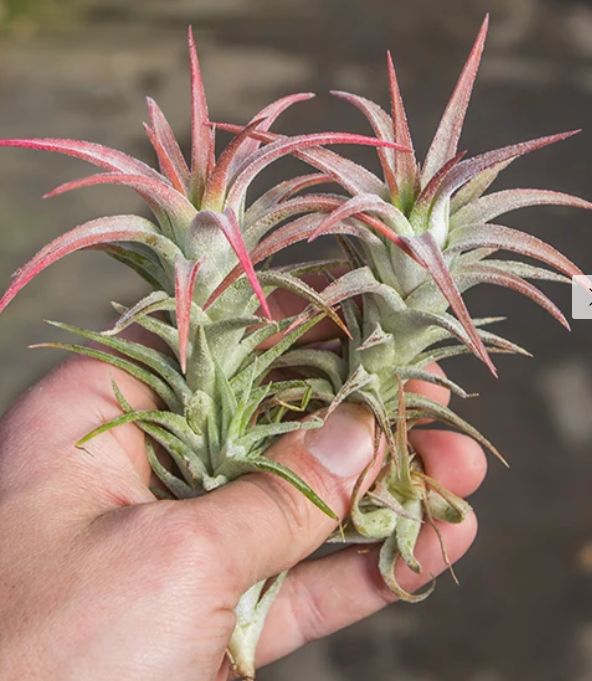
Tillandsia Ionantha Vanhyningii is a distinctive air plant prized for its thick, silvery-green leaves and unusual elongated, clumping growth habit. Unlike the compact rosettes associated with many forms of Tillandsia ionantha, Vanhyningii develops along an extended stem and readily produces offsets, eventually creating twisting clusters of connected plants. As it approaches flowering, the foliage can blush attractive shades of red or pink before producing vivid purple tubular flowers.
The plant is commonly known as Tillandsia ionantha var. vanhyningii or simply Tillandsia Vanhyningii. It is a distinctive form within the highly variable Tillandsia ionantha group and is especially valued by collectors for its elongated stems and strong tendency to form colonies. Like other Tillandsias, it is an epiphyte and does not require traditional soil.
Care
Tillandsia Ionantha Vanhyningii does best in bright, indirect light and can tolerate some gentle direct morning or late-afternoon sunlight. Plenty of light encourages compact, sturdy growth and can intensify the red or pink blush that develops around flowering. Introduce stronger direct sunlight gradually to prevent scorching.
Because this is an air plant, do not plant it in soil. Water thoroughly about once a week by soaking or completely saturating the plant, adjusting the frequency according to temperature, humidity, and airflow. After watering, gently shake away excess moisture and position the plant where it can dry completely within several hours. Plants kept in particularly warm or dry conditions may need more frequent watering.
Tillandsia Ionantha Vanhyningii should be displayed without traditional potting mix. It can be mounted on cork, wood, stone, or other open surfaces or placed in a decorative air plant holder. Its elongated, clumping growth makes it especially attractive when mounted where the developing colony has room to spread.
This Tillandsia prefers warm temperatures, moderate humidity, and excellent airflow. Good circulation is particularly important after watering. Avoid closed containers or constantly damp conditions where moisture can remain trapped between the leaves or around the developing offsets.
One of this plant's most distinctive features is its elongated, offset-producing growth habit. Rather than forming only a tight cluster around the base, new growth can develop along the extended stems, eventually producing an unusual branching colony. Mature plants typically blush red to pink before flowering and produce purple tubular blooms. After flowering, individual rosettes gradually decline while their pups continue developing, allowing the colony to become larger over time.
Pet Safety
Tillandsia Ionantha Vanhyningii is generally considered pet-friendly and non-toxic to cats and dogs. As with other air plants, consuming plant material may occasionally cause mild digestive upset, and chewing can easily damage the foliage.
Powered by Lightspeed
Display prices in:USD