Upcoming Events: Tissue Culture Workshop Oct 3 @ 11 am / Succulent Pumpkin Workshop Oct 4 @ 2 pm / Plant Swap Oct. 10 @ 10 am / Stained Glass Workshop Sunday Oct. 11th @ 2 pm
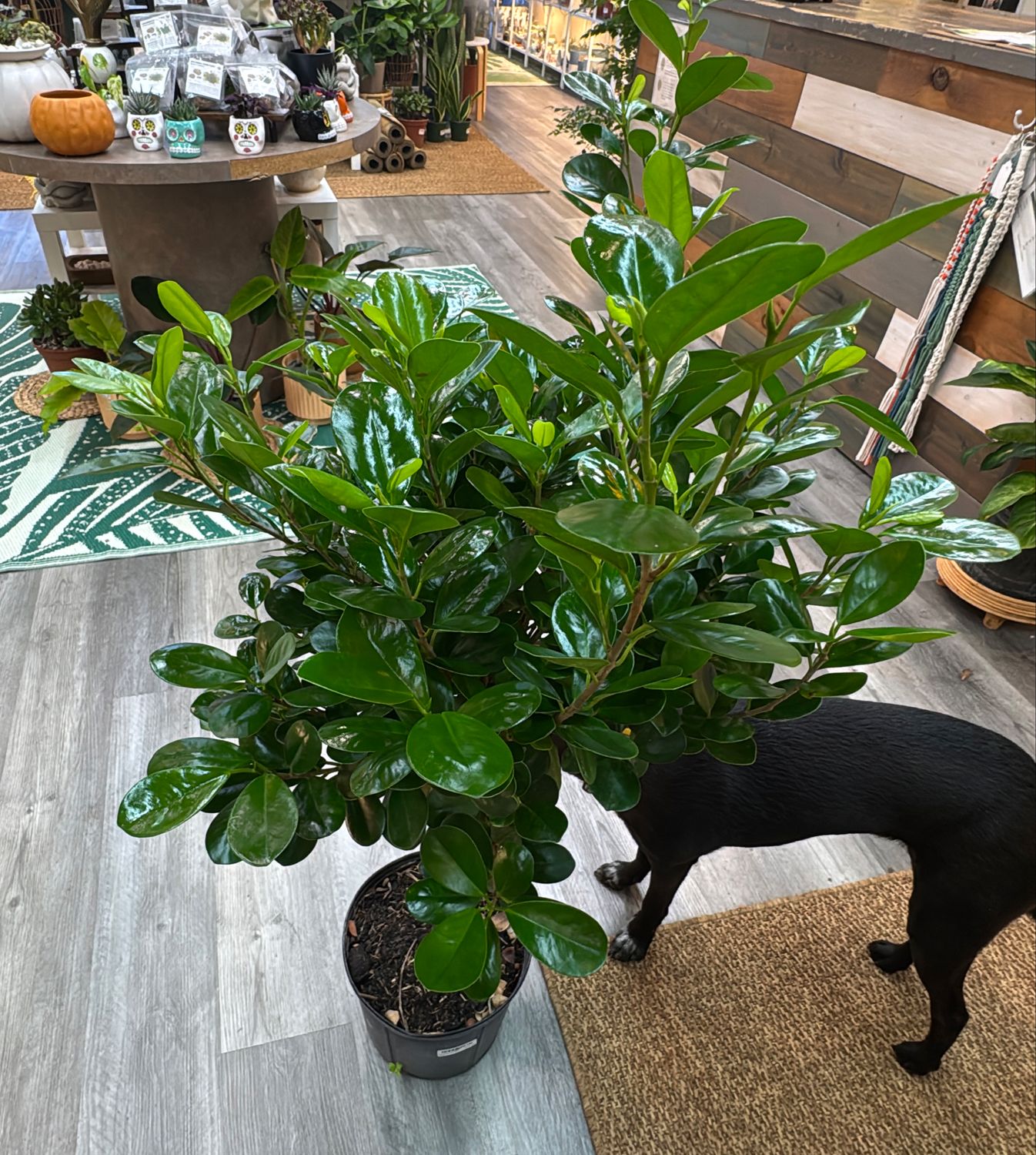
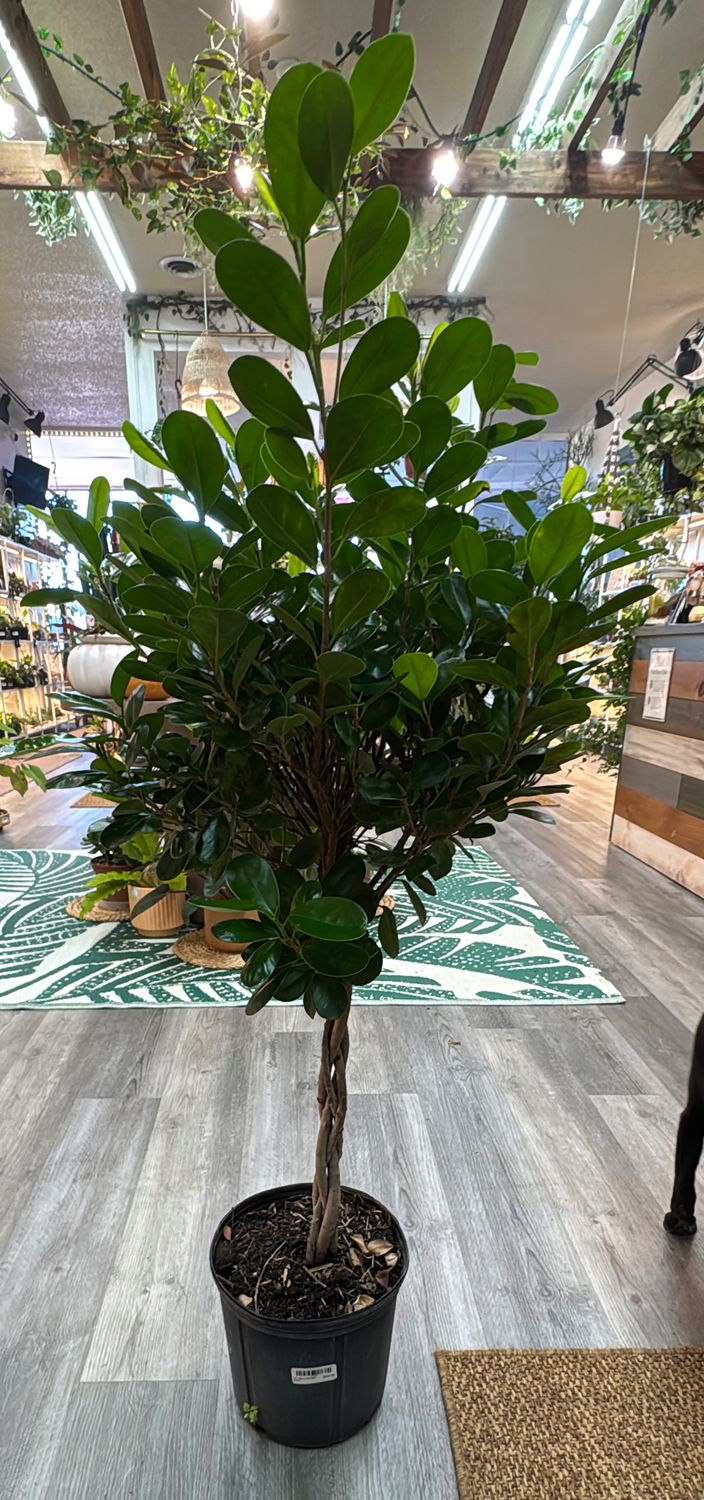
10" Ficus Daniella Braid
$58.00
Buy and save
Buy and earn $2.90 Loyalty for your next purchase
Loyalty is a discount program that lets you buy products and earn points to redeem on your next purchase. Your Loyalty balance is updated when you pay online or in-store. The Loyalty amount shown on this page can be recalculated at the checkout.
In stock: 1 available
10" Ficus Daniella Braid
Product Details
Brand: Plant
Ficus Daniella
Ficus Daniella is an attractive indoor tree known for its dense growth and glossy, deep green foliage. Its smooth, oval leaves grow along sturdy woody stems, creating a full, polished appearance that works well as either a tabletop plant when young or a larger floor plant as it matures. Its naturally tidy growth habit also makes it a popular choice for homes, offices, and other indoor spaces.
Commonly sold as Ficus ‘Daniella’ or Ficus Danielle, this plant is a cultivated form of Ficus microcarpa. It may also be associated with names such as Indian Laurel Fig or Chinese Banyan, although those common names are used for several forms of Ficus microcarpa. Daniella is selected for its compact branching and thick, glossy green leaves.
Care
Ficus Daniella does best in bright, indirect light and can tolerate some gentle direct sunlight. It can adapt to medium light, but growth may become slower or less dense. Avoid sudden changes from lower light to intense direct sun, which can scorch the foliage.
Water when the top 1–2 inches of soil feel dry, then water thoroughly and allow excess water to drain. Avoid allowing the plant to remain constantly wet, but also avoid letting it stay completely dry for extended periods. Ficus plants can respond to major changes in watering or environment by dropping leaves.
Use a well-draining, airy potting mix that retains some moisture without becoming waterlogged. A quality indoor potting mix amended with perlite, pumice, or fine orchid bark works well. Always use a container with adequate drainage.
Ficus Daniella prefers warm temperatures and moderate humidity. Typical household humidity is usually suitable, although additional humidity can be beneficial in very dry environments. Keep it away from cold drafts, heating vents, air-conditioning vents, and sudden environmental changes.
This Ficus develops into a woody, branching indoor tree and responds well to pruning. Trimming can be used to maintain its size, encourage branching, and create a fuller shape. Once placed in a suitable location, avoid moving it unnecessarily, as Ficus can temporarily shed leaves while adjusting to changes in light, temperature, or humidity.
Pet Safety
Ficus Daniella is toxic to cats and dogs. Its milky sap contains irritating compounds that can cause mouth and digestive irritation if ingested, including drooling, vomiting, or diarrhea. The sap may also irritate sensitive skin. Keep the plant out of reach of pets and small children.
Powered by Lightspeed
Display prices in:USD