Upcoming Events: Tissue Culture Workshop Oct 3 @ 11 am / Succulent Pumpkin Workshop Oct 4 @ 2 pm / Plant Swap Oct. 10 @ 10 am / Stained Glass Workshop Sunday Oct. 11th @ 2 pm
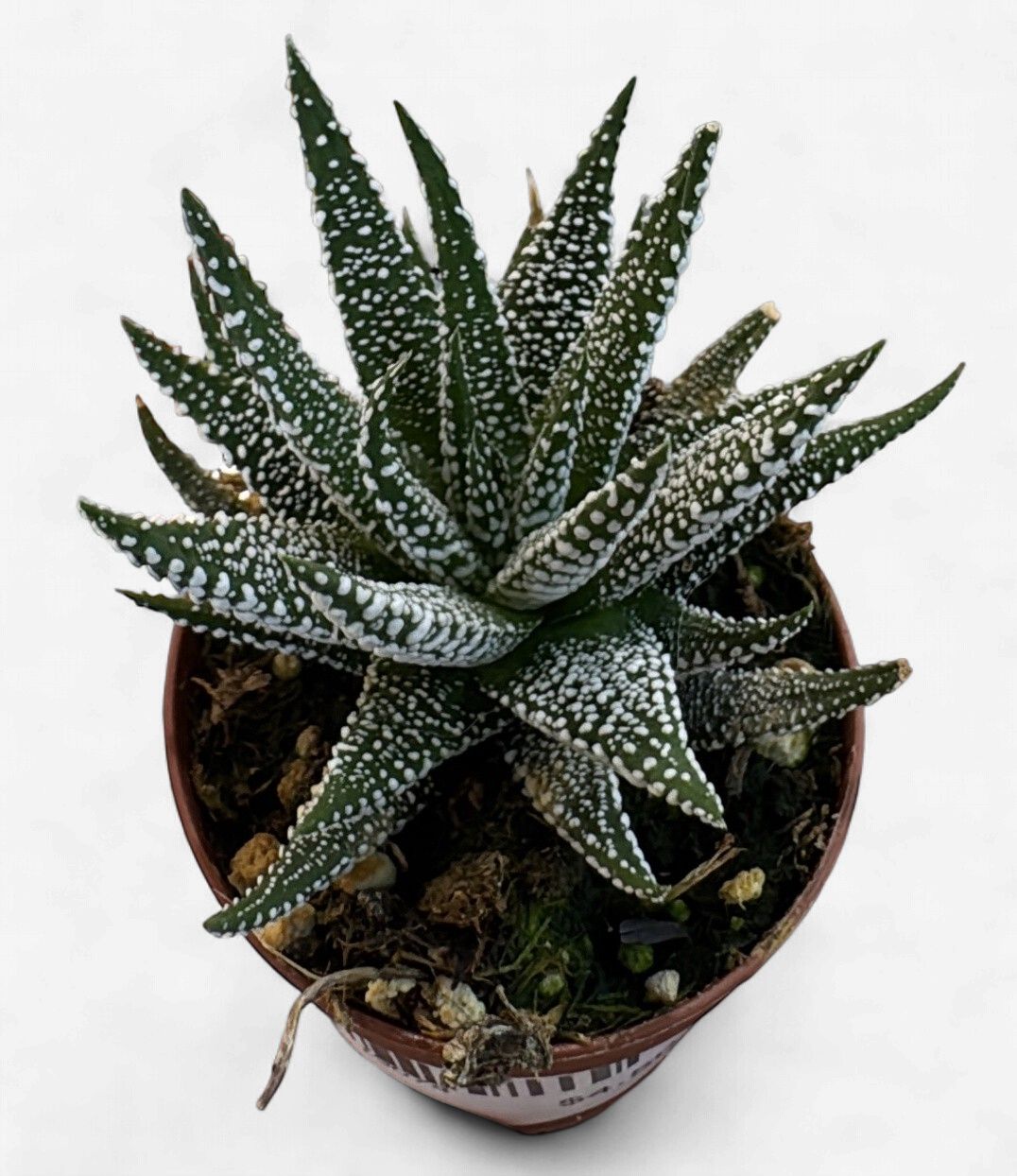
2" Haworthia Magnificos
$4.50
Buy and save
Buy and earn $0.22 Loyalty for your next purchase
Loyalty is a discount program that lets you buy products and earn points to redeem on your next purchase. Your Loyalty balance is updated when you pay online or in-store. The Loyalty amount shown on this page can be recalculated at the checkout.
In stock: 12 available
2" Haworthia Magnificos
Product Details
Brand: Plant
Haworthia Magnifica
Haworthia Magnifica is a compact succulent prized for its thick, triangular leaves, translucent windowed tips, and beautifully patterned rosette growth. The foliage typically ranges from deep green to olive, brownish green, or reddish tones depending on light and growing conditions. Many forms display delicate lines, veining, or textured markings across the translucent upper portions of the leaves, giving the plant an almost jewel-like appearance when illuminated.
The proper botanical name is Haworthia magnifica, although modern botanical classifications generally place it as Haworthia mirabilis var. magnifica. Several naturally occurring forms and cultivated selections exist, so plants sold as Haworthia Magnifica can vary noticeably in leaf shape, coloration, texture, and transparency.
Care
Haworthia Magnifica does best in bright, indirect light with some gentle direct sunlight. It generally prefers protection from intense midday or afternoon sun, which can scorch or severely stress the foliage. Moderate sun exposure may bring out attractive reddish, bronze, or darker coloration.
Allow the potting mix to dry completely or almost completely between waterings, then water thoroughly and allow all excess water to drain. Its thick succulent leaves store moisture, making overwatering a greater concern than occasional dryness. Reduce watering during periods of slower growth.
Use a very well-draining, gritty succulent potting mix in a container with drainage. A mixture containing pumice, perlite, lava rock, coarse sand, or other mineral amendments works well. Avoid dense soil that remains wet around the roots for extended periods.
Haworthia Magnifica prefers mild to warm temperatures and low to moderate humidity with good airflow. Unlike many desert cacti, Haworthias do not require intense heat or all-day direct sunlight. Protect the plant from prolonged freezing temperatures and excessively hot conditions combined with harsh sun.
This succulent develops a slow-growing, compact rosette habit and may eventually produce offsets around the base, gradually forming a small cluster. Mature plants can also send up slender flower stalks bearing small pale flowers. Its naturally modest size and slow growth make it particularly well suited to small containers and succulent displays.
Pet Safety
Haworthia Magnifica is generally considered pet-friendly and non-toxic to cats and dogs. As with any plant, consuming a large amount of plant material may still cause mild digestive upset, so discouraging pets from chewing on the foliage is recommended.
Powered by Lightspeed
Display prices in:USD