Upcoming Events: Tissue Culture Workshop Oct 3 @ 11 am / Succulent Pumpkin Workshop Oct 4 @ 2 pm / Plant Swap Oct. 10 @ 10 am / Stained Glass Workshop Sunday Oct. 11th @ 2 pm
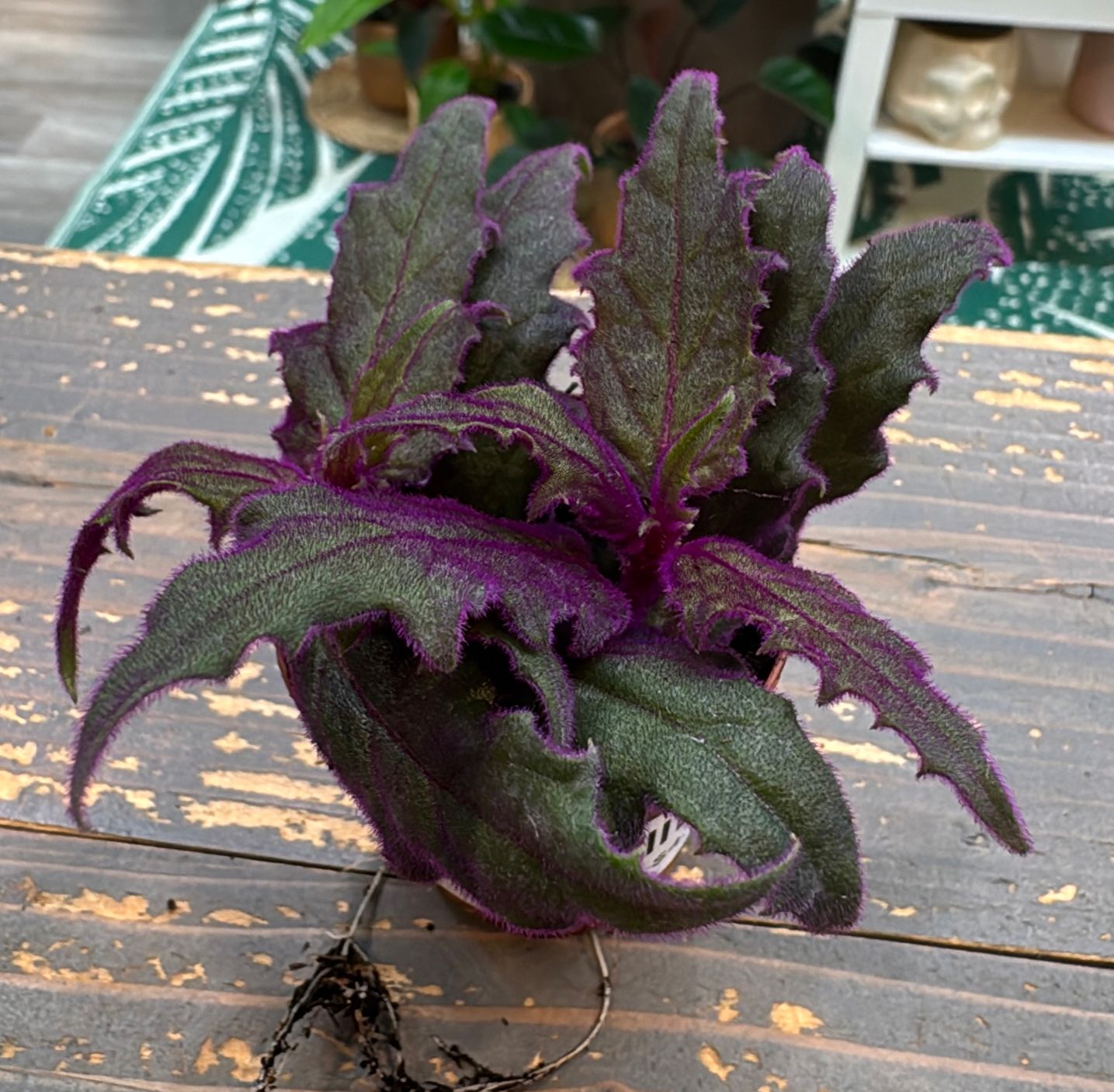
2" Purple Passion Plant
$4.00
Buy and save
Buy and earn $0.20 Loyalty for your next purchase
Loyalty is a discount program that lets you buy products and earn points to redeem on your next purchase. Your Loyalty balance is updated when you pay online or in-store. The Loyalty amount shown on this page can be recalculated at the checkout.
In stock: 26 available
2" Purple Passion Plant
Product Details
Brand: Plant
Purple Passion Plant
Purple Passion Plant is a colorful houseplant known for the soft purple hairs that cover its leaves and stems. The foliage itself is deep green, but the dense violet-purple hairs create a rich, velvety appearance that becomes especially vibrant in bright light. Its unusual texture and intense coloration make it stand out among more traditional green houseplants.
The proper botanical name is Gynura aurantiaca, commonly known as Purple Passion Plant, Purple Velvet Plant, or Velvet Plant. It is native to Southeast Asia and belongs to the Asteraceae, or daisy, family. Mature plants can produce clusters of small orange-yellow flowers, although the flowers have a strong and sometimes unpleasant odor and are often removed before fully opening.
Care
Purple Passion Plant does best in bright, indirect light with some gentle morning or late-afternoon sun. Brighter light helps maintain its intense purple coloration and compact growth. In lower light, the plant may become greener and develop longer, weaker stems. Avoid prolonged intense afternoon sun, which can scorch the foliage.
Water when the top inch of the potting mix begins to dry, then water thoroughly and allow excess water to drain. Keep the plant relatively consistent during active growth without allowing the soil to remain constantly wet. When possible, water the soil rather than repeatedly wetting the fuzzy foliage.
Use a light, airy, and well-draining potting mix. A quality indoor potting mix amended with perlite, pumice, or fine orchid bark works well. Good drainage is important because the plant prefers regular moisture but is susceptible to root problems in soggy soil.
Purple Passion Plant prefers warm temperatures and moderate humidity with good airflow. Avoid keeping the fuzzy leaves constantly damp, particularly in cool or poorly ventilated conditions. Protect the plant from cold drafts and sudden temperature changes.
This plant develops an upright to trailing growth habit, with stems becoming longer as it matures. Pinching the growing tips regularly encourages branching and helps maintain a dense, bushy shape. Purple Passion Plants can become less attractive as they age, so older plants are often refreshed by rooting stem cuttings and starting a fuller new plant.
Pet Safety
Purple Passion Plant is generally considered pet-friendly and non-toxic to cats and dogs. However, eating a large amount of any plant material may cause mild digestive upset, so it is still best to discourage pets from chewing on the foliage.
Powered by Lightspeed
Display prices in:USD