Upcoming Events: Tissue Culture Workshop Oct 3 @ 11 am / Succulent Pumpkin Workshop Oct 4 @ 2 pm / Plant Swap Oct. 10 @ 10 am / Stained Glass Workshop Sunday Oct. 11th @ 2 pm
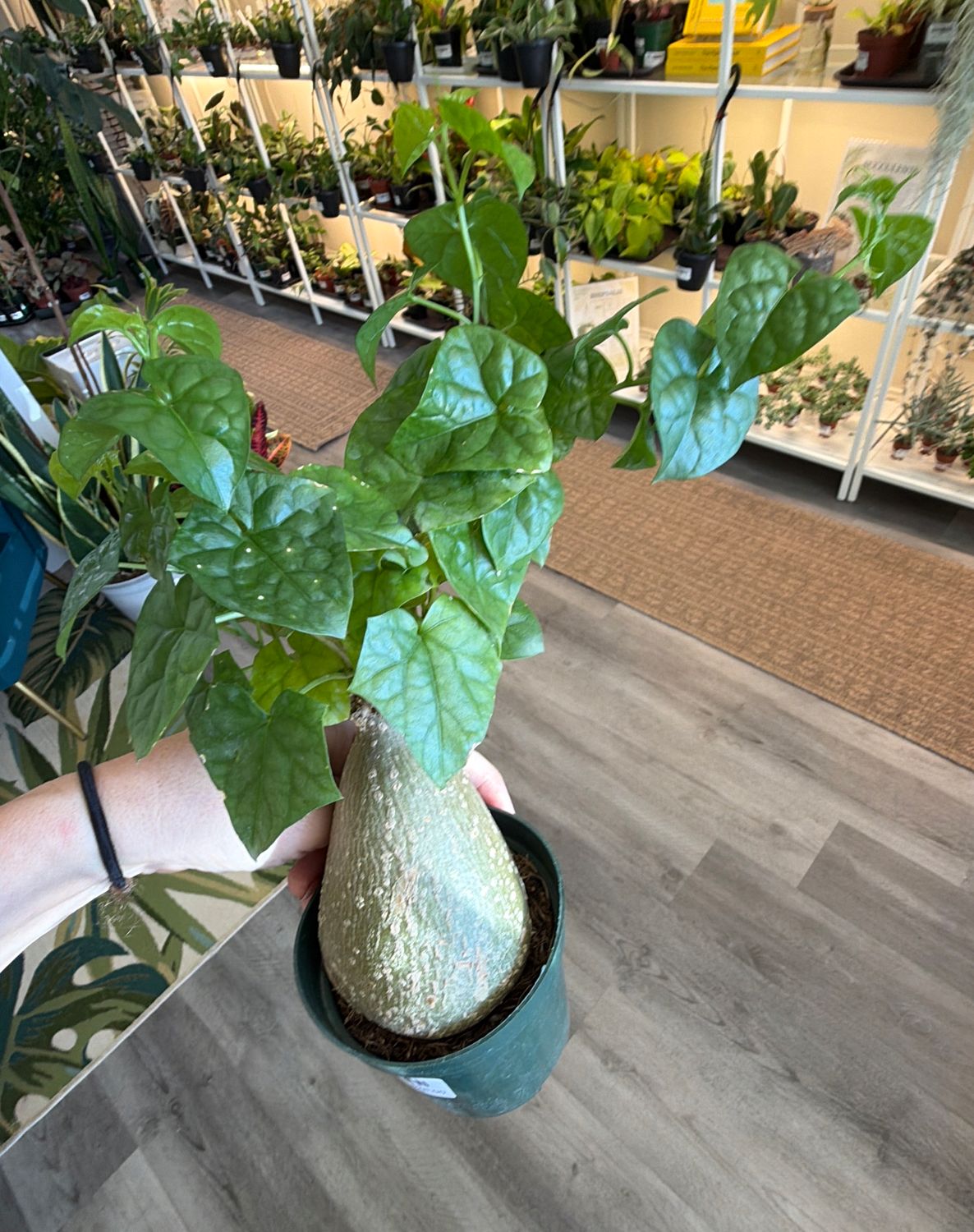
4" GerrardanthusMacrorhizus 'Bigfoot
$28.00
Buy and save
Buy and earn $1.40 Loyalty for your next purchase
Loyalty is a discount program that lets you buy products and earn points to redeem on your next purchase. Your Loyalty balance is updated when you pay online or in-store. The Loyalty amount shown on this page can be recalculated at the checkout.
In stock: 2 available
4" GerrardanthusMacrorhizus 'Bigfoot
Product Details
Gerrardanthus Bigfoot
Gerrardanthus Bigfoot is an unusual caudiciform plant prized for its massive, swollen base and vigorous climbing vines. The rounded, woody caudex develops above the soil and can become increasingly impressive with age, while slender vines produce attractive green, ivy-like leaves. The contrast between its heavy sculptural base and delicate climbing foliage gives this plant a distinctive prehistoric or bonsai-like appearance.
The plant commonly sold as Gerrardanthus Bigfoot is Gerrardanthus macrorhizus, a member of the cucumber and squash family, Cucurbitaceae. It is native to southern Africa and is also known as Bigfoot, Bigfoot Plant, or Elephant’s Foot. The large exposed structure is a water-storing caudex that allows the plant to survive seasonal periods of reduced moisture.
Care
Gerrardanthus Bigfoot does best in bright, indirect light with some gentle direct sunlight. Strong light encourages healthy vines and compact growth, although the caudex itself should be protected from sudden exposure to intense sunlight that could cause scorching.
During active growth, water when the potting mix has dried significantly, then water thoroughly and allow excess water to drain. Its caudex stores water, so the plant is much more tolerant of occasional dryness than consistently wet soil. Water considerably less when the plant enters dormancy or loses its foliage.
Use a very well-draining, gritty potting mix in a container with drainage. A cactus or succulent mix amended with pumice, perlite, lava rock, or other coarse mineral material works well. Avoid dense soil that remains wet around the roots and caudex.
Gerrardanthus Bigfoot prefers warm temperatures and low to moderate humidity. Good airflow is beneficial, and the plant should be protected from prolonged cold conditions. Seasonal changes can trigger slower growth or dormancy.
This plant produces fast-growing climbing vines during its active season and benefits from a trellis or other support. The vines can be pruned to control their size without harming the caudex. The swollen base enlarges gradually over many years and should remain prominently exposed rather than being completely buried. Leaf drop and vine dieback can occur during dormancy and do not necessarily indicate that the caudex has died.
Pet Safety
Reliable species-specific information about the toxicity of Gerrardanthus macrorhizus to cats and dogs is limited. Because it belongs to the Cucurbitaceae family and has not been established as a pet-safe houseplant, it is best treated as not pet-safe and kept out of reach of animals and small children.
Powered by Lightspeed
Display prices in:USD