Upcoming Events: Tissue Culture Workshop Oct 3 @ 11 am / Succulent Pumpkin Workshop Oct 4 @ 2 pm / Plant Swap Oct. 10 @ 10 am / Stained Glass Workshop Sunday Oct. 11th @ 2 pm
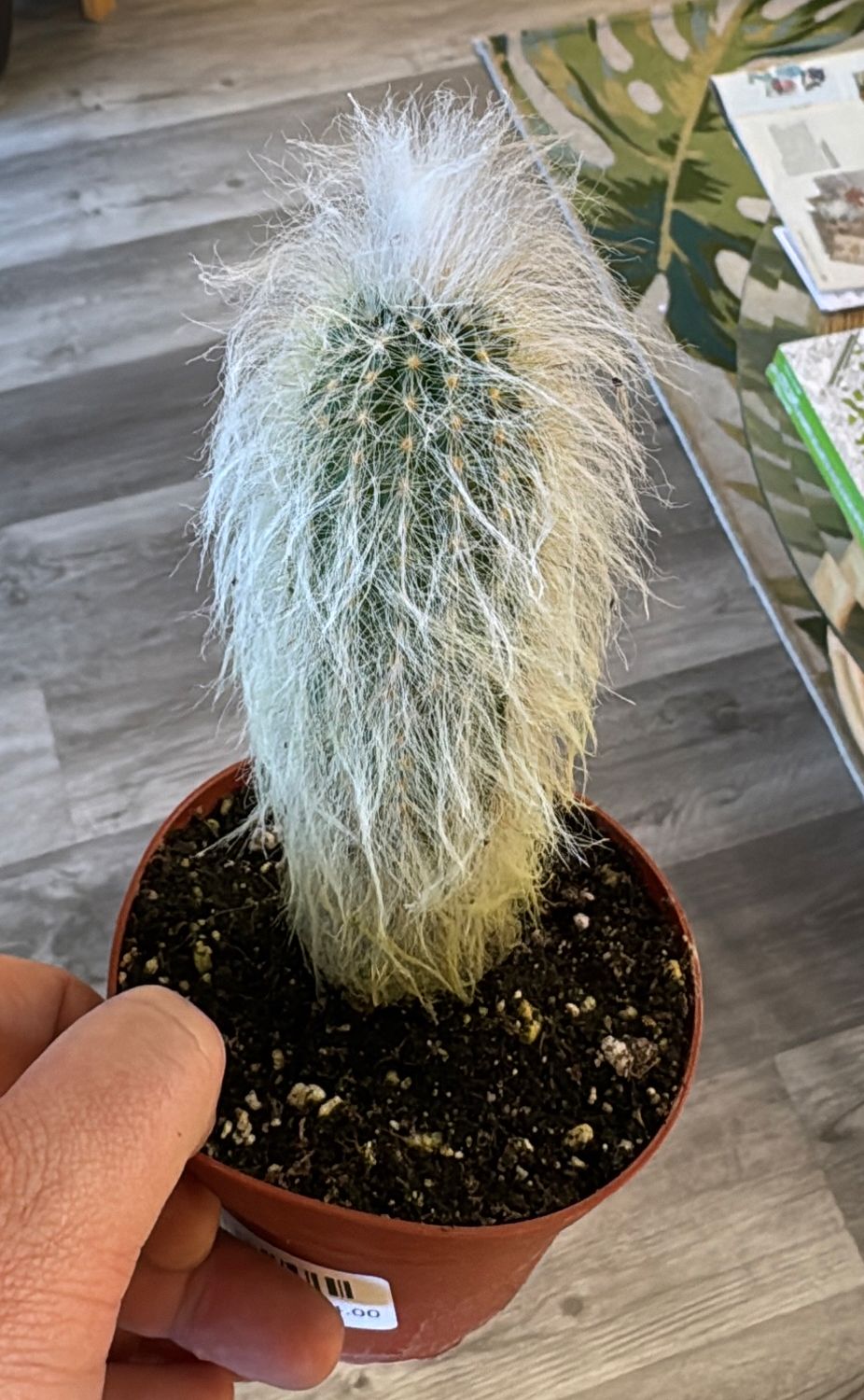
4" Old Man Cactus
$14.00
Buy and save
Buy and earn $0.70 Loyalty for your next purchase
Loyalty is a discount program that lets you buy products and earn points to redeem on your next purchase. Your Loyalty balance is updated when you pay online or in-store. The Loyalty amount shown on this page can be recalculated at the checkout.
In stock: 14 available
4" Old Man Cactus
Product Details
Brand: Plant
Old Man Cactus
Old Man Cactus is a distinctive columnar cactus prized for the long, soft-looking white hairs that cover its green stems. These dense, silvery-white hairs give the plant its characteristic shaggy appearance and help protect it from intense sunlight in its natural habitat. Young plants make unusual tabletop specimens, while mature plants can eventually develop into impressive upright columns.
The proper botanical name is Cephalocereus senilis, commonly known as Old Man Cactus or Old Man of Mexico. It is native to Mexico and is naturally a much larger plant than the small specimens commonly sold as houseplants. The soft-looking hairs conceal sharp cactus spines underneath, so the plant should still be handled carefully.
Care
Old Man Cactus does best in very bright light with several hours of direct sunlight. A sunny window or similarly bright location is ideal indoors. Strong light encourages sturdy growth and helps maintain its dense covering of white hairs. Gradually acclimate plants to intense direct sunlight to reduce the risk of scorching.
Allow the potting mix to dry completely between waterings, then water thoroughly and allow excess water to drain. Old Man Cactus is highly drought tolerant and is much more susceptible to problems from excessive moisture than occasional dryness. Reduce watering considerably during cooler months and periods of slower growth.
Use a very well-draining, gritty cactus mix in a container with drainage. A mixture containing pumice, perlite, lava rock, coarse mineral grit, or similar amendments works well. Avoid dense soil that remains wet around the roots.
Old Man Cactus prefers warm temperatures, low humidity, and good airflow. Its dense hairs can trap moisture against the stem, so avoid keeping the plant constantly damp or placing it in poorly ventilated, highly humid conditions. When watering, directing most of the water toward the soil rather than repeatedly soaking the hairy stem can help keep the plant clean and dry.
This cactus develops a slow-growing, upright, columnar habit. Growth indoors is generally quite slow, but plants can become substantially larger over many years. Very mature specimens can eventually produce flowers, although flowering is uncommon on younger plants grown indoors.
Pet Safety
Old Man Cactus is not generally considered highly toxic to cats or dogs. However, sharp spines are hidden beneath its soft white hairs and can cause painful injuries to the mouth, paws, or skin. Eating cactus tis
Powered by Lightspeed
Display prices in:USD