Upcoming Events: Tissue Culture Workshop Oct 3 @ 11 am / Succulent Pumpkin Workshop Oct 4 @ 2 pm / Plant Swap Oct. 10 @ 10 am / Stained Glass Workshop Sunday Oct. 11th @ 2 pm
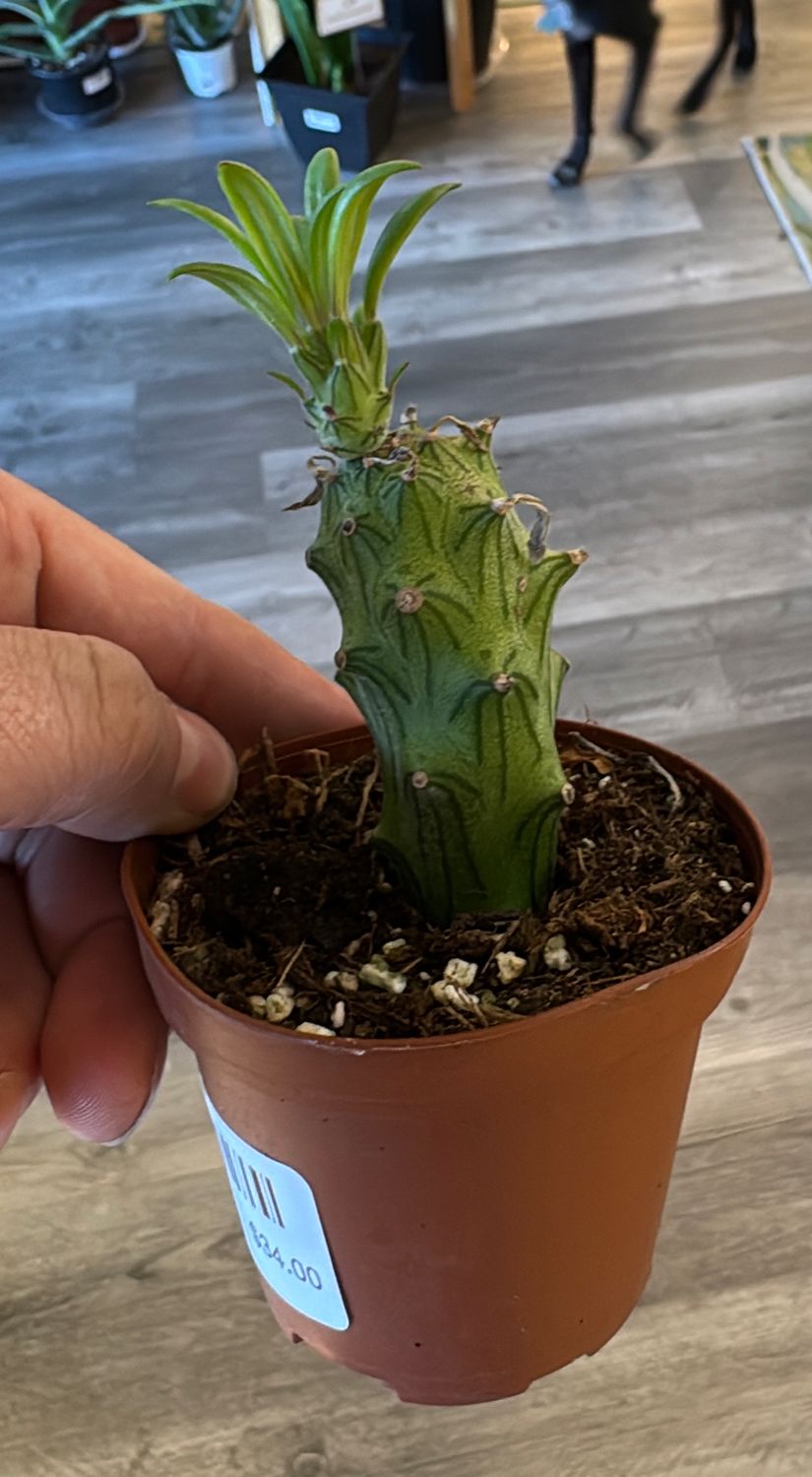
4"Senecio Kleinia Mweroensis
$34.00
Buy and save
Buy and earn $1.70 Loyalty for your next purchase
Loyalty is a discount program that lets you buy products and earn points to redeem on your next purchase. Your Loyalty balance is updated when you pay online or in-store. The Loyalty amount shown on this page can be recalculated at the checkout.
In stock: 3 available
4"Senecio Kleinia Mweroensis
Product Details
Brand: Plant
Kleinia mweroensis
Kleinia mweroensis is an unusual succulent prized for its thick, upright stems and distinctive seasonal foliage. Its fleshy stems store water and develop a sculptural, almost miniature tree-like appearance, while green leaves emerge during periods of active growth. The combination of succulent stems, branching growth, and seasonal leaf changes makes it an interesting choice for collectors of unusual succulents and caudiciform-style plants.
The proper botanical name is Kleinia mweroensis, although it may still be sold under the older classification Senecio mweroensis. It belongs to the daisy family, Asteraceae, and is native to tropical regions of Africa. The older Senecio name remains common in the succulent trade, so plants may be labeled under either genus.
Care
Kleinia mweroensis does best in very bright light with some direct sunlight. Strong light encourages sturdy, compact growth and helps prevent weak or stretched stems. Plants grown indoors should be gradually acclimated before receiving prolonged intense direct sunlight.
Allow the potting mix to dry completely or almost completely between waterings, then water thoroughly and allow excess water to drain. Water more regularly while the plant is actively producing foliage and reduce watering significantly when growth slows or the plant enters a dormant period.
Use a very well-draining, gritty cactus or succulent potting mix in a container with drainage. A mixture containing pumice, perlite, lava rock, coarse mineral grit, and a smaller amount of organic material works well. Avoid dense soil that remains wet around the roots and succulent stems.
Kleinia mweroensis prefers warm temperatures, low to moderate humidity, and good airflow. Seasonal changes in growth are normal, and the plant may shed some or all of its leaves during dormancy. Leaf loss should not automatically be interpreted as the plant dying if the stems remain firm and healthy.
This plant develops an upright, branching growth habit and can gradually form a distinctive woody or succulent shrub-like structure. Pruning can be used to cont
Powered by Lightspeed
Display prices in:USD