Upcoming Events: Tissue Culture Workshop Oct 3 @ 11 am / Succulent Pumpkin Workshop Oct 4 @ 2 pm / Plant Swap Oct. 10 @ 10 am / Stained Glass Workshop Sunday Oct. 11th @ 2 pm
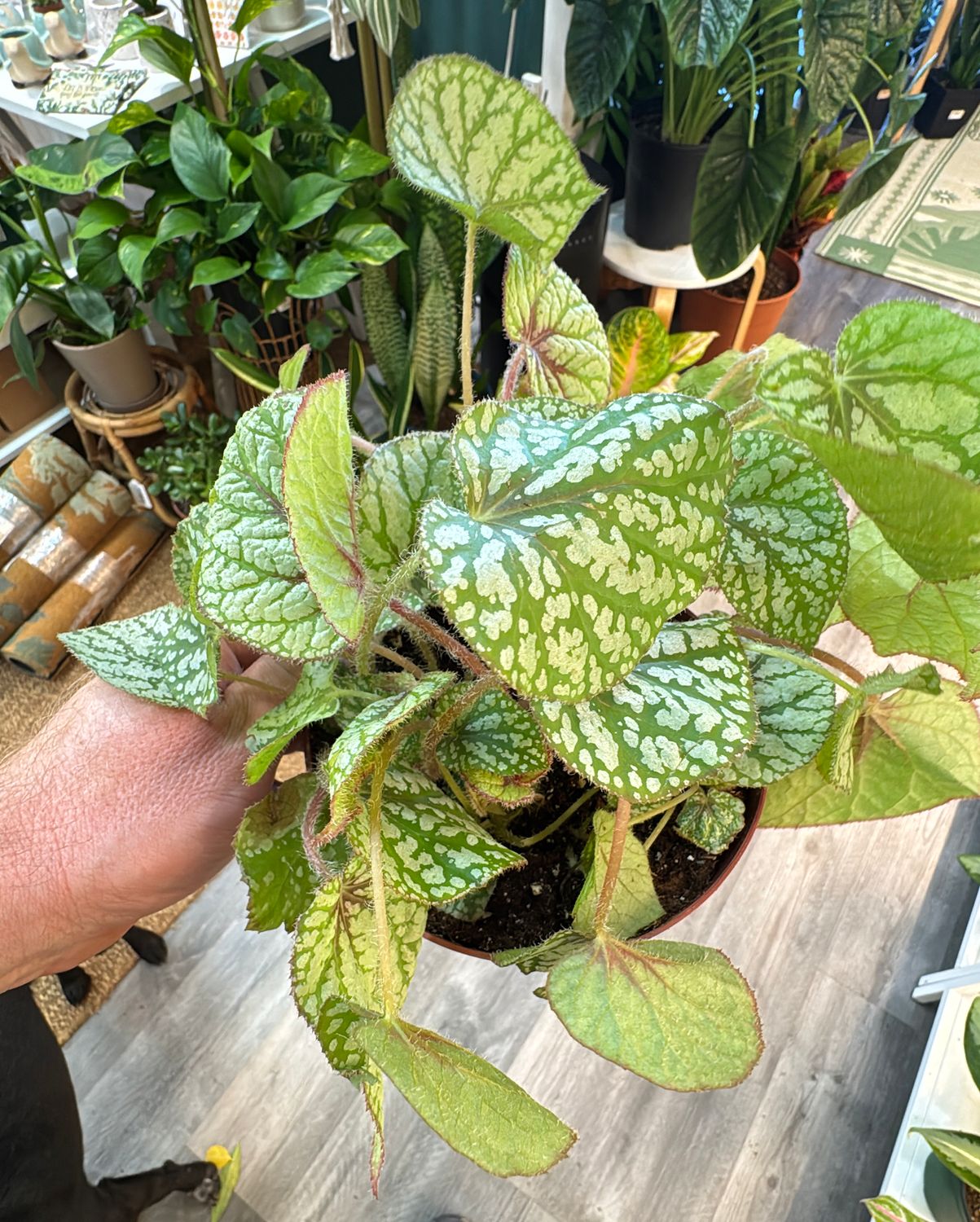
6" Begonia U309
$26.00
Buy and save
Buy and earn $1.30 Loyalty for your next purchase
Loyalty is a discount program that lets you buy products and earn points to redeem on your next purchase. Your Loyalty balance is updated when you pay online or in-store. The Loyalty amount shown on this page can be recalculated at the checkout.
In stock: 1 available
6" Begonia U309
Product Details
Brand: Plant
Begonia U309
Begonia U309 is an unusual collector Begonia prized for its deeply textured foliage, pronounced veining, and rugged, almost reptilian appearance. Its leaves develop a heavily sculpted surface that creates dramatic highlights and shadows, giving the plant considerably more dimension than a typical smooth-leaved Begonia. Its compact growth and unusual foliage make it especially appealing for specialty Begonia collections, terrariums, and humid growing spaces.
The name Begonia U309 is an identification number rather than a traditional botanical species or cultivar name. In Begonia collecting, a “U” number is used for plants that are unidentified or have not yet been confidently matched with a formally described species. Until its botanical identity is established, U309 is the appropriate collector designation and should not be replaced with a speculative species name.
Care
Begonia U309 does best in medium to bright, indirect light. Good filtered light encourages healthy, compact growth while showing off the texture and coloration of the foliage. Avoid prolonged direct sunlight, which can scorch the leaves.
Water when the upper layer of the potting mix begins to feel slightly dry, keeping the soil lightly and consistently moist without allowing it to remain soggy. This Begonia should not be treated like a succulent or allowed to remain completely dry for extended periods.
Use a light, airy and well-draining potting mix in a container with drainage. A mixture containing coco coir or quality houseplant soil, perlite or pumice, and fine orchid bark works well. The goal is to provide consistent moisture while maintaining plenty of oxygen around the roots.
Begonia U309 prefers warm temperatures and moderate to high humidity. It can particularly benefit from increased humidity compared with many common houseplants, but good airflow remains important. Avoid keeping the foliage constantly wet, especially when air circulation is limited.
This Begonia develops a compact to spreading growth habit and is grown primarily for its unusual foliage. Stable warmth, humidity, and moisture are preferable to large fluctuations in its environment. Remove declining leaves as needed and avoid burying the crown or growing points too deeply when repotting.
Pet Safety
Begonia U309 is toxic to cats and dogs if ingested. Begonias contain soluble calcium oxalates, with higher concentrations typically found in the underground portions of the plant. Ingestion can cause irritation of the mouth and digestive tract, drooling, vomiting, or difficulty swallowing. Keep it out of reach of pets and small children.
Powered by Lightspeed
Display prices in:USD