Upcoming Events: Tissue Culture Workshop Oct 3 @ 11 am / Succulent Pumpkin Workshop Oct 4 @ 2 pm / Plant Swap Oct. 10 @ 10 am / Stained Glass Workshop Sunday Oct. 11th @ 2 pm
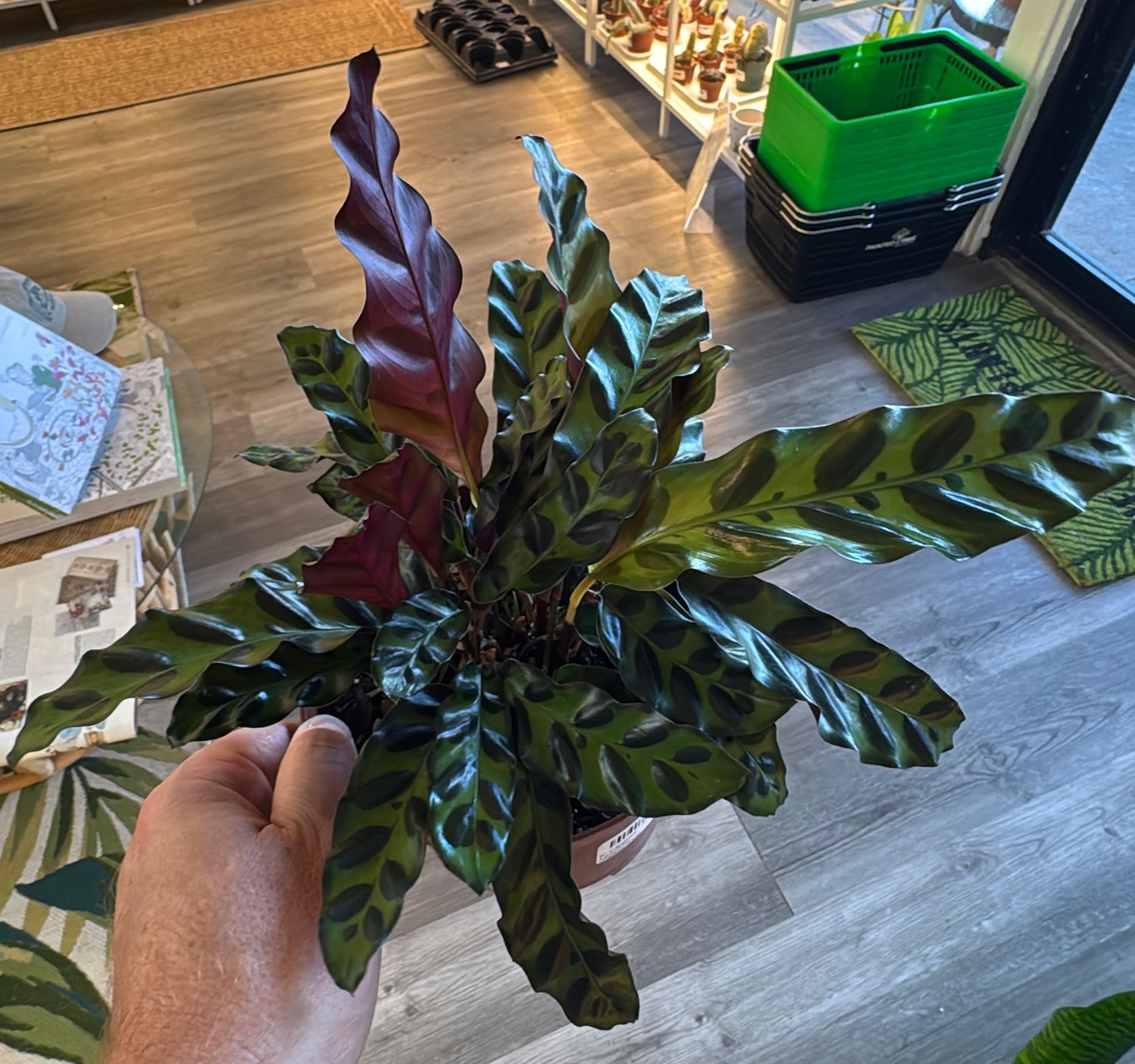
6" Calathea Lancifolia (Rattlesnake)
$24.00
Buy and save
Buy and earn $1.20 Loyalty for your next purchase
Loyalty is a discount program that lets you buy products and earn points to redeem on your next purchase. Your Loyalty balance is updated when you pay online or in-store. The Loyalty amount shown on this page can be recalculated at the checkout.
In stock: 5 available
6" Calathea Lancifolia (Rattlesnake)
Product Details
Brand: Plant
Calathea lancifolia ‘Rattlesnake’
Calathea lancifolia ‘Rattlesnake’ is a dramatic tropical foliage plant known for its long, narrow, wavy-edged leaves. Each leaf features a light to medium green background decorated with dark green oval markings that resemble the pattern of a rattlesnake, while the undersides provide a rich burgundy-purple contrast. Like other prayer plants, its leaves naturally raise and lower throughout the day in response to changing light.
Commonly known as Rattlesnake Plant or Rattlesnake Calathea, this plant has traditionally been sold as Calathea lancifolia. Its currently accepted botanical classification is Goeppertia insignis, although the older Calathea lancifolia name remains extremely common in the houseplant trade. It is native to Brazil and belongs to the Marantaceae, or prayer plant, family.
Care
Rattlesnake Calathea does best in medium to bright, indirect light. It can tolerate somewhat lower light levels, but brighter filtered light encourages stronger growth and more defined foliage patterns. Avoid prolonged direct sunlight, which can fade the leaves or cause scorching.
Water when the top inch of soil begins to feel slightly dry, keeping the potting mix lightly and consistently moist without leaving it soggy. Calatheas can be sensitive to minerals and chemicals in tap water. If brown or crispy leaf edges become a recurring problem, filtered, distilled, or rainwater may help.
Use a light, airy, well-draining potting mix that also retains some moisture. A mixture containing coco coir or quality houseplant soil with perlite and fine orchid bark works well. Good drainage is important because the plant prefers consistent moisture but does not tolerate waterlogged roots.
Rattlesnake Calathea prefers warm temperatures and moderate to high humidity. Higher humidity can help maintain healthy foliage and reduce crispy edges. Keep it away from cold drafts, heating or air-conditioning vents, and sudden temperature changes.
This plant develops an upright, clumping growth habit, with new leaves emerging from underground rhizomes. Mature plants can become impressively full while remaining manageable indoors. The daily raising and lowering of its leaves is normal and is one of the characteristics that gives members of the prayer plant family their common name.
Pet Safety
Rattlesnake Calathea is generally considered pet-friendly and non-toxic to cats and dogs. As with any houseplant, eating a large amount of foliage may still cause mild digestive upset, so it is best to discourage pets from chewing on the leaves.
Powered by Lightspeed
Display prices in:USD