
Upcoming Events: Tissue Culture Workshop Oct 3 @ 11 am / Succulent Pumpkin Workshop Oct 4 @ 2 pm / Plant Swap Oct. 10 @ 10 am / Stained Glass Workshop Sunday Oct. 11th @ 2 pm
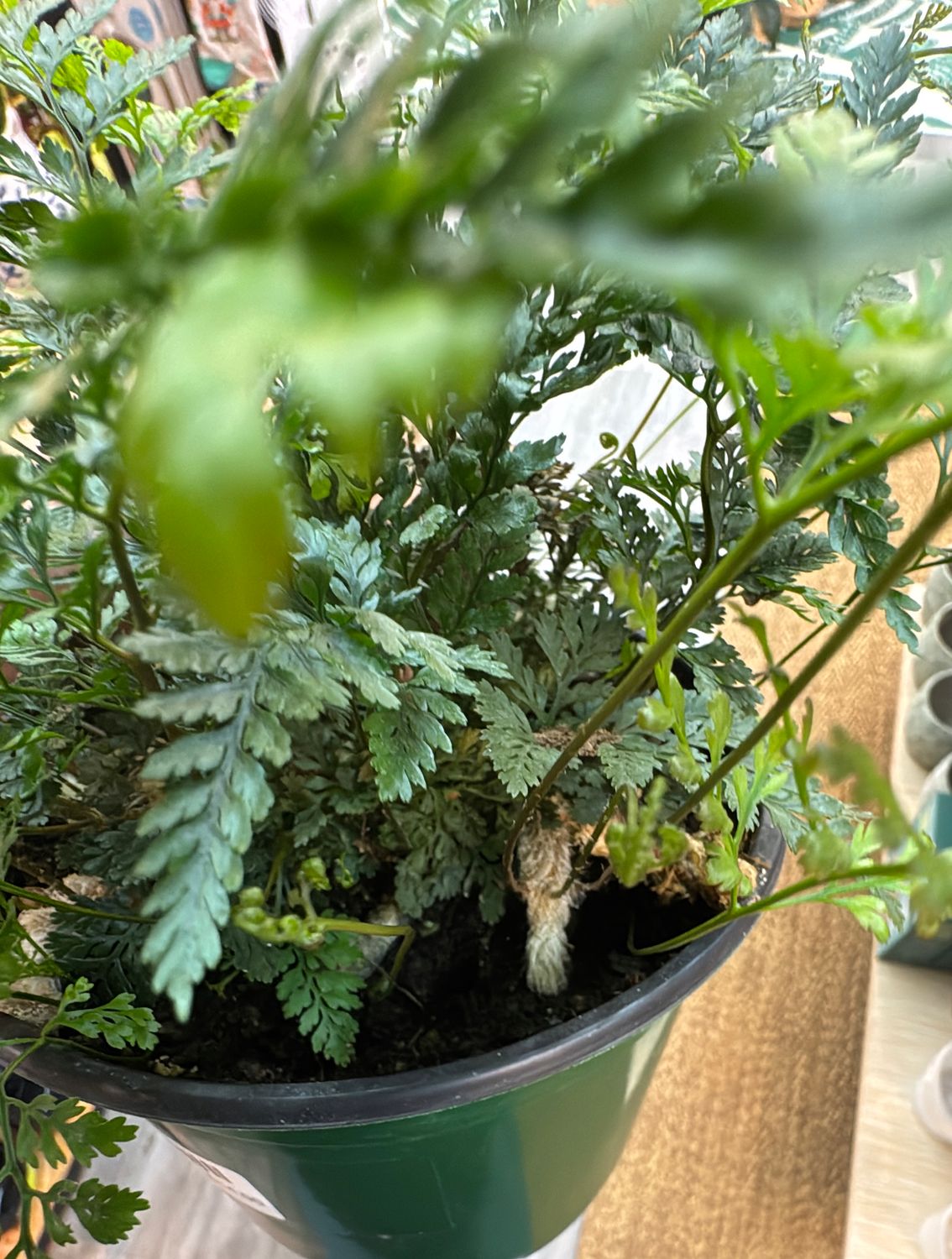
6" Fern White Rabbits Foot
$14.00
Buy and save
Buy and earn $0.70 Loyalty for your next purchase
Loyalty is a discount program that lets you buy products and earn points to redeem on your next purchase. Your Loyalty balance is updated when you pay online or in-store. The Loyalty amount shown on this page can be recalculated at the checkout.
In stock: 6 available
6" Fern White Rabbits Foot
Product Details
Brand: Plant
White Rabbit's Foot Fern
White Rabbit’s Foot Fern is a distinctive tropical fern prized for its soft, finely divided green fronds and fuzzy white to silvery rhizomes that creep across the surface of the pot. These unusual rhizomes resemble small furry rabbit feet and become increasingly visible as the plant matures. Its graceful, arching foliage and creeping growth make it particularly attractive in hanging baskets or containers where the fuzzy rhizomes can grow naturally over the edges.
The plant commonly called White Rabbit’s Foot Fern is Humata tyermannii, although it is also frequently listed under the older name Davallia tyermannii. It belongs to the Davalliaceae family, a group of ferns known for their distinctive above-ground creeping rhizomes. It should not be confused with other plants commonly called Rabbit’s Foot Fern, as several related fern species are sold under similar names.
Care
White Rabbit’s Foot Fern does best in medium to bright, indirect light. It can tolerate somewhat lower light but may grow more slowly or become less full. Avoid prolonged direct sunlight, which can scorch its delicate fronds.
Water when the top layer of the potting mix begins to feel slightly dry, keeping the plant lightly and consistently moist without leaving it soggy. Rabbit’s Foot Ferns generally tolerate a little more drying than some other tropical ferns, but they should not remain completely dry for extended periods.
Use a light, airy and well-draining potting mix in a container with drainage. A mixture containing quality houseplant soil or coco coir, fine orchid bark, and perlite works well. The creeping rhizomes should remain on top of the potting mix rather than being buried, as covering them can encourage rot.
White Rabbit’s Foot Fern prefers warm temperatures and moderate to high humidity. It adapts to typical indoor conditions better than some humidity-sensitive ferns, although additional humidity can help maintain lush foliage and prevent crispy frond tips. Good airflow is beneficial in higher-humidity environments.
This fern develops a creeping and spreading growth habit as its fuzzy rhizomes travel across the soil surface and eventually over the sides of its container. These rhizomes are a normal and desirable part of the plant and should not be cut off simply because they extend beyond the pot. Mature plants can become broad, cascading specimens and are particularly well suited to hanging displays.
Pet Safety
White Rabbit’s Foot Fern is generally considered pet-friendly and non-toxic to cats and dogs. As with any houseplant, consuming a large amount of plant material may still cause mild digestive upset, so discouraging pets from chewing on the fronds or fuzzy rhizomes is recommended.
Powered by Lightspeed
Display prices in:USD