Upcoming Events: Tissue Culture Workshop Oct 3 @ 11 am / Succulent Pumpkin Workshop Oct 4 @ 2 pm / Plant Swap Oct. 10 @ 10 am / Stained Glass Workshop Sunday Oct. 11th @ 2 pm
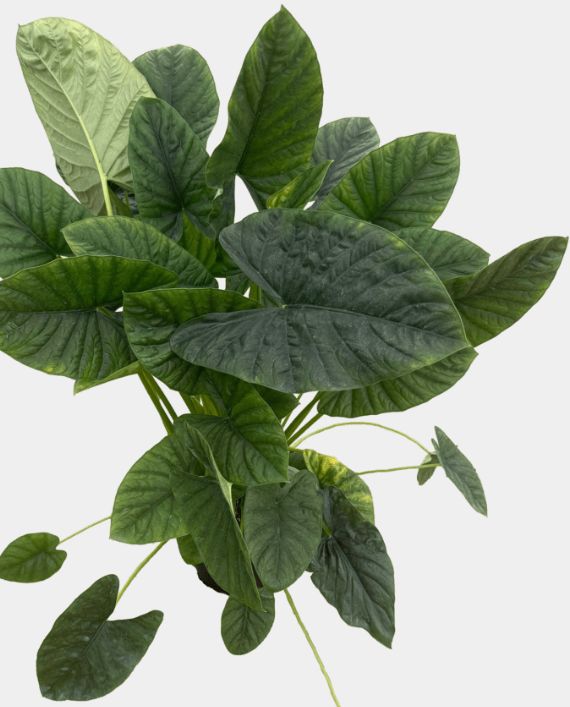
8" Alocasia Lukiwan
Product Details
Brand: Plant
Alocasia Lukiwan
Alocasia Lukiwan is a striking tropical foliage plant known for its bold, sculptural leaves and dramatic texture. Its broad, shield-shaped foliage develops in rich shades of green with pronounced veining and a substantial, almost quilted appearance. The combination of strong leaf structure and an upright growth habit gives this Alocasia the dramatic look collectors expect from larger jewel and specialty Alocasias.
Commonly sold as Alocasia ‘Lukiwan’, this is a cultivated Alocasia rather than a naturally occurring species. The name is used in the specialty plant trade, and its exact hybrid background is not consistently documented. Because of this, it is best identified by the cultivar or trade name Alocasia ‘Lukiwan’ rather than assigning it to a specific Alocasia species.
Care
Alocasia Lukiwan does best in bright, indirect light. Plenty of filtered light encourages strong growth and helps the plant maintain its compact, upright form. Avoid prolonged intense direct sunlight, which can scorch the foliage.
Water when the top 1–2 inches of the potting mix begin to dry, then water thoroughly and allow excess water to drain. Alocasias prefer relatively consistent moisture during active growth but should never remain waterlogged. Reduce watering if growth slows during cooler or darker periods.
Use a chunky, airy, and well-draining aroid mix. Orchid bark, coco chips or coir, perlite, pumice, and a small amount of quality potting mix provide a good balance of drainage, airflow, and moisture retention.
Alocasia Lukiwan prefers warm temperatures and moderate to high humidity. Higher humidity can help developing leaves expand properly, but good airflow is also important. Protect the plant from cold drafts and sudden temperature changes.
This Alocasia develops an upright, clumping growth habit and grows from an underground corm. Established plants may eventually produce offsets or additional corms around the base. Alocasias can slow dramatically or lose leaves in response to colder temperatures, reduced light, or other environmental changes, but a healthy corm may produce new growth when conditions improve.
Pet Safety
Alocasia Lukiwan is toxic to cats and dogs if chewed or ingested. Like other Alocasias, it contains insoluble calcium oxalate crystals that can cause intense irritation of the mouth, tongue, and throat, along with drooling, vomiting, or difficulty swallowing. Keep it out of reach of pets and small children.
Powered by Lightspeed
Display prices in:USD