Upcoming Events: Tissue Culture Workshop Oct 3 @ 11 am / Succulent Pumpkin Workshop Oct 4 @ 2 pm / Plant Swap Oct. 10 @ 10 am / Stained Glass Workshop Sunday Oct. 11th @ 2 pm
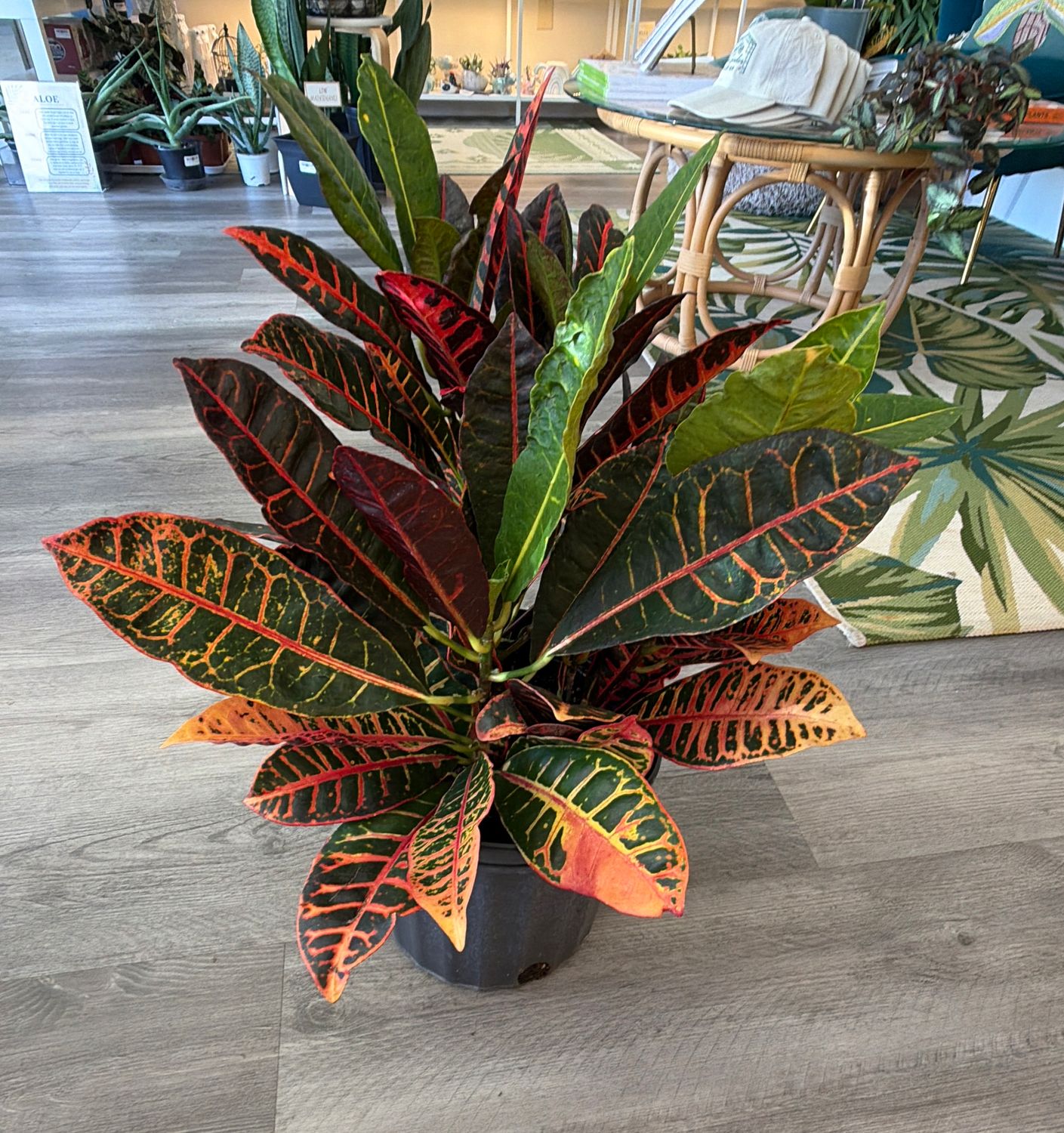
8" Croton Petra
Share
$29.00
Buy and save
Buy and earn $1.45 Loyalty for your next purchase
Loyalty is a discount program that lets you buy products and earn points to redeem on your next purchase. Your Loyalty balance is updated when you pay online or in-store. The Loyalty amount shown on this page can be recalculated at the checkout.
In stock: 6 available
8" Croton Petra
Share
Product details
Brand: Plant
Croton Petra
Croton Petra is a bold tropical houseplant prized for its large, glossy leaves splashed with vivid shades of green, yellow, orange, red, and burgundy. Its colorful foliage develops prominent contrasting veins, and individual leaves can display several colors at once. As the plant matures, it develops an upright, bushy appearance that makes it an excellent statement plant for bright indoor spaces.
The proper botanical name is Codiaeum variegatum ‘Petra’, commonly called Croton Petra or simply Petra Croton. Although commonly called a Croton, it belongs to the genus Codiaeum. It is a cultivated variety of Codiaeum variegatum, a tropical species native to parts of Southeast Asia and the western Pacific.
Care
Croton Petra does best in very bright light with some direct sunlight. Strong light is important for maintaining its intense red, orange, and yellow coloration. Plants grown in insufficient light may become increasingly green and lose some of their colorful patterning. Introduce stronger direct sunlight gradually to prevent leaf scorch.
Water when the top inch or two of soil feels dry, then water thoroughly and allow excess water to drain. Crotons prefer relatively consistent moisture during active growth and may drop leaves if allowed to become excessively dry. At the same time, avoid keeping the soil constantly wet or waterlogged.
Use a rich, airy and well-draining potting mix in a container with drainage. A quality houseplant mix amended with perlite, pumice, or fine orchid bark works well. The soil should retain some moisture without remaining saturated around the roots.
Croton Petra prefers warm temperatures and moderate to high humidity. It dislikes cold drafts and sudden temperature changes, which can contribute to leaf drop. Avoid placing it directly beside heating or air-conditioning vents. Additional humidity can help keep the foliage looking its best, particularly in dry indoor environments.
This plant develops an upright, bushy growth habit and can eventually become a substantial indoor shrub. Crotons can be sensitive to abrupt changes in their environment and may drop leaves after being moved to a new location. Once acclimated to stable light, temperature, and watering conditions, new growth should resume. Pruning can be used to control height and encourage branching.
Pet Safety
Croton Petra is toxic to cats and dogs if ingested. Its sap can irritate the mouth and digestive system and may cause drooling, vomiting, or diarrhea. The sap can also irritate sensitive skin, so wearing gloves when pruning and washing your hands afterward is recommended. Keep the plant out of reach of pets and small children.
Powered by Lightspeed
Display prices in:USD